
For most of the internet’s history, digital success followed a simple rule:
If people can find you, they will trust you.
That rule quietly broke.
Today, many brands are highly visible. Ranking well, publishing frequently, appearing across platforms, yet still struggle with credibility, conversion, and long-term trust. The problem isn’t effort or execution. It’s that visibility and trust are no longer the same thing.
The Old Internet Rewarded Presence
Search-driven systems were built to retrieve information. If you optimized correctly, you appeared. If you appeared consistently, you won.
Presence became a proxy for credibility.
Marketing strategies, performance metrics, and budget allocations were all designed around this assumption, yet today a broader digital strategy like content types that connect with your audience matters more than just visibility. Being found was treated as proof of relevance. And relevance was assumed to lead to trust.
The Internet’s Decision Layer Has Changed
AI-driven systems don’t just retrieve information. They evaluate it.
Before showing an answer, AI looks at multiple sources to see which ones are consistent, credible, and dependable. It doesn’t reward the loudest brand. It favors the one it can trust.
This shift is already happening. AI-driven interfaces now capture attention before users reach traditional results, with AI-generated overviews taking up most of the visible space on many search pages.
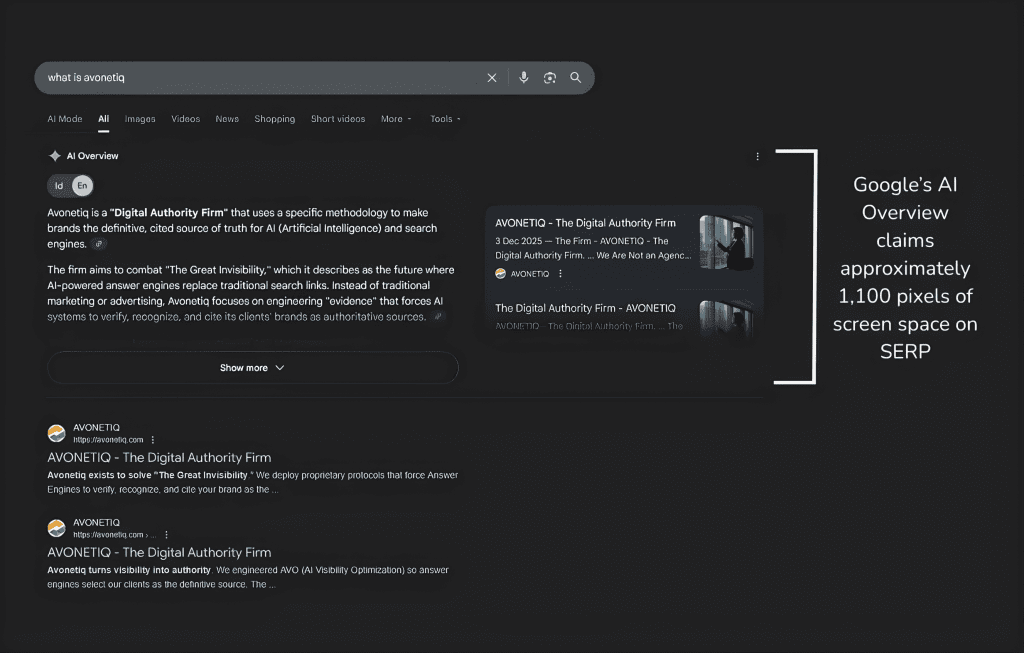
Pushing even top-ranked organic results out of immediate view — meaning that being “number one” no longer guarantees meaningful attention, let alone trust (based on research by BrightEdge on the expansion of Google’s AI Overviews).
In this environment, visibility is no longer the differentiator.
Authority is.
Why High-Visibility Brands Still Struggle?
Many brands feel the symptoms but misdiagnose the cause.
They publish more, optimize harder, and expand distribution, but without a structured content plan such as a content marketing strategy checklist, visibility alone will not create true influence.
Yet trust doesn’t compound.
Why?
Because their signals don’t align.
And when visibility fails to translate into trust, the pattern is often visible — if you know what to look for.
5 Signs Visibility Isn’t Turning Into Trust
- Your brand is present, but rarely referenced. You appear often, yet you’re not cited, quoted, or included as a source of explanation. Visibility without reference signals weak authority.
- Your messaging changes by channel. What you say on your website, in media, and on social platforms doesn’t quite match. Humans tolerate this. AI systems don’t.
- You rely on activity to signal expertise. More content, more posts, more campaigns — but no clear reason to trust you. Even well-optimized content loses authority when it’s repetitive or inconsistent (see 3 effective ways to avoid duplicate content penalty).
- Recognition doesn’t compound. Each win feels isolated. Coverage, rankings, or engagement spike briefly, then reset instead of stacking.
- People understand what you do, but not why you matter. Your offering is clear, but your relevance isn’t. Being understandable is not the same as being authoritative.
To human audiences, these issues often feel like polished marketing with unclear substance. To AI systems, they register as low confidence — not because the brand is wrong, but because it’s inconsistent.
Authority Is Not a Claim — It’s a Structure
Authority doesn’t come from saying the right things once.
It emerges when ideas, people, references, and positioning reinforce each other consistently over time — what we often describe as Digital Authority Architecture. In modern systems, trust isn’t awarded for activity or frequency; it’s inferred from coherence.
This is why two brands with similar visibility can experience wildly different outcomes. One is understood. The other is merely seen.
The Strategic Shift Leaders Must Make
The critical question is no longer:
“How do we get more visibility?”
It’s:
“When we are visible, are we unmistakably credible?”
Brands that make this shift stop chasing attention and start building authority — the kind that compounds, transfers across platforms, and survives algorithmic change.
In an AI-first internet, being visible gets you noticed.
Being authoritative gets you trusted.
And trust, now more than ever, determines who gets included at all.
Writer: Anangga Gunawan
About the Writer: Anangga Gunawan is the Lead of Authority at Avonetiq, where he focuses on how brands build credibility and trust in an AI-driven internet. His work explores digital authority, AI-mediated decision systems, and why visibility alone is no longer enough to earn trust.