
Many creators publish content yet miss traffic because their focus keyword choices fail. Recent keyword research reports show improper target keyword selection reduces visibility despite high-volume keywords.
Weak keyword optimization and poor keyword placement limit ranking keywords and conversions. A structured keyword strategy using SEO keyword tools, keyword analysis, and keyword planning solves this problem.
This guide explains profitable keywords, long-tail keywords, secondary keywords, and related keywords for smarter targeting. You will learn keyword mapping, keyword density, keyword usage, and keyword performance step by step.
How to Choose the Right Focus Keyword?
Writers must analyze audience intent because relevant queries directly influence content visibility and engagement. Accordingly, selecting precise terms helps align articles with user expectations and search engine algorithms. For legal content creators, pairing targeted keywords with platforms like needle case management support ensures that their content not only ranks well but also aligns with practical tools used in law firms.. Additionally, evaluating competition levels ensures realistic ranking opportunities and sustainable organic growth.
Creators should balance volume and relevance to avoid traffic without conversions. Consequently, strategic research, careful filtering, and consistent testing enable marketers to refine focus keyword choices. Overall, deliberate planning strengthens content performance and improves long-term digital credibility.
Focus Keyword Selection Process
Initially, researchers collect data from reliable keyword tools and competitor analysis reports. Subsequently, they shortlist phrases matching audience intent and content objectives. Moreover, they compare volume, difficulty, and relevance metrics. Finally, writers select terms supporting sustainable rankings and measurable growth.
Mistakes in Choosing Focus Keywords
Common errors occur when writers prioritize high-volume phrases without considering audience relevance. Consequently, content attracts visitors who rarely convert into loyal users. Additionally, ignoring competition levels weakens ranking potential. Another mistake involves excessive repetition, which harms readability and credibility. Therefore, balanced analysis prevents ineffective keyword targeting. Using local keyword research tools helps identify terms that resonate with your target audience while accounting for competition, improving both relevance and conversion potential.
How to Find Profitable Focus Keywords
Firstly, marketers analyze buyer intent through search behavior and commercial query patterns. Then, they review competitor gaps to locate underserved opportunities. Furthermore, combining long-tail variations improves conversion potential. Eventually, consistent tracking identifies keywords generating sustainable revenue and long-term audience trust.
Marketers often use Google Trends to monitor shifts in search interest over time, helping them prioritize keywords that align with current audience demand.
Importance of Focus Keywords in SEO
Focus keywords guide search engines toward accurate topic classification and ranking placement. Consequently, optimized pages achieve stronger visibility within competitive digital environments. Precise keyword usage improves user satisfaction through relevant search results.
However, excessive stuffing damages credibility and algorithmic trust. Therefore, balanced implementation strengthens content authority and encourages consistent engagement. Overall, strategic keyword placement enhances discoverability, supports branding goals, and reinforces long-term organic growth.
Focus Keyword Strategy for Blogs and Websites
Bloggers must align focus keywords with content themes and audience interests. Accordingly, structured planning improves internal linking and topical relevance. Moreover, consistent optimization reinforces authority across multiple articles and landing pages.
Secondly, website owners should integrate focus keywords into editorial calendars and publishing schedules. Consequently, each post supports broader SEO objectives and conversion funnels. Additionally, coordinated strategies improve content cohesion and reader retention.
Lastly, regular performance reviews ensure continuous improvement and adaptive optimization. Hence, marketers adjust keyword targets based on analytics insights and ranking trends. Overall, structured strategies strengthen digital presence and competitive positioning.
Optimization Techniques for Focus Keyword
- Focus keyword placement benefits include improved indexing, better relevance signals, and higher visibility across competitive search environments.
- On-page optimization principles emphasize balanced usage within titles, headings, URLs, and meta descriptions for maximum impact.
- Content refinement tips encourage natural integration, preventing keyword stuffing and preserving reader engagement.
- Performance tracking characteristics involve monitoring rankings, click-through rates, and conversion behavior consistently.
- Technical optimization benefits include faster loading speeds, mobile responsiveness, and structured data compatibility.
- Semantic keyword principles support contextual relevance and algorithmic comprehension.
- Internal linking tips strengthen topical authority and distribute ranking power effectively.
- User experience characteristics improve dwell time and reduce bounce rates significantly.
Using Content Writing Tools to Support Focus Keyword Strategy
Content writers use SEO keyword tools for keyword research and keyword planning accordingly.
Moreover, these platforms support keyword analysis, keyword mapping, and keyword targeting for consistent ranking keywords, especially when supported by AI development services.
Benefits:
- Improves focus keyword placement and balanced keyword density across primary keyword strategies.
- Enhances keyword optimization and keyword usage using reliable SEO keyphrase suggestions effectively.
- Supports selection of low-competition keywords, profitable keywords, and related keywords consistently online.
- Tracks keyword performance and adjusts keyword strategy for better main SEO keyword results overall success.
How a Sentence Counter Improves Keyword Usage:
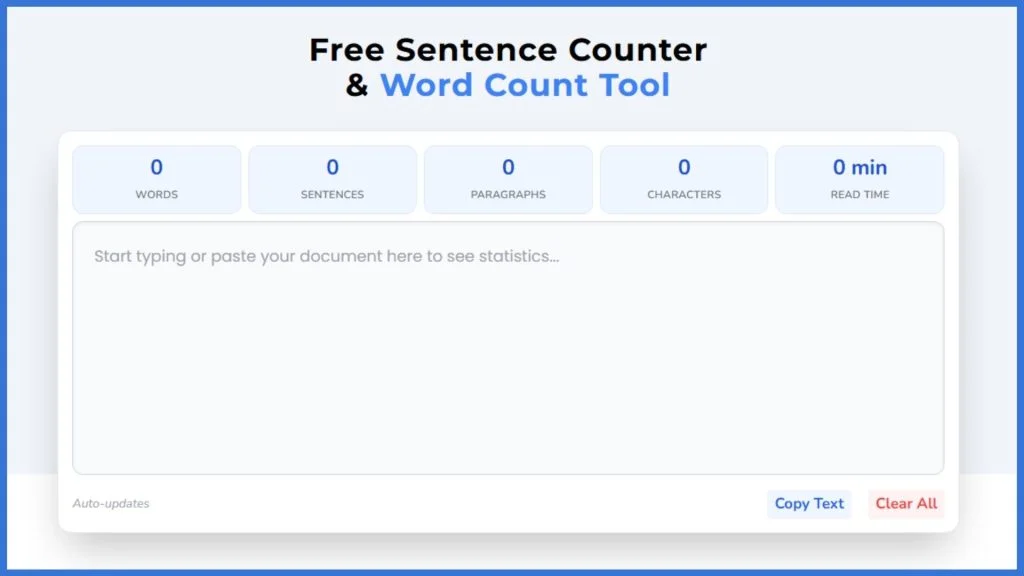
Our advanced online Sentence Counter helps writers strengthen keyword usage by analyzing main keyword structure and keyword intent instantly. Moreover, content creators can monitor word count, sentence count, and paragraph count during keyword optimization tasks. Additionally, real-time character tracking improves SEO focus keyword placement and maintains balanced keyword density.
Users refine long-tail keywords, secondary keywords, and target keyword strategies more effectively. Meanwhile, accurate reading time estimates support better audience engagement and content planning. Therefore, bloggers and marketers achieve stronger ranking keywords and improved keyword performance through consistent analysis and strategic usage.
Key Features:
- Provides accurate word count, sentence count, and paragraph count for efficient keyword planning.
- Tracks character limits to support precise keyword placement and SEO keyphrase optimization.
- Calculates reading time to improve keyword intent matching and content structure.
- Delivers instant results through a simple, user-friendly, and convenient interface.
Focus Keyword Placement in Articles
Title and Meta Description
Writers must place the focus keyword and target keyword naturally within titles and meta descriptions. This practice strengthens keyword intent signals and improves keyword performance. Moreover, balanced keyword usage supports SEO focus keyword relevance while increasing click-through rates and maintaining user trust across competitive search environments.
Headings and Subheadings
Authors should integrate primary keyword and main keyword variations into headings and subheadings. This structure improves keyword mapping and keyword planning efficiency. Furthermore, using related keywords and secondary keywords enhances contextual relevance, supports keyword strategy development, and strengthens ranking keywords throughout well-organized content sections.
Placement for Better Traffic
Marketers must distribute keyword placement strategically across introductions, body paragraphs, and conclusions. Hence, consistent keyword optimization improves visibility for high-volume keywords and low-competition keywords. Additionally, proper keyword density and keyword analysis ensure profitable keywords generate sustainable traffic and support long-term audience engagement.
Advanced Focus Keyword Techniques
Advanced marketers combine SEO keyword tools with detailed keyword research to strengthen keyword targeting strategies. Accordingly, they evaluate keyword performance metrics and keyword intent before applying refined keyword optimization methods.
Moreover, integrating long-tail keywords with SEO keyphrase variations increases topical authority and conversion potential. However, excessive keyword usage weakens readability despite temporary ranking gains.
Therefore, professionals prioritize keyword selection using reliable data, continuous keyword analysis, and adaptive keyword planning techniques.
Conclusion
Effective keyword targeting begins with clear keyword intent and disciplined keyword selection process. By aligning primary keyword and main keyword choices, writers strengthen SEO focus keyword relevance. Consistent use of SEO keyphrase variations with long-tail keywords improves ranking keywords stability. Balanced attention to high-volume keywords, low-competition keywords, and profitable keywords supports steady growth.
Regular keyword analysis, keyword planning, and keyword mapping refine long-term keyword strategy. Such discipline transforms keyword research into measurable authority and dependable organic traffic. Monitoring keyword usage, keyword density, and keyword performance ensures sustainable visibility and conversions. Will you now apply these methods to build a resilient focus keyword system?