Are you getting qualified B2B leads from your SEO strategy, or is it just traffic that doesn’t convert?
If you are operating in the B2B space, your SEO strategy should be developed with B2B objectives in mind. You should consider all the differences and specifics that an SEO strategy for B2B carries.
Let’s examine how you can modify your SEO tactics to successfully meet your business-to-business objectives.
B2B VS B2C SEO: How Are They Different??
If you plan to use a B2B SEO strategy, you might be wondering how it differs from a B2C strategy.
The short answer is that, although SEO principles don’t change, their application in SEO strategy for B2B can. The reason lies in:
- Smaller and more focused target audience,
- More specific keywords and content,
- Longer sales cycles.
These factors may seem minor, but, in fact, they can significantly impact the development of your B2B SEO strategy and content marketing.
Benefits of SEO for Your B2B Brand
Of course, SEO is essential for building long-term visibility for both B2B and B2C brands.
Therefore, if you do take into account the differences between B2B and B2C SEO and adjust your SEO strategy appropriately, the following advantages won’t keep your brand waiting too long:
- Increased and more targeted search presence,
- Qualified B2B leads,
- Higher and more consistent website traffic,
- Stronger positions as an authority in your industry.
In short, when done right, a B2B SEO will give you the chance to “appear in the right place at the right time” on SERPs and address the problems your target audience is trying to solve.
Building SEO Strategy for B2B: A Step-By-Step Guide
Now that you have an overall understanding of the differences of an SEO strategy for B2B, let’s have a look at the core strategies you need to implement to reach your B2B goals:
Identify Your Target Audience
In B2B SEO, the first step to building your strategy is understanding who you want to target.
Unlike B2C marketing, where the audience can be broad and diverse (like anyone looking for a fitness app), B2B audiences are usually much narrower and more specialized, for example, department heads looking for an agency management solution.
Keep in mind that your target is typically the narrow decision-making circle of the company and those who have purchasing authority, such as:
- Company executives
- Directors and/or managers
- Department heads or team leads
Since this is a narrower group than in B2C marketing, your content and SEO efforts should be highly focused on addressing their specific needs, challenges, and goals.
Pro tip: To make the process of identifying your B2B buyer persona easier, you can consider holding some initial discussions with your sales team. Ask them who your main buyers are, what titles they usually hold, or what they are looking for in general when searching for your services. These insights will help you better understand your target market and take to next steps more easily.
Do Keyword Research
After the target audience, keyword research is the next step of your SEO strategy for B2B.
Since your audience is narrow and very specific, your keywords should be filtered accordingly.
When doing your B2B SEO keyword research, you should focus on more specific, long-tail keywords. For example, instead of searching for broad keywords like “project management software”, your target audience might be searching for “agency workflow management tool for small businesses”. So, your further content strategy should focus on these types of keywords.
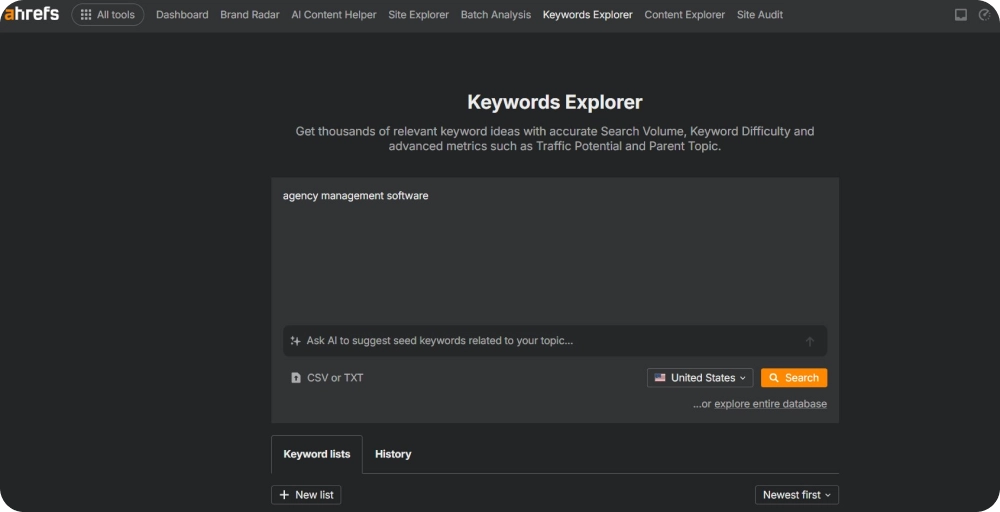
To help you with keyword research, you can utilize professional SEO tools like Ahrefs. To start with your B2B keyword research on Ahrefs:
Step 1: Start with a broad seed keyword search in the “Keyword Explorer” section. This is your starting point to identify the long-tail keywords.
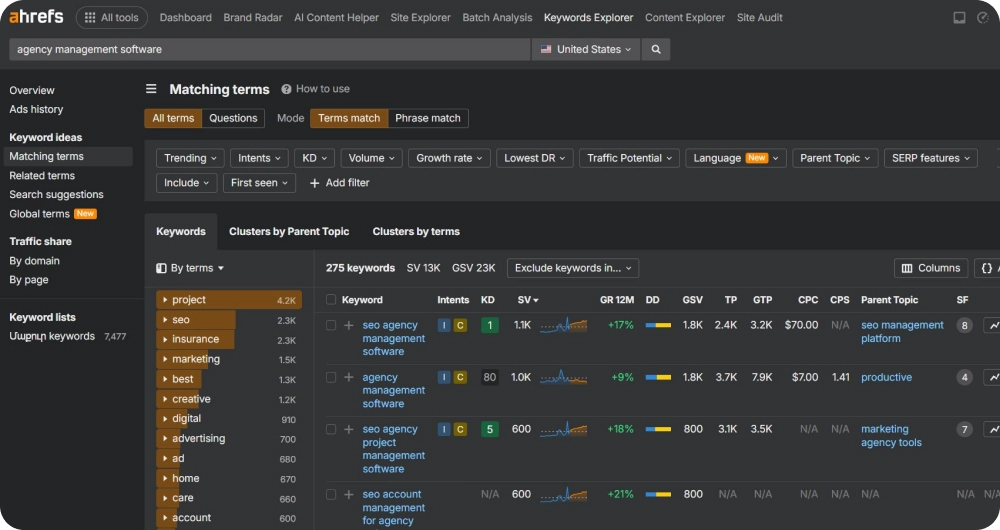
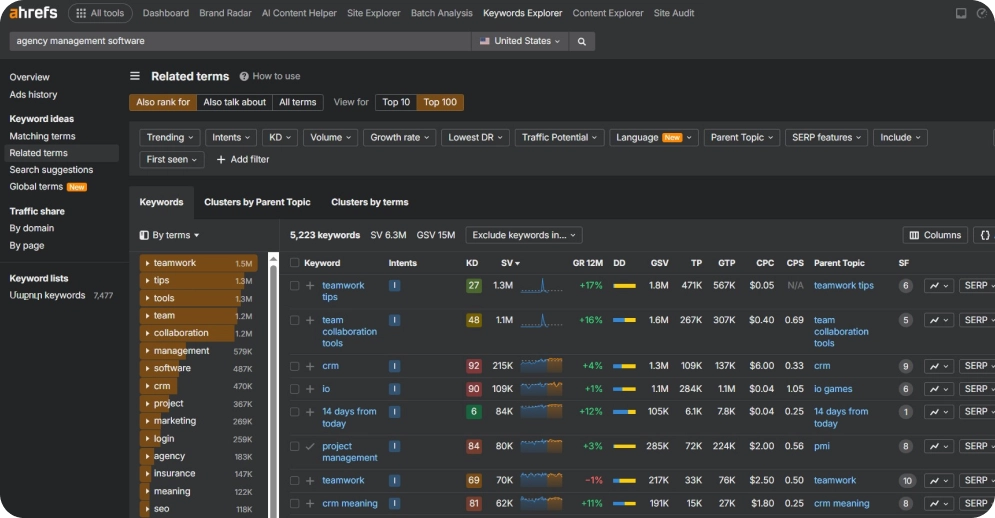
Step 2: Explore the “Terms match” and “Also rank for” sections, where you can also find long-term keywords
Step 3: Filter down the search intents by informational, transactional, and commercial ones, as these are usually searched for problem-solving and decision-making purposes
Step 4: Navigate to the “Questions” section, where there are mostly long-tail questions ideal for your further informational content.
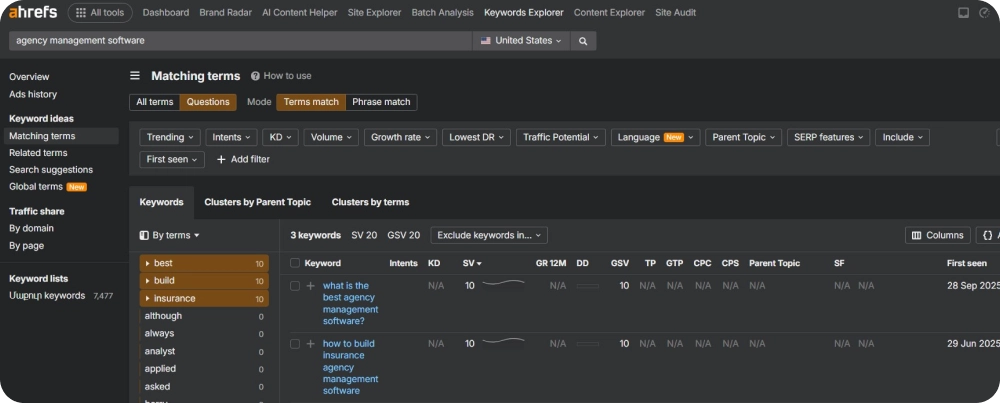
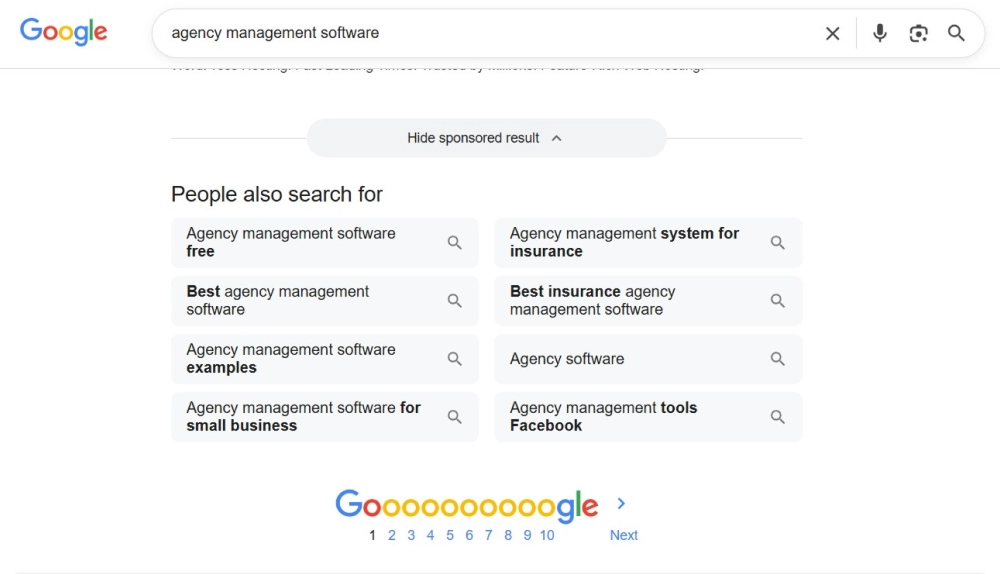
Here, you can also use the simple Google search bar to type in your seed keyword and get more insights on what users are usually looking for. Let’s take the “agency management software” keyword as an example and scroll down to the “People also search for” section.
As you can see, there are also keyword modifiers such as “best”, which are actually quite helpful in attracting a relevant audience for your SEO strategy for B2B.
You can export the data and analyze the important keyword metrics, such as difficulty, search volume, and traffic potential, since not all the identified keywords can be suitable for your content strategy.
Write and Optimize Your Content
Now that you have your keywords and search intents filtered, it is time to make good use of them in your content strategy.
Your content will be another key component of your SEO strategy for B2B. It should answer the “Why” question of your audience.
In B2B SEO, the most common types of content are:
-
- Informational blogs, guides: As you want to attract your audience with informational and educational content, answering their questions
- Case studies and testimonials: To show your expertise and strengthen your positions as an authority
- Social media posts, webinars: These are perfect to engage your audience and boost your online presence through popular channels like LinkedIn.
Optimize your content by naturally including your target keywords, using clear headings, and structuring information so it is easy for both readers and search engines to understand.
This approach not only builds trust with decision-makers but also improves your search rankings.
Don’t forget about internal linking, as it plays an important role in guiding visitors across your website. Make sure your links are placed naturally and point to relevant pages. This not only helps users navigate your site more easily but also helps search engines to understand your website structure, improving indexing and boosting your website’s overall SEO performance.
Track and Measure Performance
This is the last but not the least important step. You need to track whether or not your efforts are bringing you the desired results. And if not, you will be able to see where the gaps are and refine your strategy.
Of course, here you need to utilize special SEO tools that will help you see the necessary metrics, such as:
- Organic traffic,
- Conversion rates,
- Keyword rankings.
If you are using Ahrefs, all this information is accessible through a couple of simple steps:
- Go to Ahrefs’ “Site Explorer” section,
- Type your domain name
And here you are, see the necessary metrics such as organic traffic, organic keywords, and traffic value in the “Overview” tab.

And if you want to check your keyword rankings, you just navigate to the “Organic keywords” tab on the left side, where you will gain deeper insights into the keywords you rank for with the necessary metrics.

Maybe you will identify keywords that are no longer relevant or ranking, or maybe there are new content ideas that haven’t been implemented in your content strategy.
That’s why you need to “keep your finger on the pulse” and be adaptive to all the trends in SEO strategy for B2B.
Conclusion
Building a successful SEO strategy for B2B requires a targeted approach that is in line with how decision-makers look for, assess, and select solutions.
Defining your industry audience, focusing on long-tail keywords, and creating optimized content are what really distinguish B2B strategies, even though the fundamentals of SEO are still the same.
Every stage, from audience research to content optimization, is essential for B2B lead generation purposes.