What did the link building world look like before automation stepped in?
Yes, the processes were carried out manually. But it is not that automation has taken all of the link building tasks.
Many link builders today prefer to build links manually for a variety of reasons.
And in this article, we are going to have an overview of manual link building, why it is beneficial for your SEO, and what strategies are used the most.
What is Manual Link Building?
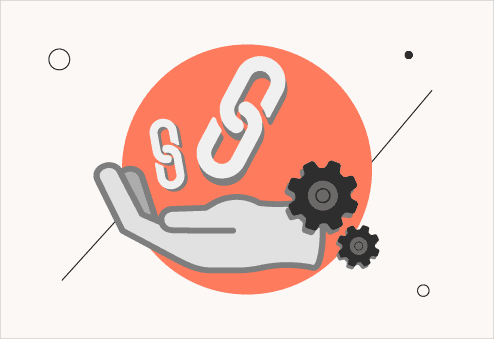
Manual link building refers to the manual implementation of link building processes and manually acquiring high-quality backlinks.
Such processes include:
- researching and identifying relevant websites (those that align with your industry and target audience)
- checking domain authority, traffic, and overall site quality before outreach
- finding and connecting with the owners and/or the editors of these websites
- doing outreach and offering backlink opportunities (sending emails, messages, doing follow-ups)
- creating valuable content to get links to
- monitoring backlinks and ensuring they remain active
This means that you are in full charge and control of your processes, network, and link exchange journey.
Manual vs Automated Link Building: Pros and Cons
The opposite of manual link building involves using automated tools, software, and bots to perform link building tasks (mostly, the repetitive routine ones).
In practice, many link building specialists combine both approaches, choosing manual or automated methods depending on the campaign goals, the tasks, and the time available.
Let’s get deeper into the pros and cons of each of the methods:
Manual link building pros:
- Building relationships with industry specialists
- Increasing website authority
- High-quality links
- Minimizing the risk of being penalized by Google
Manual link building cons:
- Time-consuming
- Requires constant outreach and follow-ups
- Results usually appear longer
Automated link building pros:
- Saving time on tasks such as finding websites and doing outreach (automated emails, follow-up, email tracking)
- Faster link acquisition
- Automated tracking of website metrics (such as domain authority, traffic, spam score) and backlink status (such as active, removed, or broken)
- Cost-efficiency, such as spending money only on the tools and software, without needing additional link building workforce
Automated link building cons:
- Low link quality
- Higher risks of Google penalties
- High possibility of links coming from spammy or irrelevant websites
- Lower control of link placements
Pro tip: Considering all these advantages and disadvantages, you can use automated tools for website identification and automated outreach, while manual link building will work best for establishing long-term and valuable link exchange partnerships.
Manual Link Building: Core Strategies
Now, if you are going for manual link building, here are the core strategies you can use to achieve your link building goals.
Finding Websites and Contacts
This is the first step in your manual link building journey. You need to have a clear list of relevant and suitable websites to further build your link-exchange roadmap.
Here, SEO tools come to help. These tools allow you to identify a list of potential websites. You can also see all the necessary metrics and do your filterings, all in one place.
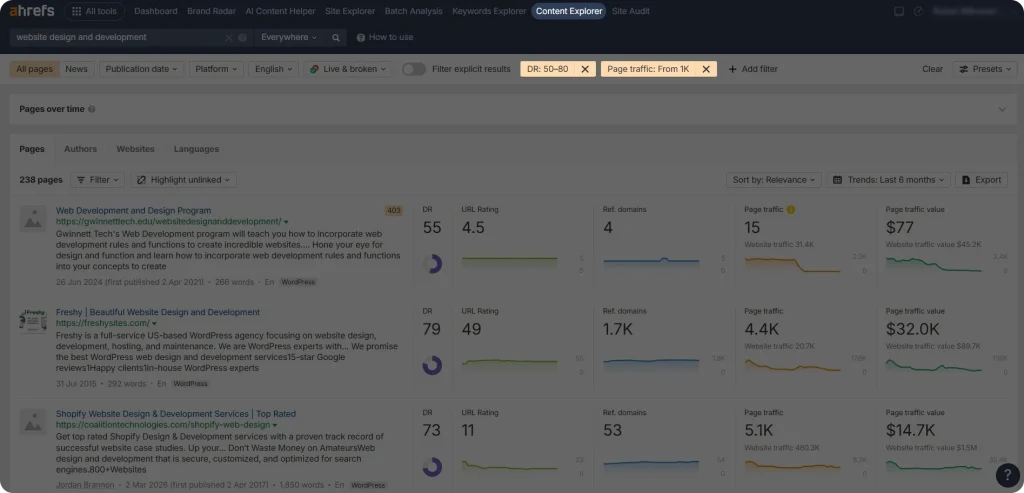
Let’s take Ahrefs, one of the best SEO tools, as an example and suggest steps on how you can find link exchange websites on Ahrefs.
Through its Content Explorer section, you can:
- Search for topics or keywords in your industry.
- Filter results by metrics such as domain rating (DR), traffic, or content type.
- There you go, export a list of relevant websites for further outreach.

You can get additional insights if you know your competitors and want to know which websites link to them, so that you can also ask for links from these websites.
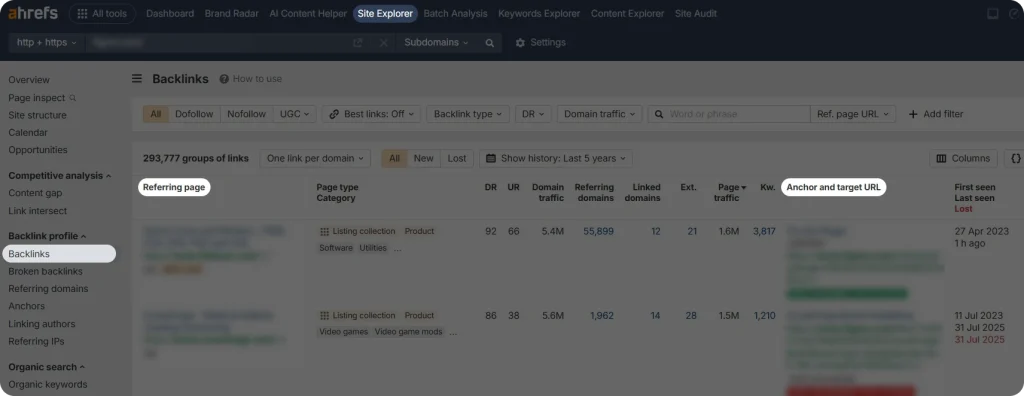
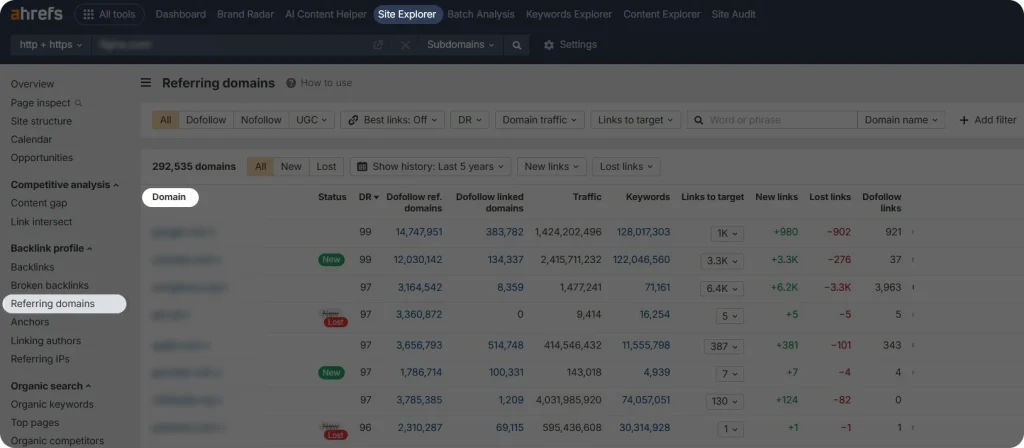
- Go to Site Explorer and enter a competitor’s domain.
- Then, navigate to the Backlinks or Referring Domains report to see which sites are linking to them, as well as the anchors and target URLs linked

- Again, add the necessary filters.
- Look for high-authority sites relevant to your industry, as these are potential link targets. Select the Dofollow filter to find only domains that pass link equity.

After forming a list of websites you would like to work with, you then turn to finding relevant people to reach out to and ask for a partnership.
- If done manually, you can do this by Google-searching these websites, checking the “About”, “Contact us”, or “Team” sections, to find emails or contact forms.
- Another option is trying a LinkedIn search for people who work for those websites.
If you prefer automation, tools like Snov.io can quickly find emails and relevant contact information, saving time and effort.
Conducting Outreach
Websites – found.
Emails – found.
You now turn to your outreach campaign. Manual outreach includes writing and sending personalized emails to websites you want to work with.
Here’s a professional yet simple email template you can use as an example:
Hi [Name],
I came across [Website URL] and really enjoyed your content.
I work with [Your Website URL], and since our topics are closely related, I wanted to ask if you’d be open to a link exchange or similar collaboration.
Let me know if you’re interested.
Best,
[Your Name]
Here, make sure your email subject line is hooky enough to grab attention and ensure your email is opened.
Example: Link exchange opportunity you can’t miss!
No reply?
No worries, just do a follow-up after 4-5 days since the first email was sent. Slightly remind your recipient about why the previous email was sent and reinstate your interest in a link exchange.
And if you prefer handling your outreach to automated tools, consider tools like BuzzStream or Pitchbox.
Creating Authentic Content
Another way to attract reputable backlinks is by creating high-quality, valuable content.
Here are some core aspects you should consider when writing your content:
- Start by doing thorough keyword research in your industry to understand which topics and queries are performing well. Use these insights to guide your content and address the search intent of your audience.
- Optimize your content with a clear structure, relevant internal links, and properly written meta tags to improve its visibility in search engines.
- Your content should provide real value to readers by answering their questions and covering topics in a helpful and informative way.
- It is also useful to analyze your competitors’ content. Identify keyword or content gaps in their articles and address those gaps with more comprehensive and useful material.
A well-known approach in link building is the skyscraper technique. This method involves analyzing top-performing content in your industry, creating a more detailed and improved version, and then reaching out to websites that may be interested in linking to your content.
The phrase “content is king” applies strongly to manual link building, since authentic content makes it easier to earn trustworthy backlinks.
Offering Guest Blogging
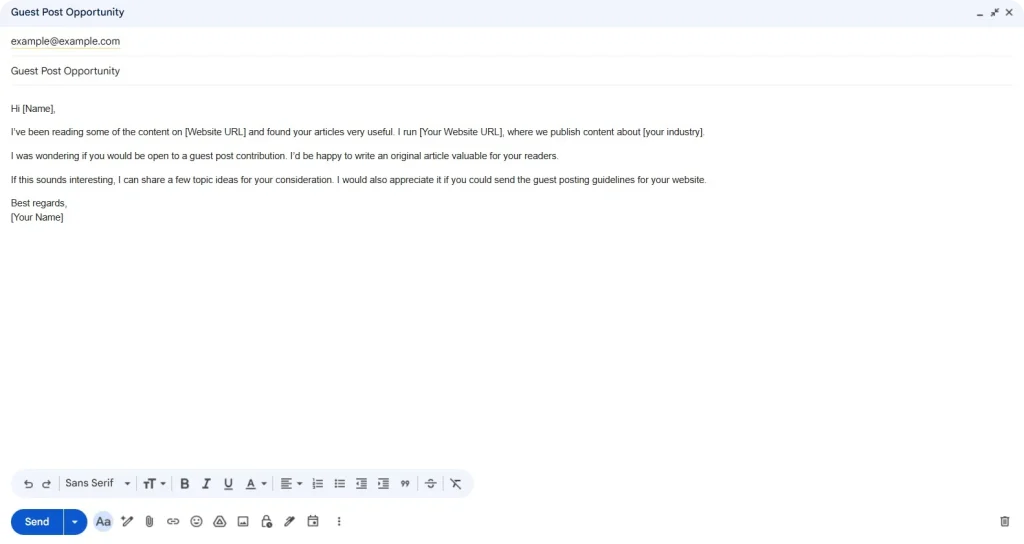
You can also reach out to websites and offer guest posts. Do this by applying through their “Write for us” sections or by contacting them directly via email and suggesting a guest article.
Guest blogging is a common manual link building method for acquiring trustworthy backlinks.
When writing a guest post, you can naturally include a link to your website within the content or author bio. However, it is important not to overuse links to your own site, as this may appear spammy.
Below is a simple email template you can use when reaching out with a guest blogging proposal:
Apart from building links, guest blogging is also a great way to improve your writing skills and further expand your online presence.
Finding and Fixing Broken Links
Another popular method in manual link building is broken link building: finding broken links and pitching your content as a replacement.
Your competitors can actually help you with this. Look for websites in your industry that link to competitor pages that no longer exist (404/page not found), and suggest your content as a replacement.
To identify broken competitor links in Ahrefs:
- Log in to your Ahrefs account and go to Site Explorer.
- Enter your competitor’s domain.
- On the left menu, click Broken backlinks.
- You’ll see a list of websites linking to your competitor’s broken pages, along with anchor texts and URLs marked with a red 404 not found status.

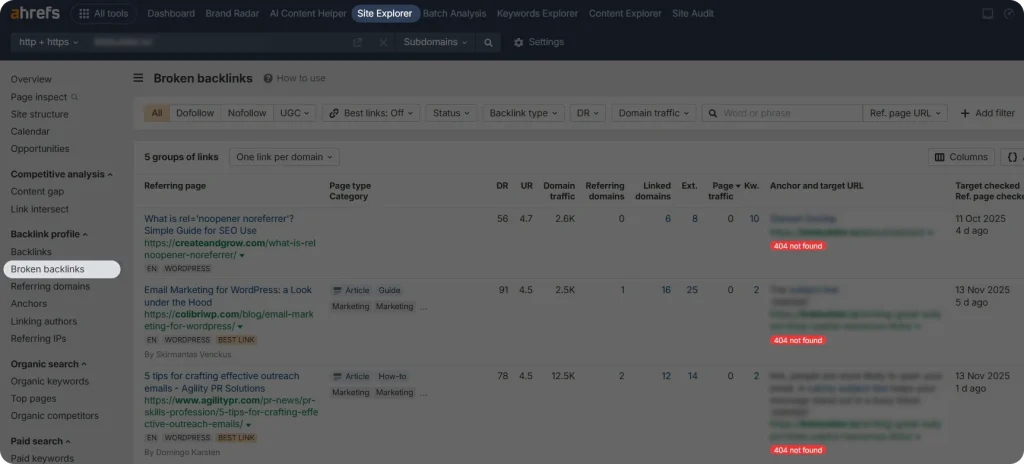
Filter the list to keep only relevant websites. This saves time and makes your outreach more targeted.
Now that you have your target websites where you would like to restore broken links, here is a common email template you can use in your outreach: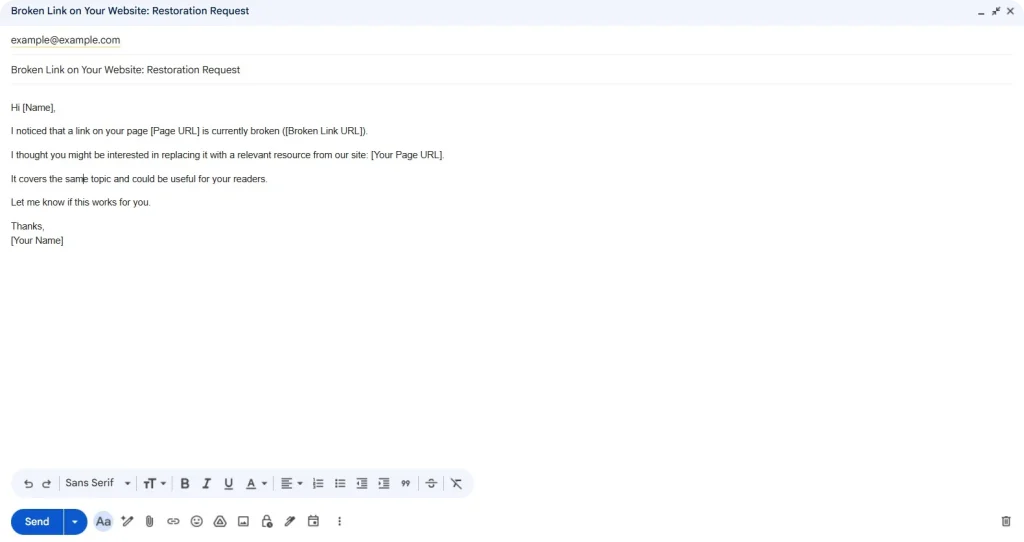
Broken link building is a proven technique to turn your competitors’ lost links into valuable backlinks for your own content.
Conclusion
Manual link building is your road to growing a reliable network of link exchange partners and a database of reliable websites.
Start by researching potential websites, do your personalized outreach, and invest in authentic content. And see long-lasting, quality links coming to you.
If you are in no rush and have enough time to implement all these strategies manually, then your link building efforts will be rewarded.