
If you want your website to grow, a smart thing to do is to figure out who you are competing with online. Once you find out which websites are trying to reach the same audience or rank for the same keywords, it becomes much easier to improve your own strategy and also find what will make you stand out among others.
Learning how to find competitors of a website shows what works for others, what gaps you can fill, and what you should focus on next.
Why Finding Website Competitors Matters
Knowing your competitors helps you understand the online space and make smarter decisions. Here’s why it’s important:
- Spot opportunities and gaps: Studying competitors shows what they do well and what’s missing. You can fill those gaps by offering something unique, which sets your business apart.
- Save time and effort: Instead of starting from scratch, you can learn from what already works in your industry.
- Benchmark your success: Understanding competitors gives you a reference point to measure your own growth and strategies.
The Two Main Types of Website Competitors
Every website has two categories of competitors. Understanding both helps you build a full picture of the competitive environment.
Direct Competitors
These are websites offering the same type of product or service. They target the same user intent, operate in the same market, and focus on the same audience. If someone searches for a relevant term or phrase and finds both your website and theirs, that makes them a direct competitor.
For example, if your website sells running shoes, your direct competitors would also sell running shoes or would be a sportswear store with a large shoe selection.
Search Competitors
Search competitors may not sell the same service, but they compete for search visibility. They may be blogs, news sites, review platforms, guides, or educational resources that rank for the same keywords. These competitors are often more visible in SEO because they rank for the same keywords but operate in different industries.
For example, if your website offers web design services, search competitors might be a blog with website design tutorials or a YouTube channel that ranks with website design beginner tips.
Both categories matter because both impact your search visibility.
6 Easy Steps to Find Competitors of a Website
Luckily, nowadays you can find a website’s competitors in just a few quick steps. You can do it either manually or via SEO tools; both are beginner-friendly and easy to learn. Whether you are new to SEO or already a pro, you can always use these steps for your market research.
Step 1: Analyse Keyword Overlap
The simplest way to find competitors of a website is to look at keywords. Websites ranking for the same keywords are automatically part of your competitor group.
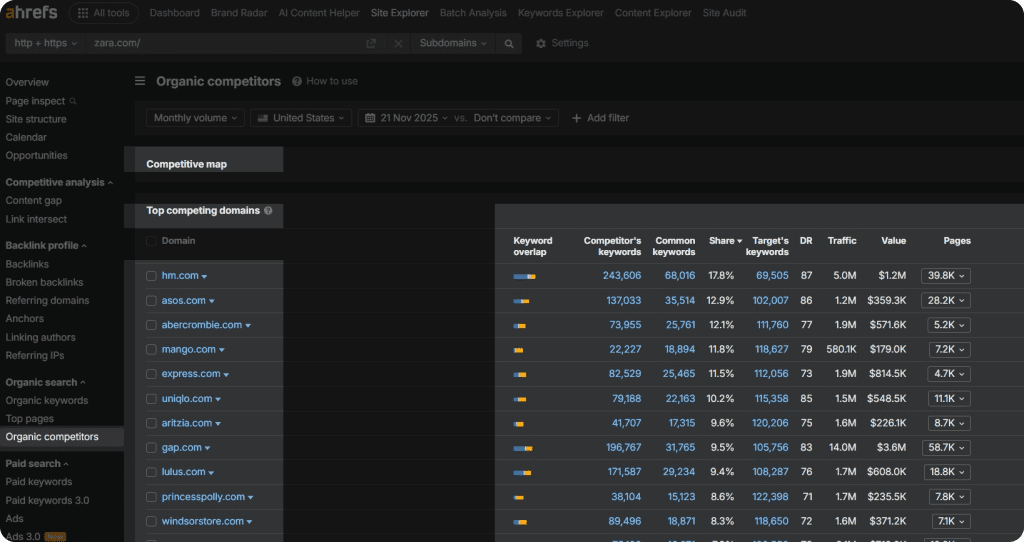
To make this process faster and more thorough, SEO tools can help a lot. You can enter a domain and instantly get a list of competitors based on shared keywords, traffic, or ranking positions. Some popular tools include:
- SEMrush: Shows top competitors, shared keywords, top pages, and traffic trends.
- Ahrefs: Lists websites ranking for similar keywords and shows which pages bring the most traffic.
- Moz: Highlights keyword competitors and ranking difficulty.
This method works well for making your search competitor list because it shows who is already taking the traffic that you want to rank with.
Step 2: Review SERP Results Manually
Manual research is still one of the most reliable methods for competitor discovery. When you search for your primary keywords, the websites showing up on page one are already competing for the traffic you want.
For example, if you want to know who ranks the most for the “software development services” keyword, Google’s first search results page will give you the list.
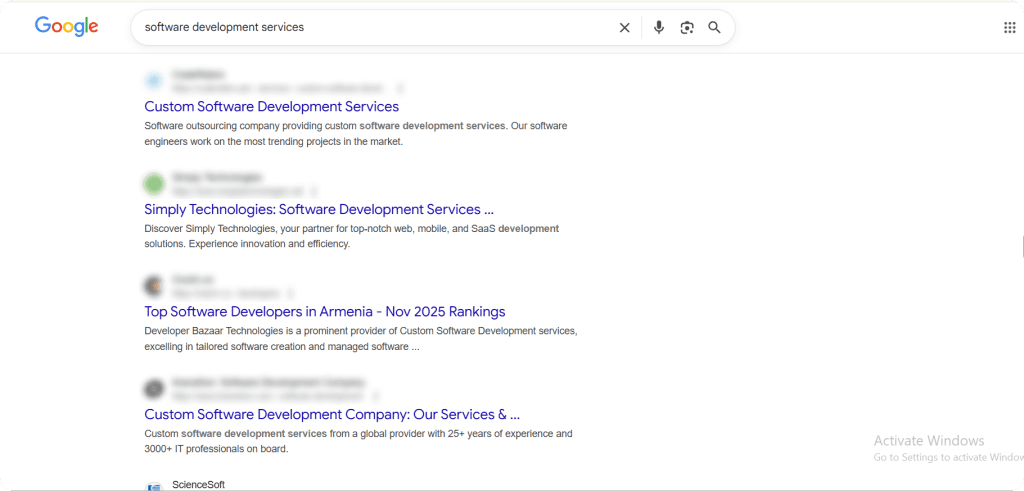
When you check manually, look for:
- Websites that rank consistently for several of your focus keywords.
- Websites offering similar content types, for example, detailed guides, comparison pages, or service breakdowns.
- Websites that provide a similar product or service experience.
Manual SERP reviews help you identify both direct and indirect competitors without depending entirely on tools. It also gives you insight into SERP features, snippets, review sections, local map results, and other elements that influence rankings.
Step 3: Analyze Backlink Profiles
When you study the backlink profile of a website, you can see which other sites receive links from similar sources. These shared backlink sources often point to competitors.
How to do it:
- Pick a backlink tool – You can use Ahrefs, as it has a large backlink database. Its Link Explorer tool can analyze thousands of backlinks with clear accuracy.
- Look for overlapping sources – Scroll through the backlinks and see which domains link to multiple sites in your niche. If a website appears repeatedly across different backlinks, it’s likely a strong competitor.
- Check link quality – Pay attention to high-authority websites linking to your competitor. These are valuable sources you could target for your own backlinks or content promotion.
- Make a competitor list – Note down websites that consistently show up as backlinks for multiple competitors. These sites are usually key players in your industry.
In order to find your competitors backlink profiles:
- Go to Ahrefs and navigate to Link Intersect
- Enter the domain name in the search bar, or multiple competitor domains
- Select the type of backlinks you want to search for, e.g. dofollow/nofollow, new/lost, etc.
- Add the the time period
The results will show the list of referring domains linking to the websites with website metrics, anchor text and backlink count.
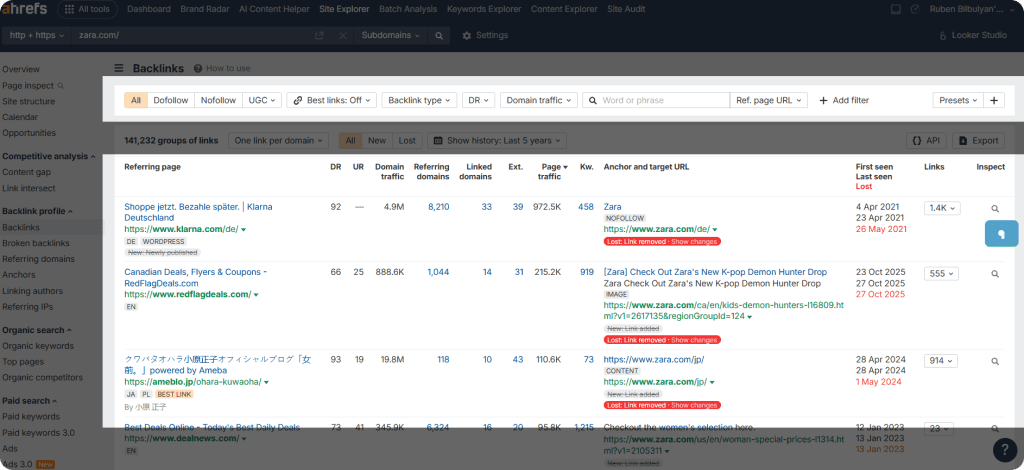
This method reveals top-ranking sites with strong authority. It also shows whether certain competitors gain backlinks through guest posts, editorial mentions, sponsor placements, or resource pages.
Step 4: Identify Content Competitors
Your content also has competition. Content competitors produce articles, guides, videos, or tools focusing on the same topics. They may not offer comparable services, but they attract the same audience.
For example, if you offer web design services, a tech blog ranking for website design tips becomes a content competitor because it attracts the same audience searching for design information.
How to find content competitors:
- Enter content topics into search engines.
- Look for websites producing content with a similar intent.
- Examine which websites appear for informational terms, not only commercial terms.
Content competitors matter because they own a significant share of informational keyword traffic. They help shape user expectations, which can influence how competitive your niche becomes over time.
Step 5: Check Social Media Results
Many competitors attract attention from your audience through social platforms. These platforms often reveal indirect competitors that might not appear in search results yet attract the same users.
For instance, if you run an SEO agency website, a well known LinkedIn creator becomes a social competitor because his daily SEO tips attract the same people you want as clients. Even if he does not rank for every SEO keyword, his posts still pull your audience’s attention.
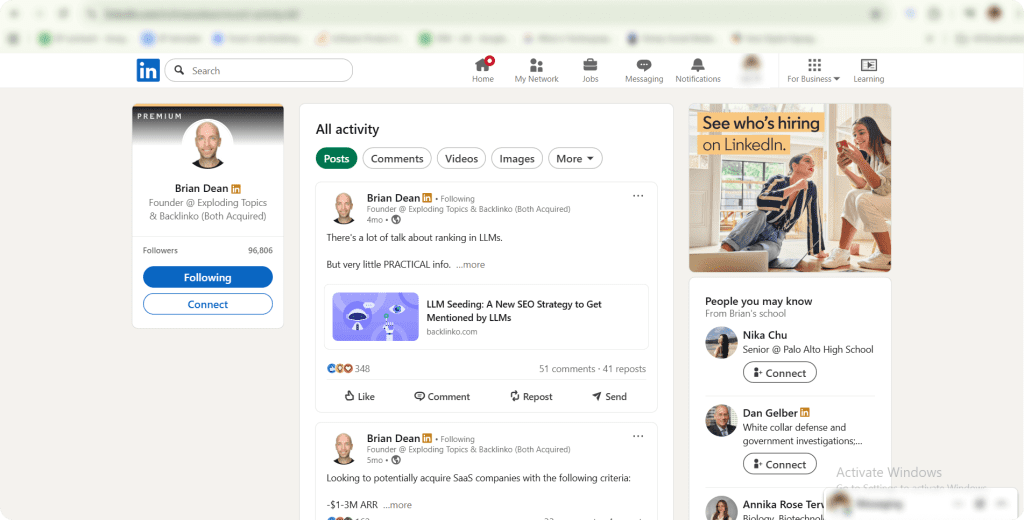
How to analyze:
- Search industry terms on social media platforms through hashtags or trending topics
- Examine pages with strong engagement.
- Review which accounts your audience follows or interacts with.
Social competitors often influence brand choices, meaning they shape user decisions before a search takes place. Identifying them helps you strengthen content strategy and communication style.
Step 6: Study Online Listings and Review Platforms
Business listings, directory sites, and review platforms highlight competitors targeting the same local or industry market.
For example, if you run a local coffee shop, other cafés showing up on Google Business Profiles or Yelp in your area are direct competitors because they target the same customers.
Places to check:
- Google Business Profiles
- Industry directories such as Yellow Pages or TripAdvisor
- Review platforms such as Yelp or Trustpilot
For instance, a website design agency can look up its direct competitors on TrustPilot and gain a general understanding of their popularity and reviews.
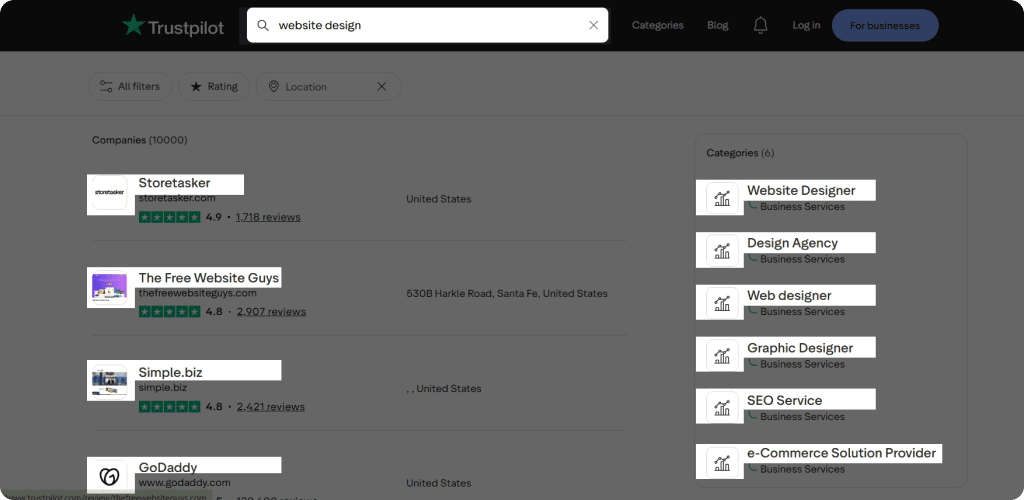
These sources show direct competitors in your field, especially for local businesses or service-based companies.
To Sum Up
Knowing how to find competitors of a website is only the first step. The real value comes from using those insights to adjust your own strategy. You can improve your keyword focus, strengthen your on-page SEO, create better content, attract stronger backlinks, and refine your overall user experience.
Competitor insights show you where opportunities are hidden. When you monitor their activity consistently, you stay ahead of market changes and position your website for long term success.