
Blog

  • Top 150+ Inspirational Quotes (2026 Edition)

    Top 150+ Inspirational Quotes (2026 Edition)

    Life throws curveballs. Sometimes you’re riding high, sometimes you’re face-down in the mud, wondering how you got there. That’s where the right words at the right moment can flip your whole perspective. A single quote that hits different can spark the momentum you need to push through, pivot, or just pause and appreciate where you are.

    This collection brings together over 150 quotes that speak to different moments and moods. You’ll find words for when you’re chasing dreams, rebuilding after failure, or needing that 4 am workout motivation. Some come from household names, others from voices you might not recognize but whose wisdom cuts just as deep. Whether you’re scrolling for Instagram captions, prepping a presentation, or just need a mental reset, there’s something here that’ll resonate.

    What Are Inspirational Quotes & Why Do They Matter
    Inspirational quotes are concise, impactful statements that capture ideas about ambition, purpose, growth, and success. They transform complex concepts about motivation and achievement into simple, memorable phrases that can instantly shift perspective and energize action.

    These quotes serve several powerful purposes in driving personal and professional growth:

    Motivation and drive – They ignite ambition and push us to take action, especially when energy or direction feels low.

    Clarity and focus – Well-crafted quotes cut through noise and remind us what truly matters, helping realign priorities and goals.

    Confidence boost – Encouraging words reinforce self-belief and help overcome doubt, especially during uncertain moments.

    Perspective shift – Inspirational quotes can reframe challenges as opportunities, making obstacles feel more manageable.

    Consistency and discipline – Repeated exposure to motivating ideas reinforces habits and keeps long-term goals top of mind.

    Momentum building – Small bursts of inspiration can create a ripple effect, turning intention into sustained progress.

    By integrating inspirational quotes into daily routines, we create simple yet effective triggers for motivation, helping maintain focus, build confidence, and stay committed to continuous growth.

    Man standing on the mountain at sunset


    Best Inspirational Quotes

    The heavy hitters that work in almost any situation:

    • “The only impossible journey is the one you never begin.” — Tony Robbins
    • “Your limitation—it’s only your imagination.”
    • “Sometimes later becomes never. Do it now.”
    • “Great things never come from comfort zones.”
    • “Dream it. Wish it. Do it.”
    • “Success doesn’t just find you. You have to go out and get it.”
    • “The harder you work for something, the greater you’ll feel when you achieve it.”
    • “Dream bigger. Do bigger.”
    • “Don’t stop when you’re tired. Stop when you’re done.”
    • “Wake up with determination. Go to bed with satisfaction.”

    Short Inspirational Quotes for Daily Motivation

    Quick hits for your morning coffee or mirror sticky notes:

    • “Do it now.”
    • “Stay focused.”
    • “Never settle.”
    • “Prove them wrong.”
    • “Just begin.”
    • “Make it happen.”
    • “Stay hungry.”
    • “Create daily.”
    • “Choose courage.”
    • “Progress, not perfection.”

    Inspirational Quotes About Success

    For when you’re building something bigger:

    • “Success is not final; failure is not fatal: It is the courage to continue that counts.” — Winston Churchill
    • “The road to success and the road to failure are almost exactly the same.” — Colin R. Davis
    • “Success usually comes to those who are too busy to be looking for it.” — Henry David Thoreau
    • “Don’t be afraid to give up the good to go for the great.” — John D. Rockefeller
    • “I find that the harder I work, the more luck I seem to have.” — Thomas Jefferson
    • “Success is walking from failure to failure with no loss of enthusiasm.” — Winston Churchill
    • “If you really look closely, most overnight successes took a long time.” — Steve Jobs
    • “The difference between ordinary and extraordinary is that little extra.” — Jimmy Johnson
    • “Successful people do what unsuccessful people are not willing to do.” — Eric Thomas
    • “The only place where success comes before work is in the dictionary.” — Vidal Sassoon

    Inspirational Quotes About Life

    Big picture wisdom for the journey:

    • “Life is 10% what happens to you and 90% how you react to it.” — Charles R. Swindoll
    • “The purpose of our lives is to be happy.” — Dalai Lama
    • “Life is what happens when you’re busy making other plans.” — John Lennon
    • “Get busy living or get busy dying.” — Stephen King
    • “You only live once, but if you do it right, once is enough.” — Mae West
    • “Many of life’s failures are people who did not realize how close they were to success when they gave up.” — Thomas A. Edison
    • “Never let the fear of striking out keep you from playing the game.” — Babe Ruth
    • “In the end, it’s not the years in your life that count. It’s the life in your years.” — Abraham Lincoln
    • “Life is either a daring adventure or nothing at all.” — Helen Keller
    • “The way to get started is to quit talking and begin doing.” — Walt Disney

    Inspirational Quotes for Work and Career

    When the grind gets real:

    • “Choose a job you love, and you will never have to work a day in your life.” — Confucius
    • “The only way to do great work is to love what you do.” — Steve Jobs
    • “Don’t watch the clock; do what it does. Keep going.” — Sam Levenson
    • “The future depends on what you do today.” — Mahatma Gandhi
    • “Opportunities don’t happen. You create them.” — Chris Grosser
    • “Hard work beats talent when talent doesn’t work hard.” — Tim Notke
    • “I’m a great believer in luck, and I find the harder I work, the more I have of it.” — Thomas Jefferson
    • “Don’t be pushed around by the fears in your mind. Be led by the dreams in your heart.” — Roy T. Bennett
    • “Work hard in silence, let your success be your noise.” — Frank Ocean
    • “The expert in anything was once a beginner.” — Helen Hayes

    Inspirational Quotes About Change

    For transitions, pivots, and new chapters:

    • “Be yourself; everyone else is already taken.” — Oscar Wilde
    • “The secret of change is to focus all of your energy not on fighting the old, but on building the new.” — Socrates
    • “Change your thoughts, and you change your world.” — Norman Vincent Peale
    • “Everyone thinks of changing the world, but no one thinks of changing himself.” — Leo Tolstoy
    • “Progress is impossible without change, and those who cannot change their minds cannot change anything.” — George Bernard Shaw
    • “The greatest discovery of all time is that a person can change his future by merely changing his attitude.” — Oprah Winfrey
    • “Change is the law of life. And those who look only to the past or present are certain to miss the future.” — John F. Kennedy
    • “Your life does not get better by chance, it gets better by change.” — Jim Rohn
    • “To improve is to change; to be perfect is to change often.” — Winston Churchill
    • “They always say time changes things, but you actually have to change them yourself.” — Andy Warhol

    Inspirational Quotes About Strength

    When you need to tap into your inner warrior:

    • “Tough times never last, but tough people do.” — Robert H. Schuller
    • “You never know how strong you are until being strong is your only choice.” — Bob Marley
    • “Strength doesn’t come from what you can do. It comes from overcoming the things you once thought you couldn’t.” — Rikki Rogers
    • “The world breaks everyone, and afterward, some are strong at the broken places.” — Ernest Hemingway
    • “What lies behind us and what lies before us are tiny matters compared to what lies within us.” — Ralph Waldo Emerson
    • “You have power over your mind—not outside events. Realize this, and you will find strength.” — Marcus Aurelius
    • “Difficulties are meant to rouse, not discourage. The human spirit is to grow strong by conflict.” — William Ellery Channing
    • “That which does not kill us makes us stronger.” — Friedrich Nietzsche
    • “The struggle you’re in today is developing the strength you need for tomorrow.” — Robert Tew
    • “Anyone can hide. Facing up to things, working through them, that’s what makes you strong.” — Sarah Dessen

    Inspirational Quotes for Students

    For the late-night study sessions and exam season stress:

    • “Education is the most powerful weapon which you can use to change the world.” — Nelson Mandela
    • “The beautiful thing about learning is that nobody can take it away from you.” — B.B. King
    • “Study hard, for the well is deep, and our brains are shallow.” — Richard Baxter
    • “The roots of education are bitter, but the fruit is sweet.” — Aristotle
    • “Learning is never done without errors and defeat.” — Vladimir Lenin
    • “The capacity to learn is a gift; the ability to learn is a skill; the willingness to learn is a choice.” — Brian Herbert
    • “Education is not preparation for life; education is life itself.” — John Dewey
    • “The more that you read, the more things you will know. The more that you learn, the more places you’ll go.” — Dr. Seuss
    • “Success is the sum of small efforts, repeated day in and day out.” — Robert Collier
    • “Your education is a dress rehearsal for a life that is yours to lead.” — Nora Ephron

    Inspirational Quotes About Dreams and Goals

    Keep your eyes on the prize:

    • “A goal is not always meant to be reached; it often serves simply as something to aim at.” — Bruce Lee
    • “All our dreams can come true if we have the courage to pursue them.” — Walt Disney
    • “The future belongs to those who believe in the beauty of their dreams.” — Eleanor Roosevelt
    • “Dreams don’t work unless you do.” — John C. Maxwell
    • “A dream becomes a goal when action is taken toward its achievement.” — Bo Bennett
    • “The only thing worse than starting something and failing… is not starting something.” — Seth Godin
    • “Set your goals high, and don’t stop till you get there.” — Bo Jackson
    • “If you want to live a happy life, tie it to a goal, not to people or things.” — Albert Einstein
    • “Goals are dreams with deadlines.” — Diana Scharf
    • “It’s harder to stay on top than it is to make the climb. Continue to seek new goals.” — Pat Summitt

    Funny Inspirational Quotes

    Sometimes you need wisdom with a side of humor:

    • “I am so clever that sometimes I don’t understand a single word of what I am saying.” — Oscar Wilde
    • “People say nothing is impossible, but I do nothing every day.” — A.A. Milne
    • “Life is like a sewer… what you get out of it depends on what you put into it.” — Tom Lehrer
    • “I didn’t fail the test. I just found 100 ways to do it wrong.” — Benjamin Franklin
    • “Think like a proton. Always positive.”
    • “I find television very educating. Every time somebody turns on the set, I go into the other room and read a book.” — Groucho Marx
    • “Opportunity is missed by most people because it is dressed in overalls and looks like work.” — Thomas Edison
    • “The road to success is dotted with many tempting parking spaces.” — Will Rogers
    • “When life gives you lemons, squirt someone in the eye.” — Cathy Guisewite
    • “The elevator to success is out of order. You’ll have to use the stairs, one step at a time.” — Joe Girard

    Inspirational Quotes from Athletes

    Champions know about pushing limits:

    • “Champions aren’t made in the gyms. Champions are made from something they have deep inside them: a desire, a dream, a vision.” — Muhammad Ali
    • “You miss 100% of the shots you don’t take.” — Wayne Gretzky
    • “It’s not whether you get knocked down; it’s whether you get up.” — Vince Lombardi
    • “The only person you are destined to become is the person you decide to be.” — Ralph Waldo Emerson
    • “I’ve failed over and over and over again in my life. And that is why I succeed.” — Michael Jordan
    • “The difference between the impossible and the possible lies in a person’s determination.” — Tommy Lasorda
    • “You have to expect things of yourself before you can do them.” — Michael Jordan
    • “There may be people who have more talent than you, but there’s no excuse for anyone to work harder than you do.” — Derek Jeter
    • “Do you know what my favorite part of the game is? The opportunity to play.” — Mike Singletary
    • “Always make a total effort, even when the odds are against you.” — Arnold Palmer

    Inspirational Quotes for Women

    Empowerment and strength:

    • “A woman is like a tea bag—you never know how strong she is until she gets in hot water.” — Eleanor Roosevelt
    • “The question isn’t who’s going to let me; it’s who is going to stop me.” — Ayn Rand
    • “I never dreamed about success. I worked for it.” — Estée Lauder
    • “A strong woman looks a challenge dead in the eye and gives it a wink.” — Gina Carey
    • “The most courageous act is still to think for yourself. Aloud.” — Coco Chanel
    • “I am not free while any woman is unfree, even when her shackles are very different from my own.” — Audre Lorde
    • “The most common way people give up their power is by thinking they don’t have any.” — Alice Walker
    • “Women are the real architects of society.” — Harriet Beecher Stowe
    • “If you want something said, ask a man; if you want something done, ask a woman.” — Margaret Thatcher
    • “Above all, be the heroine of your life, not the victim.” — Nora Ephron

    Inspirational Quotes About Leadership

    For those who guide others:

    • “A leader knows the way, goes the way, and shows the way.” — John C. Maxwell
    • “Leadership is not about being in charge. It’s about taking care of those in your charge.” — Simon Sinek
    • “Before you are a leader, success is all about growing yourself. When you become a leader, success is all about growing others.” — Jack Welch
    • “The greatest leader is not necessarily the one who does the greatest things. He is the one that gets the people to do the greatest things.” — Ronald Reagan
    • “To handle yourself, use your head; to handle others, use your heart.” — Eleanor Roosevelt
    • “Leadership is the capacity to translate vision into reality.” — Warren Bennis
    • “The art of leadership is saying no, not yes. It is very easy to say yes.” — Tony Blair
    • “A good leader takes a little more than his share of the blame, a little less than his share of the credit.” — Arnold H. Glasow
    • “Become the kind of leader that people would follow voluntarily, even if you had no title or position.” — Brian Tracy
    • “The task of the leader is to get their people from where they are to where they have not been.” — Henry Kissinger

    Closing: The Power of the Right Words at the Right Time

    Words have weight. The right quote landing at the perfect moment can shift your entire trajectory. Maybe it’s the push you needed to finally start that project. Perhaps it’s the reminder that failure isn’t final. Or it could simply be the permission to rest and reset before the next round.

    This collection spans the spectrum of human experience — from grinding through challenges to celebrating victories, from quiet reflection to bold action. Bookmark the ones that hit home. Share the ones that might lift someone else. Return to them when you need that spark.

    Because inspiration isn’t a one-time event. It’s a practice, a choice you make daily to see possibility where others see obstacles. Let these words be fuel for that choice.

     

  • 10 Best YouTube Alternatives in 2026 (Tested and Ranked)

    10 Best YouTube Alternatives in 2026 (Tested and Ranked)

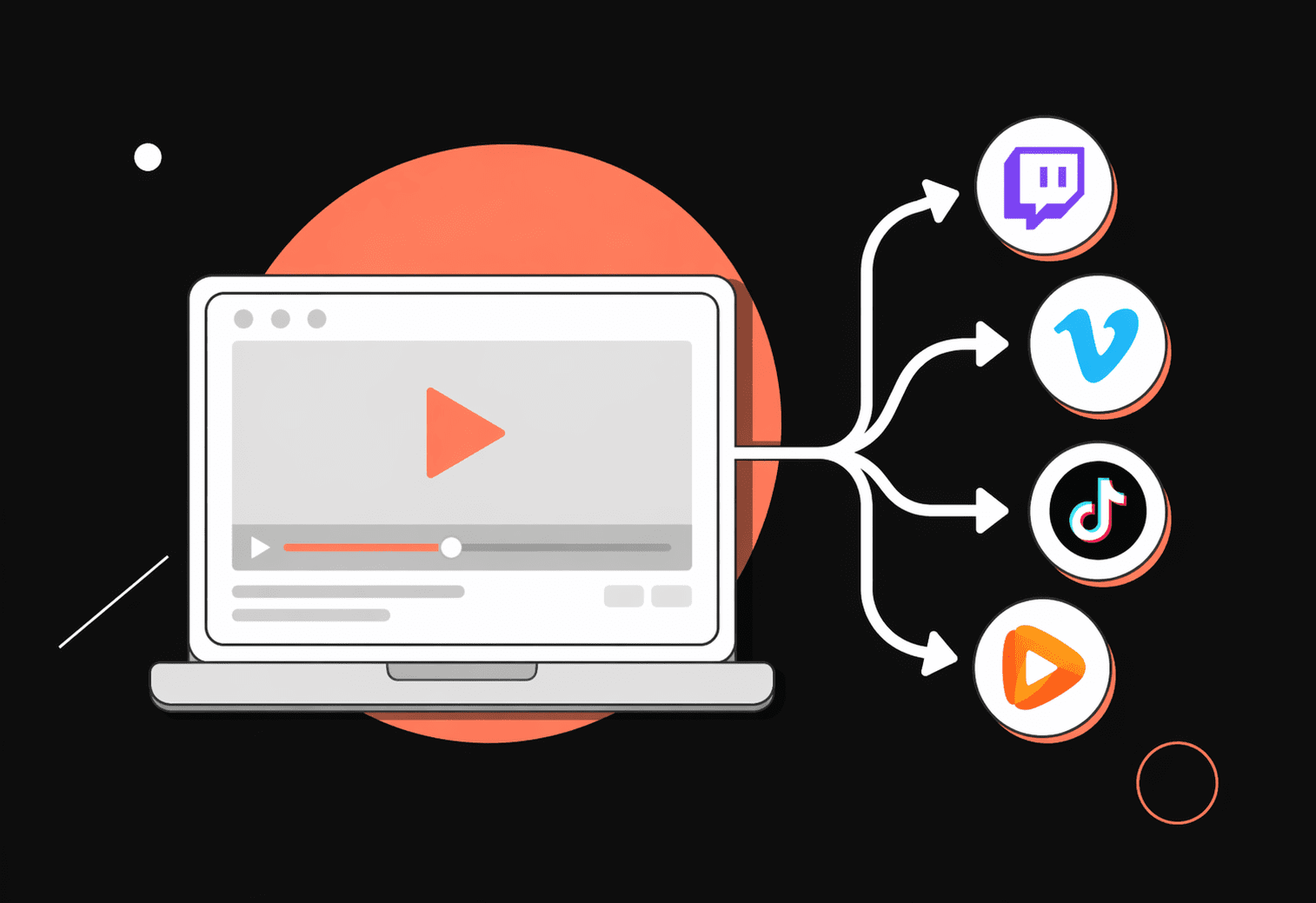
    YouTube occupies a specific and increasingly dominant position in the video platform market: a global video-sharing behemoth with proven monetization capabilities, an algorithmic recommendation engine that keeps 2.7 billion users engaged, and a creator community that uploads 720,000 hours of content daily. The 2026 YouTube platform carries forward this reputation with enhanced AI-powered features, improved creator tools, and expanded YouTube Shorts to compete with TikTok. However, YouTube’s aggressive advertising, content restrictions, privacy concerns, and creator revenue splits have created a growing group of users and creators evaluating what else the market offers.

    After six weeks of testing across content creation, viewer experience, monetization options, and community features, the best YouTube alternatives in 2026 are Vimeo for creators who prioritize video quality and professional presentation with better privacy controls; Twitch for creators focused on live streaming and real-time audience interaction; and Rumble for creators who want less content restriction with competitive monetization options.

    There is no perfect YouTube alternative – its combination of massive audience reach, established monetization, and search integration is genuinely unique in the current market. But depending on what you actually use video platforms for, several of the services on this list do specific things better with different priorities.

    Here is every platform I evaluated, with real pros, cons, and a no-bias verdict on who each one is actually for.

    Who Should Pick What

    Best YouTube alternative for professional creators: Vimeo (Pro or Business)

    Best for live streaming: Twitch

    Best for free speech priority: Rumble or Odysee

    Best for educational content: Skillshare or Udemy

    Best for short-form video: TikTok or Instagram Reels

    Best for privacy-conscious users: PeerTube or Odysee

    Best for monetization potential: Patreon (with any platform) or Twitch

    Best for music and audio content: SoundCloud or Spotify for Podcasters

    Best for adult content creators: OnlyFans or Fansly

    Best for gaming content: Twitch or Kick

    Best for decentralized video: PeerTube or LBRY/Odysee

    Best for businesses: Vimeo Business or Wistia

    How I Evaluated These Platforms

    I have created and consumed video content across multiple platforms for 8 years, including monetized YouTube channels, Twitch streaming, and professional video hosting. This six-week evaluation covered four primary use cases: content creator experience, viewer usability, monetization options, and community engagement tools.

    I evaluated each platform on eight criteria: upload limits and video quality, discovery and recommendation algorithms, monetization options for creators, content moderation policies, privacy and data handling, community features, mobile app quality, and API/embedding capabilities. Where possible, I uploaded identical content to compare performance and viewer engagement.

    No platform paid for placement or coverage in this evaluation. Pricing reflects current tiers as of March 2026; features and policies change frequently in this space.

    1. Vimeo – Best for Professional Video Quality

    Vimeo – At a Glance Best for: Professional creators, businesses, and filmmakers who prioritize video quality over mass reach

    Pricing: Free (limited). Plus: $12/month. Pro: $35/month. Business: $95/month.

    What it is: Vimeo is a professional video platform that has positioned itself as the quality-focused alternative to YouTube since 2004. It offers superior compression, no pre-roll ads on videos, detailed analytics, and professional presentation tools that appeal to filmmakers, businesses, and creators who prioritize how their content looks over maximum views.

    Why it is a great YouTube alternative: Vimeo’s compression algorithm maintains higher quality at the same bitrate, no ads interrupt the viewer experience, and the platform culture emphasizes artistic and professional content over viral videos. Privacy controls are granular – you can password-protect videos, restrict embedding domains, and control exactly who sees your content.

    YouTube vs Vimeo in one line: YouTube wins on audience reach and discovery; Vimeo wins on video quality, professional features, and viewer experience without ads.

    Key Features

    Superior video quality – 4K, 8K, HDR support with better compression than YouTube. Your videos look noticeably better at the same file size.

    No viewer ads – Zero pre-roll, mid-roll, or overlay ads on any tier. Viewers watch your content uninterrupted.

    Advanced privacy controls – Password protection, domain-level embed restrictions, and private link sharing with expiration dates.

    Professional player customization – Remove Vimeo branding, customize colors, add your logo, and create a white-label experience.

    Pros

    • Best-in-class video compression and playback quality
    • No ads create a premium viewer experience
    • Robust API and embedding options for websites and apps
    • Strong creative community that values quality over quantity

    Cons

    • Tiny audience compared to YouTube – discovery is essentially non-existent
    • Storage limits even on paid plans (Pro is 20GB/week)
    • No real monetization through the platform itself
    • Monthly costs for the features YouTube provides free

    Pricing: Free: 500MB/week. Plus ($12/mo): 5GB/week. Pro ($35/mo): 20GB/week. Business ($95/mo): 1TB total.

    Best for: Filmmakers, professional creators, businesses embedding video, anyone prioritizing quality over reach

    Skip if: You need large audience discovery, direct platform monetization, or unlimited uploads.

    My take: Vimeo is YouTube for adults with money. If you’re showcasing professional work, running a business, or prioritizing viewer experience over view count, it’s the clear choice. For audience building, it’s not competitive.

    2. Twitch – Best for Live Content and Community

    Best for: Live streamers, gamers, and creators who want real-time audience interaction

    Pricing: Free to use. Revenue split: 50/50 for most, 70/30 for top partners.

    What it is: Twitch is Amazon’s live streaming platform that has expanded beyond gaming to include “Just Chatting,” music, art, and virtually any live content category. With integrated chat, donations, subscriptions, and the most engaged live audiences online, it’s the dominant force in live streaming.

    Why it is a great YouTube alternative: For creators who thrive on real-time interaction, Twitch’s live-first approach creates deeper audience connections than YouTube’s comment system. Monetization starts earlier – viewers can subscribe or donate from day one. The community culture encourages support through subscriptions, bits (virtual currency), and direct donations.

    YouTube vs Twitch in one line: YouTube wins on VOD discoverability and total reach; Twitch wins on live engagement, community features, and early monetization.

    Key Features

    Integrated live chat – Real-time interaction with moderation tools, emotes, and community culture built around engagement.

    Multiple monetization streams – Subscriptions ($4.99+/month), bits (cheering), direct donations, and sponsorships all from one platform.

    Raids and hosts – Send your audience to other streamers, building community connections impossible on YouTube.

    Category-based discovery – Browse by game, activity, or interest rather than relying solely on algorithm recommendations.

    Pros

    • Best live streaming infrastructure and features in the industry
    • Monetization possible from day one through donations/bits
    • Deeply engaged communities around streamers
    • Strong moderation tools for managing live chat

    Cons

    • Terrible for VOD/recorded content discovery
    • 50/50 revenue split worse than YouTube’s 55/45
    • Extremely competitive – standing out requires consistent live schedules
    • The copyright detection system (DMCA) is aggressive and problematic

    Monetization: Affiliates (50/50 split), Partners (usually 50/50, top creators 70/30), Bits, Direct donations

    Best for: Gamers, live performers, anyone who thrives on real-time audience interaction

    Skip if: You primarily create edited videos, can’t maintain a streaming schedule, or need strong VOD discovery

    My take: Twitch is unmatched for building a community through live content. The platform mechanics encourage viewer loyalty and financial support in ways YouTube can’t match. But it’s a grind requiring consistent live presence.

    3. Rumble – Best for Less Restricted Content

    Best for: Creators who want minimal content moderation and alternative monetization

    Pricing: Free. Rumble Premium (viewer): $9.99/month for ad-free viewing.

    What it is: Rumble positions itself as the “free speech” alternative to YouTube, with minimal content restrictions beyond legal requirements. It has gained significant traction since 2020, particularly among political commentators and creators who faced YouTube restrictions or demonetization.

    Why it is a great YouTube alternative: Rumble offers genuine monetization through advertising and licensing, minimal content restrictions, and a growing audience seeking alternatives to mainstream platforms. The platform pays creators for content licensed to its partners and offers competitive ad rates for eligible channels.

    YouTube vs Rumble in one line: YouTube wins on total audience size and features; Rumble wins on content freedom and competitive monetization rates for established creators.

    Key Features

    Minimal content restrictions – Content policies focus on legality rather than advertiser preferences or political positions.

    Multiple monetization methods – Ad revenue, content licensing, tips, and Rumble Premium revenue sharing.

    Video licensing program – Rumble licenses creator content to partners like Yahoo, generating additional revenue.

    Creator-friendly policies – No demonetization for political views, controversial topics, or advertiser-unfriendly content.

    Pros

    • True alternative monetization through licensing deals
    • Growing audience seeking YouTube alternatives
    • No shadow banning or algorithmic suppression
    • Higher per-view earnings for many creators than on YouTube

    Cons

    • Much smaller total audience than YouTube
    • A platform associated with political content may limit mainstream appeal
    • Fewer features and less polished than established platforms
    • The discovery algorithm is less sophisticated than YouTube

    Monetization: 60% ad revenue share, licensing deals, viewer tips, Premium revenue share

    Best for: Political commentators, creators facing YouTube restrictions, free speech advocates

    Skip if: You need maximum mainstream reach or prefer heavily moderated platforms

    My take: Rumble is what it claims: a genuine alternative for creators that YouTube doesn’t want. The monetization is real, the audience is growing, but the platform’s political associations may limit broader appeal.

    4. TikTok – Best for Short-Form Viral Content

    Best for: Short-form creators who can adapt to vertical video and trend-based content

    Pricing: Free. Creator Fund pays $0.02-0.04 per 1,000 views (highly variable).

    What it is: TikTok is the dominant short-form video platform, with an algorithm that can make unknown creators viral overnight. While not a direct YouTube replacement, it’s where audience attention has shifted, particularly for users under 25.

    Why it is a great YouTube alternative: TikTok’s algorithm is unmatched at serving content to interested audiences without requiring subscribers. Creators can build massive followings faster than any other platform. The integrated editing tools, effects, and music library lower the barrier to content creation.

    YouTube vs TikTok in one line: YouTube wins on long-form content and direct monetization; TikTok wins on viral potential and audience growth speed.

    Pros

    • Fastest audience growth potential of any platform
    • Algorithm excels at finding your target audience
    • Built-in editing tools and effects streamline creation
    • Massive engaged user base, especially Gen Z

    Cons

    • Terrible direct monetization – Creator Fund pays pennies
    • No long-form content option limits content types
    • The copyright system is restrictive and arbitrary
    • Uncertain future due to potential bans/regulations

    Monetization: Creator Fund (minimal), Brand partnerships, Live gifts, TikTok Shop affiliates

    Best for: Short-form creators, trend-based content, building an audience for other platforms

    Skip if: You create educational or long-form content, need direct monetization, or want platform stability

    My take: TikTok is unmatched for audience building but terrible for direct monetization. Smart creators use it as a funnel to monetize platforms.

    5. LBRY/Odysee – Best Decentralized Alternative

    Best for: Tech-savvy creators who value decentralization and cryptocurrency integration

    Pricing: Free. Creators earn LBC cryptocurrency for views.

    What it is: LBRY is a decentralized protocol for content sharing, with Odysee as its main front-end. Content is hosted on a blockchain-based network, making censorship technically impossible and giving creators true ownership of their content and audience.

    Why it is a great YouTube alternative: True content ownership, no platform censorship, and cryptocurrency monetization appeal to creators concerned about platform control. The decentralized nature means content can’t be deleted by corporate policy changes.

    YouTube vs LBRY/Odysee in one line: YouTube wins on usability and audience size; LBRY wins on creator control and censorship resistance.

    Pros

    • Truly decentralized – content cannot be censored or removed
    • Cryptocurrency monetization with no middleman
    • Import YouTube channels easily
    • Growing community of tech-savvy users

    Cons

    • Much smaller audience than centralized platforms
    • Cryptocurrency complexity deters mainstream users
    • Video quality and streaming reliability vary
    • Interface less polished than mainstream alternatives

    Monetization: LBC cryptocurrency tips and rewards, direct creator support

    Best for: Crypto enthusiasts, creators concerned about censorship, tech-savvy audiences

    Skip if: You need mainstream audience reach or aren’t comfortable with cryptocurrency

    My take: LBRY/Odysee represents the future many creators want – true ownership and decentralization. But the present reality is a small audience and technical barriers.

    6-10. Quick Platform Comparisons

    6. PeerTube – Best for Self-Hosted Video

    PeerTube is the federated alternative where anyone can host their own instance. Using ActivityPub (same protocol as Mastodon), videos can be shared across instances while maintaining control. It’s perfect for organizations or creators who want complete control over their platform. The downside is minimal built-in discovery and the technical requirements of self-hosting. Best for technical creators or organizations that prioritize ownership over convenience.

    7. Dailymotion – Best International YouTube Alternative

    Dailymotion remains YouTube’s largest traditional competitor globally, particularly strong in Europe. It offers similar features with a 60/40 revenue split favoring creators. The platform is stable and well-funded, but has failed to differentiate meaningfully from YouTube. Its main advantage is less competition for viewer attention. Best for international creators, particularly in French-speaking markets.

    8. Instagram Reels/IGTV – Best for Existing Instagram Audiences

    For creators with established Instagram followings, Reels and IGTV offer video options without platform switching. The integration with Instagram’s ecosystem is seamless, and the Reels Play bonus program pays creators directly. However, discovery outside your follower base is limited, and monetization options lag behind dedicated video platforms. Best for influencers leveraging existing Instagram audiences.

    9. Patreon – Best for Direct Creator Support

    While not a video platform itself, Patreon revolutionized creator monetization through direct monthly support. Creators maintain 88-95% of earnings and can offer exclusive content, early access, and community features. Most successful creators use Patreon alongside other platforms rather than as a replacement. Best for creators with dedicated audiences willing to pay for exclusive content.

    10. Nebula – Best for Educational Creators

    Nebula is a creator-owned platform featuring educational content from established YouTube educators. The subscription model ($5/month) splits revenue among creators based on watch time. With no ads and creator ownership, it offers what many see as an ideal model. However, it’s invite-only and limited to educational content. Best for educational creators already established elsewhere.

    Why People Look Beyond YouTube

    Algorithm frustration: YouTube’s recommendation algorithm, while powerful, often feels arbitrary to creators. Videos can be suppressed for unclear reasons, and building an audience requires playing the algorithm game rather than focusing on content quality.

    Monetization restrictions: YouTube’s advertiser-friendly guidelines, demonetization policies, and relatively low ad rates push creators to seek alternatives. Many topics that audiences want are deemed “not suitable for advertisers.”

    Privacy concerns: Google’s data collection and targeted advertising make privacy-conscious users and creators uncomfortable. The integration with Google’s ecosystem means extensive tracking across platforms.

    Content restrictions: YouTube’s community guidelines, while necessary at scale, often feel restrictive to creators. Automated content ID and strikes can destroy channels without meaningful appeal processes.

    Platform instability: Creators have learned that platform rule changes can eliminate income overnight. The search for alternatives is often about diversification rather than replacement.

    How to Choose the Right YouTube Alternative

    1. What type of content do you create?

    Long-form educational: Nebula or Vimeo 

    Live streaming: Twitch or Kick 

    Short-form: TikTok or Instagram Reels 

    Professional/Business: Vimeo or Wistia 

    Controversial/Political: Rumble or Odysee

    2. What matters most to you?

    Audience reach: Stick with YouTube while building on alternatives. 

    Monetization: Twitch + Patreon combination 

    Content freedom: Rumble or Odysee 

    Video quality: Vimeo 

    Privacy: PeerTube or Odysee.

    3. How technical are you?

    Very technical: PeerTube or LBRY 

    Somewhat technical: Odysee or Vimeo 

    Not technical: Rumble, Twitch, or TikTok

    4. What’s your monetization goal?

    Direct platform ads: YouTube is still the best, Rumble is secondary. 

    Fan funding: Twitch or Patreon 

    Brand deals: TikTok or Instagram

    Selling courses/content: Vimeo or self-hosted

    5. How important is mobile?

    Critical: TikTok, YouTube, Instagram. 

    Important: Twitch, Rumble. 

    Less important: PeerTube, Vimeo

    FAQ

    Can I make money on YouTube alternatives?

    Yes, but different from YouTube. Twitch offers multiple revenue streams but requires live content. Patreon provides a stable monthly income but requires dedicated fans. Rumble offers competitive ad rates but smaller audiences. Most successful creators use multiple platforms.

    Should I leave YouTube entirely?

    Rarely. YouTube’s audience reach remains unmatched. Smart creators use YouTube for discovery while building audiences on alternatives for diversification. Only leave entirely if YouTube actively prevents your content type.

    Which alternative is growing fastest?

    Rumble and TikTok show the highest growth rates, though from different bases. Rumble grows among users seeking YouTube alternatives, while TikTok dominates younger demographics. Twitch continues steady growth in live streaming.

    What about bandwidth costs?

    Most platforms handle hosting, but costs vary. PeerTube requires self-hosting considerations. Vimeo has strict bandwidth limits on lower tiers. Platforms like Rumble and Odysee handle infrastructure costs through their business models.

    Final Verdict

    YouTube remains the dominant video platform for good reasons – massive audience, established monetization, and unmatched discovery through search integration. No single alternative replicates this combination. However, the best strategy for most creators in 2026 is platform diversification rather than replacement.

    For live content, Twitch offers superior features and community engagement. For professional presentation, Vimeo provides quality and control that YouTube can’t match. For content freedom, Rumble and Odysee offer genuine alternatives with growing audiences. For audience building, TikTok’s algorithm remains unmatched despite poor direct monetization.

    The ideal approach depends on your content type, audience, and goals. Gaming streamers should prioritize Twitch while maintaining YouTube VODs. Educational creators might combine YouTube for discovery with Nebula or Patreon for monetization. Political commentators increasingly use Rumble alongside YouTube for redundancy.

    The era of single-platform dependency is ending. Successful creators in 2026 build audiences across multiple platforms, own their audience relationships through email lists and direct support platforms, and adapt content for each platform’s strengths rather than seeking a perfect YouTube replacement that doesn’t exist.

    Have you successfully built an audience on YouTube alternatives? What platform combinations work for your content? Share your experience in the comments.


  • How to Improve Domain Authority: Core Tips Reviewed

    How to Improve Domain Authority: Core Tips Reviewed

    Have you ever received outreach emails saying “get backlinks from websites with high DA” or “DA 30+”? Or noticed that your potential link partners lose interest because your site’s authority seems too low?

    This often leads to a common question: how to improve Domain Authority to unlock better link building opportunities and strengthen your site’s overall SEO performance?

    If you are new to SEO and link building, this guide will help you understand what Domain Authority is, why it matters in link building, and the most effective steps to improve it.

    What is Domain Authority?

    Domain Authority is a metric (or a relative score) developed by Moz to evaluate a website’s potential and competitiveness on SERPs. Although it is widely used by digital marketers and business owners, it is not an official Google ranking metric.

    Domain Authority score can change over time, and various factors affect these changes, such as:

    • Changes in your backlink profile (losing or getting backlinks)
    • Changes in your competitors’ backlink profile
    • Search engine algorithm changes

    Since DA was developed by Moz, it is calculated using data from its Link Explorer index, taking multiple factors into account.

    • To check your Domain Authority, go to Link Explorer and type your domain URL
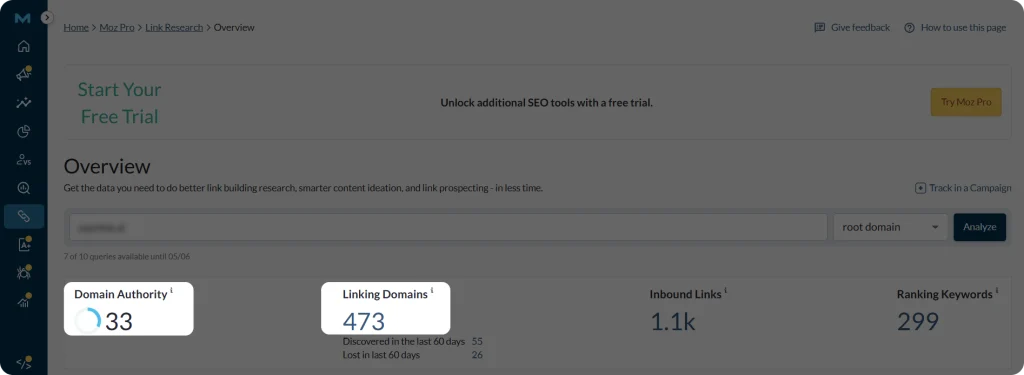
    • You’ll see a general overview of your website metrics with DA and Linking Domain numbers (number of unique external sources that link to you), too. Screenshot of Moz Overview section
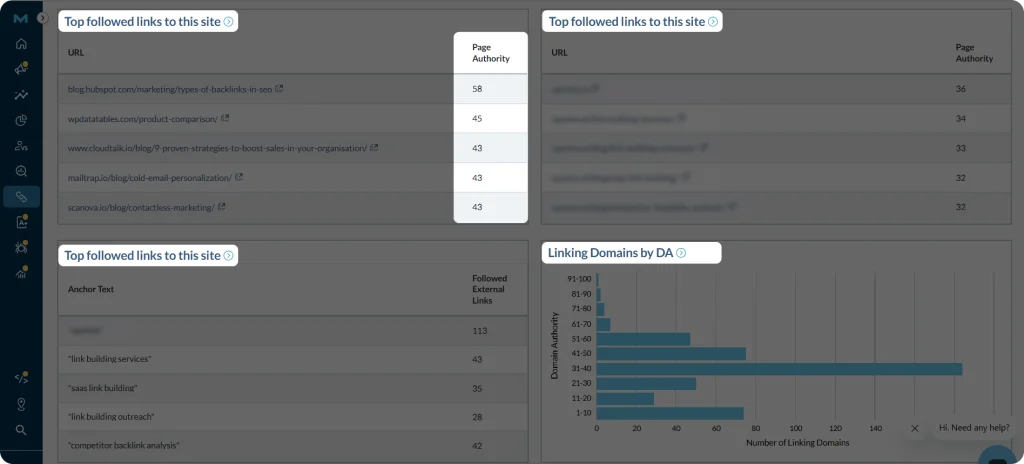
    • Later as you scroll down, you can see 4 sections showing the pages that link to you (“top followed links to this site”), your pages, that are linked to (“top pages on this site”), your anchor texts (“top anchor texts for this site”), as well as a chart sorting linking domains by their DA.Screenshot of Moz Overview section

    You might have also heard of Domain Ranking, which is also a website authority metric, but created by Ahrefs. 

    • Domain Authority: Created by Moz. The scale is from 0 to 100. The goal is to predict how likely a website is to rank on SERPs 
    • Domain Ranking: Created by Ahrefs. The scale is from 0 to 100. The goal is to evaluate the strength of a website’s backlink profile

    So, in short, Domain Authority is a relative metric that compares your site’s ability to rank on search results against competitors, making it most useful for understanding your ranking potential within your industry.

    Why Do You Need to Improve Domain Authority?

    If Domain Authority is a relative metric and not used by Google, a natural question arises: why should you care about improving it?

    While it is not an official ranking factor, DA score is still widely used by SEO professionals and businesses as a practical benchmark.

    • To earn backlinks from higher-quality websites: Many SEO and link building specialists use DA scores as a quick filter when deciding whom to collaborate with and how to further coordinate their manual link building efforts.
    • To understand your competitiveness: Since it is a comparative score, it helps you see how your website compares to others in your industry.
    • To shape your SEO strategy: By knowing where you stand and collecting your backlink data, you can set realistic goals and focus on actions that improve your overall search performance.

    For these reasons, the DA score is still used to understand how strong a website is, especially when building links and comparing it with competitors.

    So, How to Improve Domain Authority? 

    Now that you have a general understanding of Domain Authority, how and why it is used in SEO, let’s discuss some important steps to improve your DA.

    Get Links from Authoritative Websites 

    Since Domain Authority is calculated based on backlink data, it means that the primary way to improve your DA is to acquire backlinks from authoritative websites. 

    Backlinks are important for any website’s online presence. Earning natural backlinks is one of the most important SEO strategies for improving visibility and authority.

    Don’t try to buy backlinks or use other black-hat practices, as those will harm your rankings. Instead, try to identify relevant and authoritative websites and reach out for a backlink exchange.

    One good option is researching which websites link to your competitors and not to you. 

    Here, Moz can help you.

    • Log in to your Moz account (for deeper insights, you need to have a Moz Pro subscription)
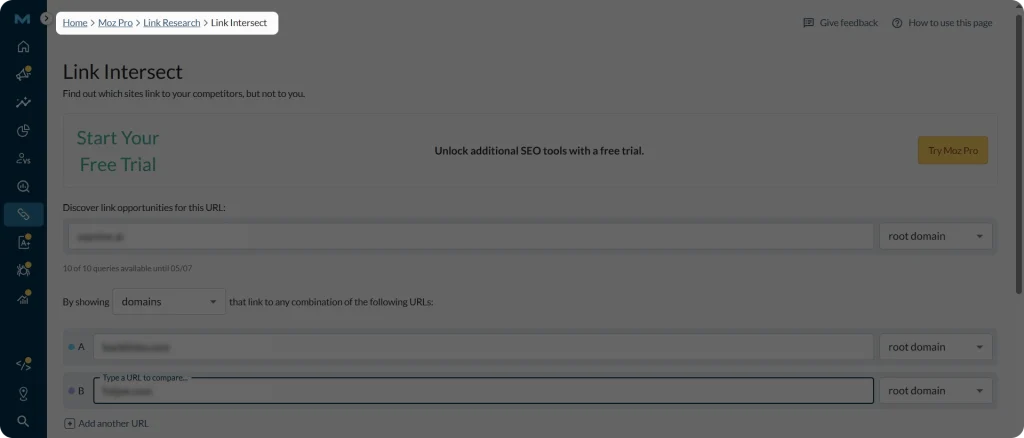
    • Go to the “Link Intersect” section.
    • Enter your URL and then your competitors’ URLs and hit “Find opportunities”. Screenshot of Moz Link intersect section

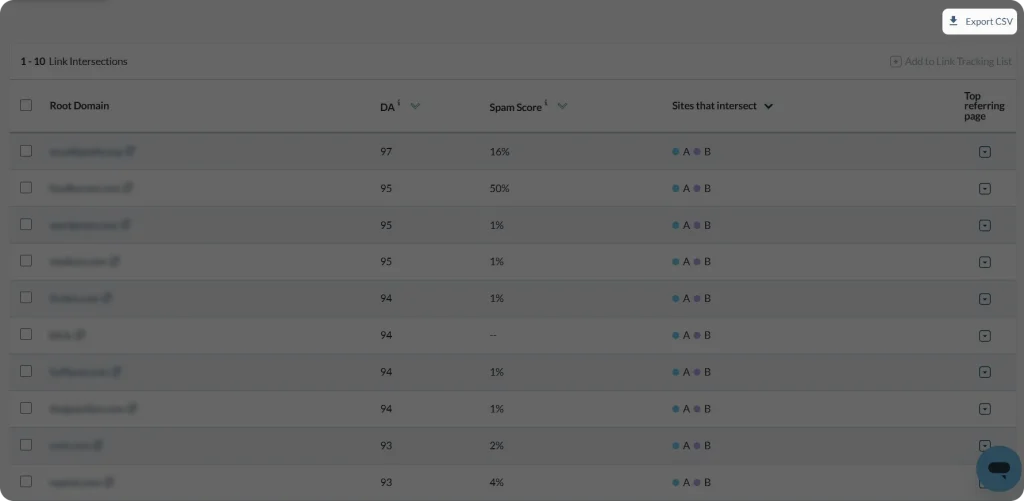
    There you go, a list of all the potential link building sources is presented.

    Screenshot of Moz Link intersect section

    You can then download this list in a CSV format for your further analysis and filtering. Pay special attention to DA scores by sorting the ones that are higher.

    After filtering all the relevant websites, find contacts and reach out for backlink opportunities.

    Create Content Worth Linking to

    Another reliable way to get backlinks is to create compelling content that will add value to the target website, your target audience, and search engines in general.

    Don’t just generate robotic content that is stuffed with keywords. Instead, invest some time in keyword and topic research to create content that is built around people’s search queries. Make sure your keywords are relevant and fit the context without overloading your article.

    Here are some tips along the way:

    • Use a simple Google search to see what people are searching for. On Google, type your seed keywords (like “digital marketing”, “SEO strategy”, “SEO content writing”) and the most popular related search queries will show up. For long-tail results, scroll down to the “People also search for” section.
    • This will help you understand the type of content your audience prefers, whether it is informational blog posts, in-depth guides, or case studies.
    • For deeper insights, use SEO keyword research tools like Ahrefs, Semrush, or Moz. All these listed tools have free keyword research tools to uncover general keyword insight. However, if you want to go deeper, different pricing plans are available, depending on your business needs.

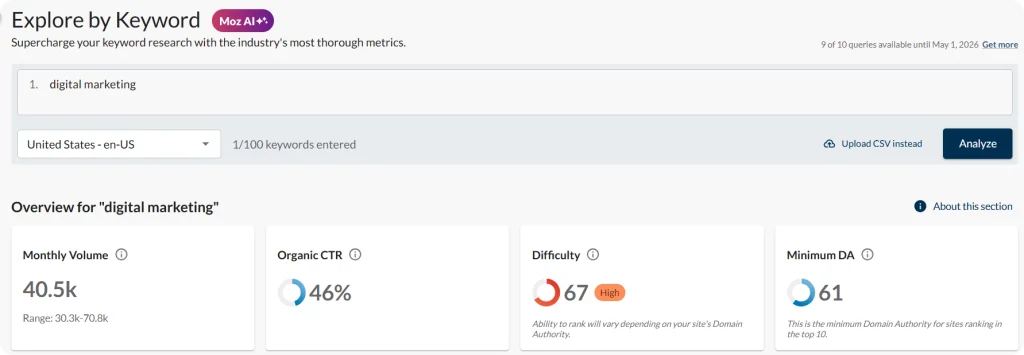
             Let’s take a look at Moz Keyword Explorer, as an example. After searching for your seed keywords, you get an overview of your           keywords’ search volume, difficulty, or primary search intent.

    Screenshot of Moz Keyword Explorer section

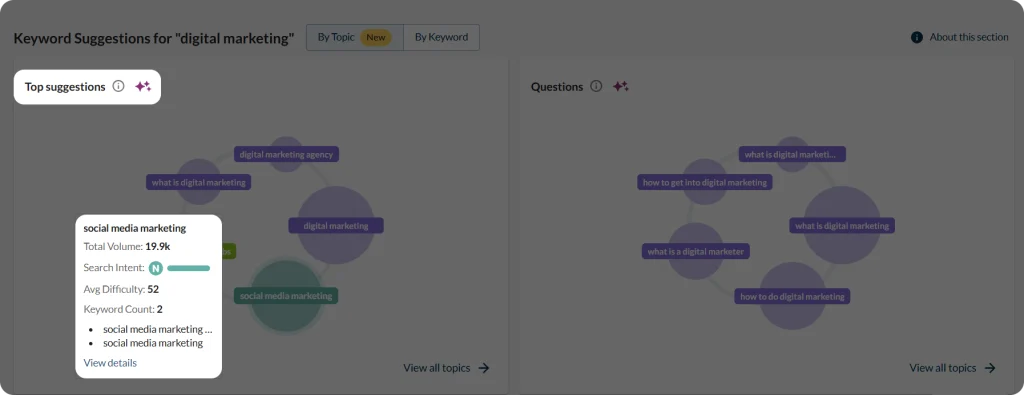
    • As you scroll down, you can uncover more keyword suggestions and questions related to your general keyword, again, with respective metrics showing too.Screenshot of Moz Keyword Explorer section and top keyword suggestions

    When creating your content, also pay attention to your article structure, making sure it’s clear and readable.

    In short, your content should be valuable, relevant, and genuinely worth linking to, making it a strong foundation for successful organic link building efforts.

    Don’t Forget About On-Page SEO 

    While you may be putting a lot of effort into finding and reaching out to websites for backlinks, it is just as important to make sure your own website is worth linking to and visiting. This means having solid on-page SEO in place to deliver a smooth and reliable user experience.

    If your site is slow, hard to navigate, or poorly structured, even high-quality backlink opportunities may not convert:

    • Choose the right primary and secondary keywords, and use them naturally throughout your content, especially in titles and headings
    • Add internal links to help users navigate easily across your website
    • Use schema markup to help search engines like Google better understand your content
    • Ensure your website loads quickly, is mobile-friendly, and has no broken pages

    Ensuring smooth navigation, fast load times, and proper keyword usage improves the user experience, strengthens your website’s credibility in the eyes of users and search engines, and can therefore contribute to higher Domain Authority.

    To Sum Up

    You can think of Domain Authority as a score from 0 to 100 that shows how strong a website is compared to others in terms of SERP ranking potential.

    While it is not a direct measure of ranking success, it can still help you get a quick idea of your backlink profile and guide your link building efforts, especially when learning how to improve Domain Authority.

    By focusing on getting high-quality, relevant backlinks and creating useful content, you can slowly improve your website’s authority and support better long-term SEO results.

  • SEO Writing: How to Make Your Content Shine Online

    SEO Writing: How to Make Your Content Shine Online

    Let’s picture this: you spent hours researching your topic and writing a top-notch article. You feel relaxed after finally publishing it. But time passes, and your article is not doing so great on SERPs.

    So you start questioning whether your piece was good enough. The thing is that the problem may not be in the content itself, but the SEO strategies that you might have missed while writing your article.

    To do well on SERPs, you need to master the SEO writing tips and tricks.

    And this article provides just that, so read along to find out more.

    What is SEO Writing?

    SEO writing is the process of writing and optimizing your content so that it ranks well on search engines and attracts traffic. It also helps your content get featured on AI search engines, too. Various optimization rules are used to achieve this goal.

    This is what makes it different from general content writing. 

    • SEO writing: Here, your content is strategically structured around keywords and search intent. It follows a clear optimization structure. The core goal is to improve visibility on search engines while maintaining readability and value for the reader. 
    • Content writing: The focus is primarily on informing, educating, or engaging the audience. It is more flexible in structure and does not require strict keyword targeting. As a bonus, it can still perform well in search results if the content naturally matches the search intent.

    So, remember that your article should not only answer people’s queries but also be structured in an SEO friendly way. 

    SEO Writing: A Go-To Optimization Checklist

    So, if your goal is to increase your brand visibility through your content, let’s turn to the optimization steps below.

    Optimize Your Article Structure

    One of the most important rules in SEO writing is your article structure. It has to be as clear as possible to ensure readability. 

    Here are some common points you need to consider when structuring your article:

    • Keep your meta titles within 50-60 characters, while meta descriptions within 150-160 characters.
    • Ensure a hook in your meta tags, so that your readers are interested enough to click and open your article.
    • URL slug: Optimize your article URL, too, by making it as short and clear as possible. For example: /seo-writing, /content-writing-tip.
    • Bullet points and numberings: Where relevant, break your idea into bullet points and numberings as these are easier to read visually than long paragraphs, which readers usually tend to skip.
    • Clear paragraphs and sections: Break your articles into paragraphs. Try to present one idea per paragraph without stuffing them. Be short and precise. 

    By ensuring your article is structured, not only people, but also search engines will be able to smoothly scan through your article and grasp which topic is mentioned in which section.

    Identify the Search Intent

    Search intent is the reason behind your users’ searches. Why did they search for that specific term, and what information did they want to get? And to rank higher, your content should match their intent.

    There are 4 main types of search intent:

    • Informational: These types of content (blog posts, articles, guides) help readers to learn something and get new information.
    • Navigational: This is when users want to land on a specific page or website.
    • Commercial: Here, users want to find options, compare them, before actually making a purchase.
    • Transactional: And as a last stage, users are ready to take action, such as buying or subscribing.

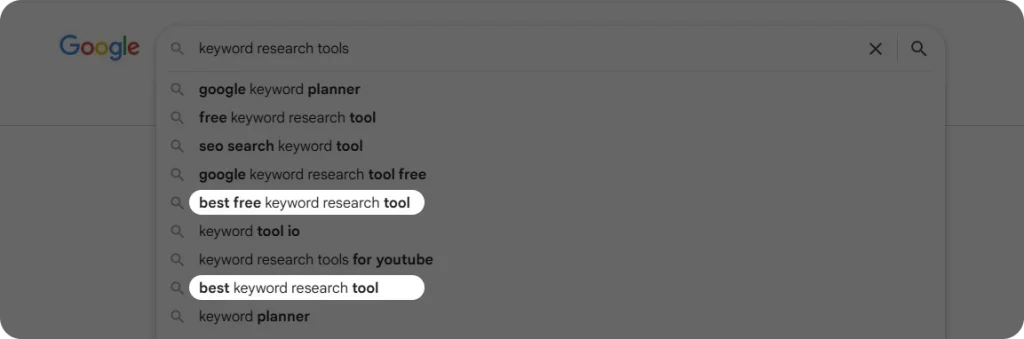
    To identify the search intent, you can simply have a closer look at the Google search results and “People also ask” section, because each of the intents has a structure and its specific keywords, which is especially important for local SEO. For example, if the query is “how to” or “what is”, this is an informational intent, while keywords such as “best” or “top” are common for the commercial one.

    Here’s an example of a commercial intent for “keyword research tools”.

    Screenshot of Google search results for commercial intent identification

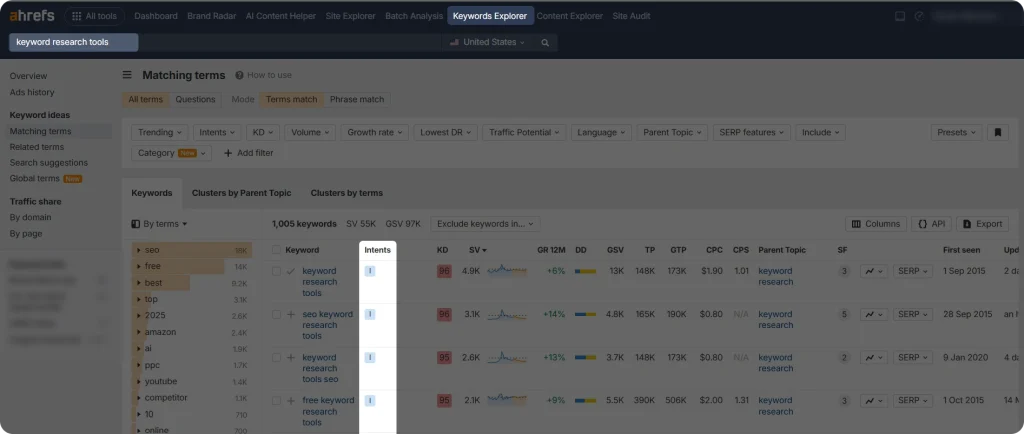
    Many SEO tools, like Ahrefs, also show the search intent for each matching keyword of your target keyword. Here’s an example of Ahrefs. 

    • Just type your general keyword in the Keyword Explorer, 
    • Go to the Matching terms section,
    • See the letters “I”, “N”, “C”, “T” for each matching keyword.Screenshot of Ahrefs Keyword Explorer for search intent identification

    By understanding the search intent, you will be able to structure your content accordingly, target the right keywords, and ensure appearing in the SERPs at the right time.

    Place Keywords Naturally

    In SEO writing, your content is built around your primary and secondary keywords. To achieve this, you need to do keyword research and identify keywords that have high chances of ranking on SERPs (pay attention to KD and search volume). Tools like Ahrefs, Semrush, or Moz can help you with this research.

    However, this doesn’t mean that adding as many of your target keywords as possible will benefit your rankings. In fact, keyword stuffing will make it even worse and lead to low rankings or not showing on SERPs at all. 

    Nothing new, just Google spam policies.

    Now, if you are asking yourself what the rule of avoiding keyword stuffing is, here are some suggestions:

    • Use keywords once every 200 words in your article. 
    • If they don’t fit in the paragraph or context, just don’t place them. Use synonyms or related terms instead.
    • Make sure your primary keywords are present in your meta tags, Heading 1 (your title), intro, and conclusion (but only once or twice). Place in the subheadings only if relevant.
    • After completing your article, re-read it to identify the sections with keyword overuse, because you might not notice it while writing.

    To sum up, the general rule for avoiding keyword stuffing is to use your keywords evenly and naturally.

    Use Relevant Visuals

    Another way to optimize your article and improve its readability is by adding relevant and compelling visuals. Visual information is better digested than text-based information, so make sure you include visual elements too.

    For example, if you are writing a tool review guide, you can include step-by-step screenshots so that your readers can follow along. 

    To support your point, you can also include video tutorials or charts.

    In terms of SERP visibility, good visuals can increase your chances of appearing in Google featured snippets or AI Overviews. This can drive additional traffic to your content.

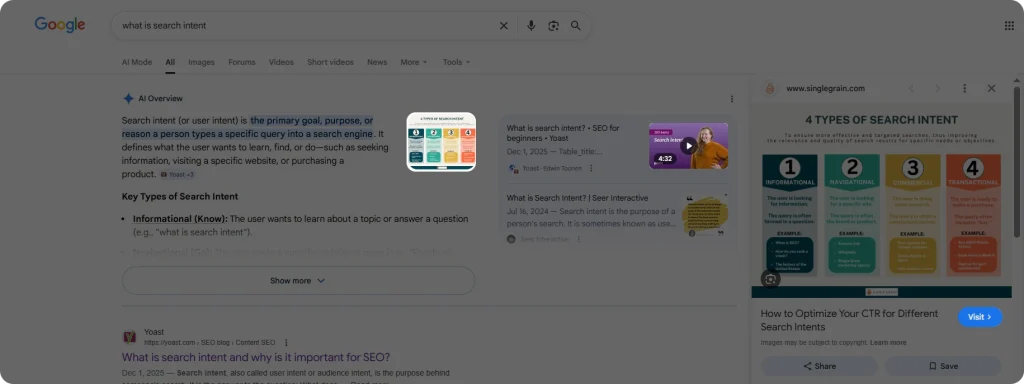
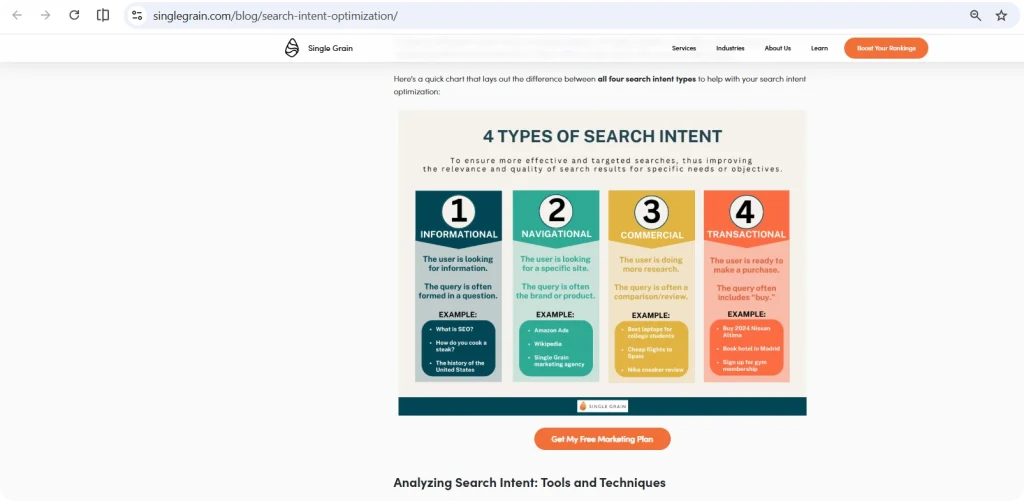
    Here’s an example of a Google query for “what is search intent”. AI Overviews provided several sources on search intent and highlighted an informative chart explaining the differences of 4 intents provided by Single Grain. Later, after clicking on the visual, you are redirected to Single Grain’s relevant article, where you can find the visual.

    AI Overviews results with highlighted visuals

    Screenshot of a Single Grain article containing the image featured on AI Overviews

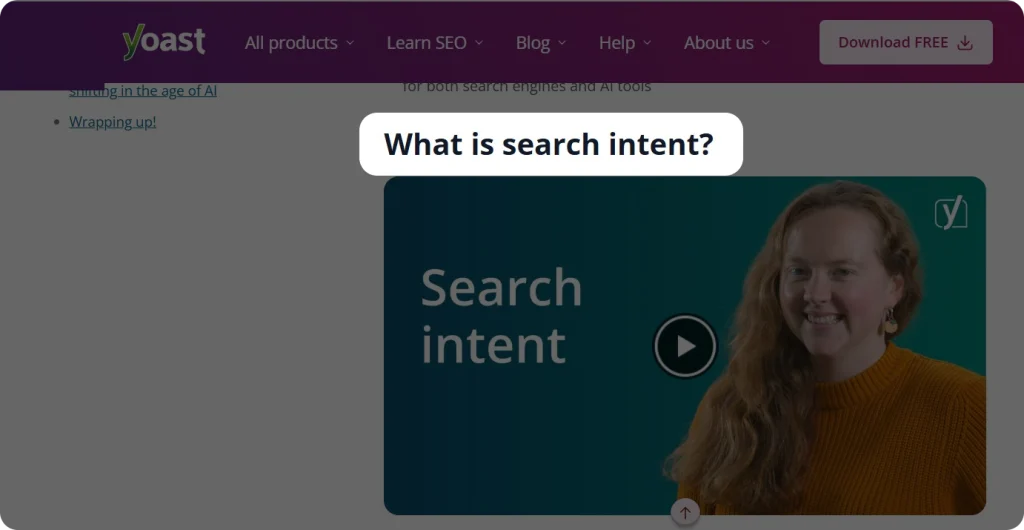
    It also highlighted a video provided by Yoast SEO answering our “what is search intent” query.

    Notice that in Yoast SEO’s article, the video is placed right under the “What is search intent?” heading to signal that the answer is explained in the video. And that’s how search engines considered it as a credible source to cite.

    Screenshot of Yoast SEO article containing the video featured on AI Overviews

    When placing your visuals, don’t forget to optimize alternative text (alt text) to explain to search engines what each image is about. Keep them short, preferably within 100 characters.

    So, adding visual elements to your article can improve engagement, keep readers on the page longer, and may also help improve your visibility in search engines.

    Add Internal and External Links

    Internal and external links play an important role in SEO writing by improving content structure, credibility, and search engine understanding. 

    They also help increase authority across your website and support better rankings in SERPs.

    • Internal links connect different pages within your website, helping users navigate more easily and allowing search engines to better understand your site structure.
    • External links point to relevant and trustworthy sources outside your website, which can increase credibility and provide additional value to readers.

    Therefore, using both internal and external links strategically enhances user experience and strengthens your content’s SEO performance. 

    SEO Writing: The AI Trends

    Today, people use AI search engines (such as ChatGPT, Claude, or Gemini) to find answers to their queries. This tendency sets its rules in SEO writing, where your goal is to be cited by AI platforms, too.

    Have you ever noticed how AI search engines answer your questions and which sources they rely on? By analyzing these patterns, you can refine your article structure to increase your chances of being cited by AI systems.

    Here are some points to consider:

    • As said before, your article should be easy to scan, with clear headings, well-defined sections, and concise paragraphs. Formats such as question-and-answer or term-and-definition can make it easier for AI to extract information.
    • Focus on writing credible and reliable content, as accuracy and trustworthiness are key factors for being cited.
    • Consider using listicles, as structured lists make information easier to process and more likely to be picked up by AI. 
    • Focus on your brand mentions across different sources. This way, your product or service will have higher online visibility and more chances to get featured on AI search engines.

    And after your AI search optimization efforts, use SEO tools to track important AI visibility metrics. For example, Ahrefs’ brand radar does just that by comparing your brand’s and your competitors’ AI visibility across various AI platforms like AI Overviews, AI Mode, ChatGPT, or Gemini.

    So, optimizing your content for search engines and AI search platforms should go hand in hand, as both are important for ensuring your brand’s long-term visibility and success.

    The Bottom Line

    SEO writing requires specific practices to ensure content ranks on search engines and AI platforms. But this doesn’t mean that your content should sound robotic with keywords mentioned in every corner. 

    As search algorithms continue to change, it is more important than ever to create compelling, informative content that adds value to your audience.  

    If you are new to the field, you can also take an SEO writing course to learn the essential techniques and gain hands-on practice. 

    In short, the best results come from balancing optimization techniques with natural, people-first writing.

  • Comprehensive Hiring Tactics: Discover How to Identify Talents Others Overlook

    Comprehensive Hiring Tactics: Discover How to Identify Talents Others Overlook

    Hiring is evolving, and if your approach still hinges on polished resumes and rigid filters, you’re likely missing out on exceptional candidates hiding in plain sight. The truth is, the best hires often don’t look “perfect” on paper—but they shine once given the chance to demonstrate real capability. From career switchers and self-taught professionals to individuals with non-linear backgrounds, today’s talent market demands a deeper, more nuanced hiring strategy.

    Why does this matter? Because the cost of overlooking hidden talent isn’t just a missed opportunity—it’s a financial drain. Traditional hiring methods can unintentionally screen out high-potential candidates, leading to mis-hires, prolonged vacancies, and a less diverse, agile workforce. By adopting comprehensive, modern hiring tactics, organizations not only broaden their talent pool but also improve performance, retention, and innovation.

    In this article, we’ll unpack the most effective hiring strategies you can use right now to uncover talent others overlook—and transform your recruitment outcomes.

    Why Traditional Hiring Methods Miss High-Potential Talent

    Let’s face it: traditional hiring methods are outdated, and they often miss exceptionally capable candidates.

    Over-reliance on resumes and keyword filters continues to eliminate qualified individuals before they ever speak to a hiring manager. Many applicant tracking systems prioritize exact keyword matches, which means candidates who describe their experience differently—or who gained skills outside conventional job titles—are automatically filtered out. The result? Capable professionals never make it past the first stage. Moreover, a marketing strategy for recruitment agencies should also focus on more flexible screening approaches that capture a wider range of candidate profiles. 

    Rigid job descriptions also shrink your candidate pool. When roles demand excessive qualifications or unnecessary years of experience, you unintentionally discourage adaptable, high-potential applicants from applying. This is particularly common in industries like tech, healthcare, and even insurance recruiting, where employers sometimes prioritize industry tenure over transferable skill sets. While experience is valuable, it should not overshadow capability and learning agility.

    Unconscious bias compounds the issue. Recruiters may favor familiar schools, previous employers, or backgrounds that “feel” right. Hiring for “culture fit” can further narrow diversity and prevent fresh perspectives from entering your organization. Instead, hiring for “culture add” fosters innovation by welcoming different viewpoints and experiences. This is especially important when you hire a digital marketing manager, as diverse perspectives can drive more creative and effective campaigns.

    The cost of these missteps is substantial. A bad hire can cost up to 30% of the employee’s first-year salary—or significantly more when productivity loss and rehiring expenses are factored in. Missing hidden talent isn’t just a recruitment issue; it’s a business performance issue.

    Redefining What “Top Talent” Really Means

    It’s time to rethink what qualifies as “top talent.” For years, credentials dominated hiring decisions. Today, capability, adaptability, and growth potential carry far more weight.

    Shifting from credentials to capabilities allows hiring teams to evaluate what candidates can actually do instead of where they studied or which company appears on their resume. Skills-based hiring focuses on competencies, measurable outputs, and practical knowledge. It opens the door to talented individuals who may not have followed a traditional career path.

    Transferable skills play a massive role here. Communication, leadership, adaptability, problem-solving, and emotional intelligence apply across industries and roles. A teacher transitioning into corporate training or a sales professional moving into customer success brings valuable experience—even if their resume doesn’t match the job title word-for-word.

    Growth mindset is another powerful indicator. In rapidly evolving industries, the ability to learn and adapt often matters more than static experience. Someone with five years of repetitive experience may not outperform a motivated professional with two years of diverse, high-impact projects.

    When you redefine top talent as someone capable of growth, not just someone with experience, your hiring funnel expands dramatically—and your long-term outcomes improve.

    Comprehensive Hiring Tactics That Uncover Hidden Talent

    Modern hiring requires modern tactics. Below are strategies that help uncover talent beyond the resume.

    Implement Skills-Based Assessments

    Instead of relying solely on resumes, use practical evaluations. Job simulations, case studies, writing samples, coding exercises, or scenario-based problem-solving tasks provide tangible evidence of a candidate’s capability.

    Structured evaluation rubrics ensure fairness. When every candidate is assessed against the same criteria, subjectivity decreases and performance becomes measurable. This approach not only improves quality-of-hire but also enhances diversity by focusing on output rather than pedigree.

    Skills-based assessments also reveal hidden strengths. A candidate who may not interview perfectly could excel when given a practical task. These assessments allow ability to speak louder than credentials.

    Leverage Structured Interviews

    Structured interviews use standardized questions and consistent scoring systems. Every candidate answers the same core questions, reducing bias and improving comparison accuracy.

    Behavioral and situational questions reveal how candidates think and respond to challenges. Asking, “Tell me about a time you solved a complex problem under pressure,” uncovers real-world competencies.

    Using scorecards further strengthens objectivity. Interviewers evaluate answers based on predefined metrics, ensuring that decisions are grounded in evidence rather than gut feelings.

    Expand Your Sourcing Channels

    Relying solely on LinkedIn and major job boards limits your reach. Explore niche communities, online forums, industry groups, bootcamps, and professional associations. Many skilled professionals are active in specialized spaces rather than traditional recruitment platforms.

    Employee referral programs can also be powerful when structured properly. Incentivize quality referrals and encourage employees to recommend individuals from diverse backgrounds.

    Broader sourcing uncovers candidates who might otherwise remain invisible in conventional hiring pipelines.

    Use Data-Driven Recruitment

    Data transforms recruitment from reactive to strategic. Track metrics like quality-of-hire, retention rates, time-to-productivity, and candidate pipeline conversion rates.

    Analyzing bottlenecks reveals inefficiencies. Are candidates dropping off after initial interviews? Are certain sourcing channels producing stronger hires? Recruitment analytics answers these questions.

    Data-driven hiring empowers continuous improvement. Instead of guessing what works, you refine your strategy based on measurable insights.

    How to Identify Transferable Skills That Others Ignore

    Some of the most valuable hires come from unconventional paths. Identifying transferable skills requires curiosity and open-minded evaluation.

    Career switchers often bring cross-industry knowledge and adaptability. A hospitality manager transitioning into operations may possess exceptional customer experience and leadership skills. Military veterans often demonstrate discipline, strategic thinking, and crisis management capabilities.

    Freelancers and gig workers typically manage multiple clients, deadlines, and projects simultaneously. That experience builds resilience and independence. Volunteer leaders and individuals with side projects demonstrate initiative, passion, and accountability.

    Soft skills frequently determine long-term success. Communication, collaboration, and problem-solving are universally relevant. These qualities may not always appear prominently on resumes, but structured interviews and assessments can surface them effectively.

    Building an Inclusive Hiring Strategy That Surfaces Hidden Gems

    Inclusivity broadens access to talent. Writing inclusive job descriptions means removing unnecessary barriers and focusing on essential competencies rather than inflated requirements.

    Avoiding rigid prerequisites—like specific degree programs or exact years of experience—encourages applications from diverse candidates. Blind resume screening techniques can help mitigate bias by removing identifying information during initial evaluation.

    Diverse hiring panels introduce varied perspectives, reducing groupthink and increasing fairness. Inclusivity not only strengthens employer reputation but also increases innovation and team performance.

    When candidates feel welcomed and evaluated fairly, they’re more likely to engage fully in the process.

    Employer Branding That Attracts Overlooked Talent

    Your employer brand communicates what you value. If your messaging highlights growth, mentorship, and internal mobility, you naturally attract high-potential individuals seeking development.

    Showcase training programs and clear career progression paths. Promote internal promotions and cross-functional transitions. Feature employee stories of non-linear journeys within your organization.

    When candidates see that your company values ability over background, they’re more likely to apply—even if they don’t check every traditional box.

    Technology That Helps You Spot What Others Miss

    Technology enhances hiring—but only when used wisely.

    AI-powered candidate matching tools can identify skill patterns beyond exact keywords. Talent intelligence platforms map workforce capabilities and identify gaps. Optimizing your ATS to prioritize competencies over titles reduces the risk of overlooking qualified candidates.

    Building skills taxonomies within your organization allows you to match internal talent with emerging roles more effectively. However, automation should support—not replace—human judgment. Recruiters must interpret data thoughtfully and remain aware of algorithmic bias. The growing use of AI in human resources is reshaping how organizations balance efficiency with fairness in hiring decisions. 

    Common Hiring Mistakes That Cost You Exceptional Talent

    Hiring for speed instead of strategy often results in costly mis-hires. Rushed decisions rarely consider long-term fit or growth potential.

    Overvaluing pedigree—like elite schools or big-name employers—excludes talented professionals from diverse backgrounds. Ignoring internal candidates also wastes existing potential and can hurt morale.

    Failing to nurture silver-medalist candidates means losing warm, pre-vetted talent. Maintaining relationships with strong runners-up can dramatically reduce future time-to-fill.

    Poor candidate experience—slow responses, unclear communication, disorganized interviews—drives high-quality candidates away. Today’s job market is competitive, and top talent won’t tolerate inefficiency.

    Creating a Long-Term Talent Identification Framework

    Effective hiring isn’t reactive; it’s proactive. Continuous talent pipelining ensures you maintain relationships with potential candidates even when roles aren’t immediately available.

    Align workforce planning with business strategy. Anticipate future skill needs and begin building pipelines early. Succession planning ensures continuity in leadership and critical roles.

    Internal upskilling initiatives reduce dependency on external hiring and strengthen employee loyalty. When recruitment becomes strategic, it transforms into a competitive advantage.

    Real-World Examples of Companies That Hired Beyond the Resume

    Forward-thinking companies across industries have embraced skills-based hiring and seen measurable improvements in retention and performance. Organizations that replaced degree requirements with competency assessments reported broader applicant pools and higher diversity.

    Companies investing in structured interviews and inclusive sourcing channels consistently improved quality-of-hire metrics. Internal mobility programs have also increased retention while reducing hiring costs.

    These examples show that hiring beyond the resume isn’t theory—it’s a proven strategy.

    Hiring for Potential Is Hiring for the Future

    The future of hiring belongs to organizations willing to look beyond surface-level credentials. Hidden talent exists in career switchers, self-taught professionals, freelancers, veterans, and countless others who may not fit the traditional mold.

    By implementing comprehensive hiring tactics—skills-based assessments, structured interviews, inclusive sourcing, data-driven decision-making, and strategic employer branding—you unlock access to exceptional talent others overlook.

    Hiring for potential isn’t risky. It’s strategic. When you focus on capability, adaptability, and growth mindset, you build teams ready to evolve with your organization.

    The question isn’t whether hidden talent exists. It’s whether your hiring strategy is designed to find it.

  • 5 Key Factors to Choose Content Marketing Services

    5 Key Factors to Choose Content Marketing Services

    Do you need a strong content marketing strategy but don’t have the expertise, skills, or time to manage it yourself?  

    The best solution is to turn to content marketing services. However, with so many choices out there, it can be challenging to figure out which one is right for your business.  

    To make the best decision and ensure the service perfectly aligns with your goals, here are five important factors to think about before hiring.  

    Let’s examine each one closely.

    Why Do You Need to Outsource Content Marketing Services?

    Before looking at the key factors for choosing the best content marketing service, it is important to understand why content marketing outsourcing is beneficial for your business. 

    Outsourcing content marketing offers several benefits:

    • Saving you time: Letting others handle content creation and management allows you to focus on your main business activities.
    • Working with experts: You access professionals experienced in content strategy, which leads to better results.
    • Fresh content solutions: External experts provide new ideas and perspectives, making your content more engaging and innovative.
    • Faster content scheduling and publishing: A dedicated content marketing team can produce and publish content more efficiently and ensure consistency.
    • Cost-effective: Hiring content marketing services can be cheaper than building an in-house team, which is especially beneficial for startups or small businesses.

    In short, hiring content marketing services lets you use professional skills to grow your brand and bring in more leads.

    how to choose content marketing services

    Image Source: Freepik.com

    Content Marketing Services: Key Factors to Consider

    Now that you are determined to outsource your content marketing, here are the 5 essential factors you should keep in mind throughout the outsourcing process.

    Experience and Content Quality

    The first factor to consider when selecting a content marketing service is experience, especially in your industry. However, you can also look through agencies with varied experience in different industries, because their broad background can help them better and faster meet your specific business needs.

    To choose the right agency with credible experience and background, start by looking into the top content marketing agencies in your field. 

    Next:

    • Check their websites, 
    • Review their client lists and testimonials, and see who they have collaborated with before. If possible, look at their portfolios. You may find it directly on their website or request it during the interview.

    These steps will help you understand their style, skills, and results.

    Budget and Service Fees

    First, have a clear understanding of your own budget and how much you are willing to invest in your content marketing

    Secondly, another important factor to consider is how well your budget matches the service fees. 

    When exploring the pricing options, keep these steps in mind:

    • Look into the pricing structures of the agencies you’re considering. Check their pricing plans for different services and make sure there are no hidden fees. 
    • Be careful with agencies that offer prices that seem too low, as the quality of their work might be unreliable. 
    • On the other hand, beware of those who charge high rates without a clear portfolio or proven results to back up their costs. 
    • When you start discussions with your shortlisted agencies, make sure to clarify all payment details. This includes whether any part must be paid upfront, midway through the project, or upon completion. All these details should be included in the contract to avoid misunderstandings later.

    Communication and Collaboration

    After you already have a list of shortlisted services you want to work with, pay close attention to how quickly they respond and their communication style. These early interactions often show how they will handle working together later.

    Ask yourself these questions:

    • Do they reply quickly, or do they take too long to get back to you?
    • Do they help and offer solutions when problems come up?
    • Are they open to your ideas and willing to adjust plans based on your feedback?

    Good communication and teamwork are crucial for building a productive long-term partnership. 

    A strong content marketing agency should be proactive, clear, and truly interested in reaching your business goals. 

    Strategy and Planning

    Last but not least, focus on how they plan and carry out content marketing strategies from start to finish.

    A good service provider should present a clear content strategy that includes at least the following key elements:

    • Topic ideation and research
    • Audience targeting
    • Content strategy development
    • Content calendars and scheduling
    • Workflow and task management

    Also, look for agencies that set measurable goals and KPIs and provide detailed progress reports. This helps you track performance, monitor results, and make informed decisions throughout the collaboration.

    content strategy planning

    Image Source: Freepik.com

    Content Distribution and Promotion

    Beyond scheduling and posting content, it’s important to know how your service providers will distribute and promote it. A strong content marketing agency should share content across the right channels and track its performance to measure engagement and results.

    Make sure the services you pick distribute the content across these core channels and use tools to enhance image quality for visuals to ensure your content looks professional and engaging:

    • Social media platforms
    • Email newsletters
    • Your company website or blog page
    • Online communities or forums

    SEO optimization is just as important. Each piece of content should be optimized to rank well on search engines and drive targeted traffic to your website. Without proper SEO, even great content may not reach the right audience or produce the necessary results.

    Make sure to ask whether the agency includes SEO in its services or if you will need to hire a different provider for optimization. 

    Common Questions to Ask Before Hiring a Content Marketing Agency

    Once you have a shortlist of the content marketing services you’re interested in, schedule interviews with them. 

    Preparation is key for these interviews. Make sure to create your questions beforehand and connect them with your main business goals for the upcoming period.

    So, here are some useful questions you can have in mind when interviewing content marketers:

    • Do they understand your target audience and market challenges? 

    This is an important question to start with to understand their experience with identifying and addressing target audiences for any niche or industry.

    • How do they plan and create content? Will they develop a content calendar, conduct audience research, and align content with your business goals? 

    Ask about the steps they usually take to implement the content marketing strategy.

    • What methods do they use to optimize content for search engines? Do they handle keyword research, on-page SEO strategy, and link-building?

    This step is important to find out if they handle SEO optimization. Publishing content alone is not enough. Each piece must be optimized well to get the best results.

    • How will they track content performance? 

    Ask what metrics they report on and how frequently they provide insights. You can also ask about the tools they use to track content performance.

    Asking the right questions is a vital part of the selection process. The answers will show content marketing service providers’ understanding of your business, their experience level, and if they truly fit your needs.

    questions to ask before hiring a content marketing agency

    Image Source: Freepik.com

    Conclusion

    Yes, choosing the right content marketing services can be overwhelming, but careful preparation simplifies the process. 

    Take time to understand their experience, strategy, and planning. Clarify your budget upfront and learn how they communicate and work together during the partnership. It’s also important to know how they will distribute and promote your content effectively.

    Before any interview, prepare questions that cover all these points to make sure nothing is missed.

    With these steps completed, you can confidently choose the content marketing services that best fit your business!

  • Data Science in AI Age: From Experimentation to Scalable, Governed Systems

    Data Science in AI Age: From Experimentation to Scalable, Governed Systems

    The technological landscape has undergone a fundamental transformation. In 2026, our inquiry shifts from assessing Artificial Intelligence’s problem-solving abilities to determining methods for establishing strong controlled systems which enable worldwide problem resolution. 

    The present era defines itself through its essential advance from experimental data science which uses “notebook-based” systems to complete production systems which operate through AI technologies.

    For anyone pursuing a Data Science Course or an Artificial Intelligence Course, understanding this evolution is critical. We are moving away from siloed experiments toward integrated, autonomous systems that drive real business value. 

    The Evolution of Data Science: From Labs to Enterprise Systems

    Data science traditionally used hypothesis testing and statistical modelling together with proof-of-concept model development. Teams worked in silos, often disconnected from real business impact. The current AI technology boom renders existing methods insufficient.

    Today, organizations demand:

    • Real-time decision-making systems 
    • Scalable machine learning pipelines 
    • Continuous monitoring and improvement 
    • Ethical and explainable AI 

    According to industry insights, global AI spending is expected to reach $2.52 trillion in 2026, growing by 44% yearover-year. Companies have advanced from testing their systems to implementing complete operational solutions according to this increase.  

    The Data Science Course requires students to study both system design and deployment processes together with their respective lifecycle management and algorithm development.

    From Pilots to Production: The 2026 Reality

    The “Proof of Concept” (PoC) stage has now completed its journey into history. In 2024 and 2025, companies were content with seeing a chatbot answer a few questions or a model predict churn with moderate accuracy. The situation in 2026 presents more critical problems. Organizations are now integrating Agentic AI autonomous systems that don’t just suggest actions but execute them.

    Our approach to data management requires an entire system transformation because of this development. The process extends beyond CSV file cleaning because it requires the creation of systems that can operate at scale while maintaining regulatory compliance. The following components make up this system:

    • Real-time Data Pipelines: Moving from batch processing to streaming data to feed live AI models.
    • Model Observability: Implementing “drift detection” to ensure AI doesn’t become less accurate over time.
    • AI Governance: Establishing ethical frameworks to prevent bias and ensure data privacy compliance.

    The Rise of Agentic AI and Autonomous Marketing

    One of the most visible applications of these governed systems is in the world of marketing. According to industry benchmarks, the marketing lifecycle has reached a critical point at which organizations now use AI technology for their operations.

    Latest Statistics on AI Marketing (2026)

    The data for 2026 paints a clear picture of an AI-first economy. The Data Science Course numbers show professionals their potential job opportunities across various industries.

    • Market Growth: The global AI marketing revenue is projected to hit $107 billion by 2028, with 2026 being the year of “Top-Down Strategy” adoption.
    • Operational Productivity: Organizations leveraging AI in their marketing workflows report a 20% improvement in overall productivity.
    • Content Dominance: 93% of marketers now use Generative AI to produce content faster, and 71% of images shared on social media are now AI-generated or edited.
    • Hyper-Personalization: AI-driven personalization has led to a 35% increase in purchase frequency and a 21% boost in average order value.
    • Efficiency Gains: AI tools are saving marketing teams an average of 13 hours per week on repetitive tasks.
    • The Trust Gap: Despite adoption, 43% of businesses remain cautious due to potential inaccuracies or biases, highlighting the urgent need for AI Governance specialists professionals who often hold an msc in ai to develop the deep technical and ethical fluency required to govern AI systems responsibly.

    Why Systems Matter More Than Tools?

    The complete Artificial Intelligence Course requires students to learn about the System mind-set. 

    At the Boston Institute of Analytics, we emphasize that while tools like ChatGPT or Gemini are powerful, they are merely components. A system that needs to scale requires:

    • AI Engineering: Building the infrastructure (CI/CD pipelines) that allows models to be updated and deployed without human intervention.
    • Explainability: A governed system requires users to explain the AI decision-making process. At BIA, we teach this as a fundamental skill.
    • Scalability: Your AI needs to operate at maximum capacity from ten users up to ten million users when you implement cloud-native architectures (AWS, Azure, Google Cloud).

    The Boston Institute of Analytics Advantage

    Your education needs to evolve because the industry is progressing from its experimental phase to its complete transformation period. The Boston Institute of Analytics has the ability to create a solution that will address this educational requirement. The curriculum which we developed, stems from the expertise of more than 1500 industry professionals. These professionals currently build the systems which Apple, Google, and Meta use to maintain their market dominance.

    What BIA Offers: 

    • Industry-Aligned Training

    Our educational program goes beyond theoretical instruction. The Data Science Course requires students to complete more than 15 real-world case studies and a capstone project which develops their skills for handling high-pressure business situations.

    • Mastery in GenAI and Agentic AI

    Our training program includes specialized courses which teach participants how to develop and improve Large Language Models (LLMs) and create independent software systems.

    • 100% Placement Assistance

    Our training program provides you with skills while we assist your professional development through our network of more than 350 corporate partners which operates in multiple countries.

    • Global Recognition

    BIA offers a global certification program through its campuses located in Mumbai, Delhi, Sydney, and other international locations.

    Skills Required for the Modern Data Scientist

    To succeed in the AI era, data scientists must grow beyond outmoded roles. Key skills include:

    1. Programming and Tools
    • Python, R, SQL 
    • TensorFlow, PyTorch 
    • Cloud platforms (AWS, Azure, GCP) 
    1. Machine Learning and AI
    • Deep learning 
    • NLP and computer vision 
    • Generative AI 
    1. Data Engineering
    • Big data technologies (Spark, Hadoop) 
    • Data pipelines and ETL processes 
    1. MLOps and Deployment
    • Docker, Kubernetes 
    • CI/CD pipelines 
    1. Governance and Ethics
    • Explainable AI 
    • Bias detection 
    • Regulatory compliance 

    An all-inclusive Data Science Course equips students with these skills, while an Artificial Intelligence Course deepens know-how in advanced AI techniques.

    Final Thoughts: Leading the AI Era

    The development of data science from its experimental stage to its capacity for reaching widespread deployment at controlled systems shows how much AI technology has progressed. 

    Organizations are no longer satisfied with isolated models they demand end-to-end AI solutions that are scalable, reliable, and ethical. The current changes offer professionals who work in this field. The Data Science Course and the Artificial Intelligence Course provide you with essential skills for success in this evolving field. 

    People who understand both technical and strategic aspects of data science will become the leaders of upcoming industries which will emerge through AI development. Boston Institute of Analytics together with institutions like it, prepares students for their future careers in artificial intelligence.  

    FAQ: Data Science in the Age of AI

    What does “data science in the age of AI” actually mean?
    The field of data science has developed from its initial stage of basic data analysis and experiments into its current state which uses artificial intelligence for advanced systems. Data science work today focuses on creating intelligent systems which automate decision-making processes while continuously learning and maintaining operational performance across actual business settings.

    How is modern data science different from traditional data science?
    Data scientists from previous times used historical data to construct models which delivered insightful results. The current field of data science uses artificial intelligence to process data in real time while it maintains system performance during high-demand situations and it automates processes to work with existing business operations. The system requires ongoing assessment and model enhancement after its initial launch.

    Why is scalability important in data science projects?
    Data science solutions achieve scalability when they can manage extensive data sets and multiple users without encountering performance difficulties. In actual situations, models need to function effectively across various settings while they handle millions of users and adapt to evolving data patterns.

    What is meant by “governed systems” in data science?
    Governance systems for AI and data science models designate specific operational protocols which mandate organizations to maintain transparent operations while they track performance results and adhere to established ethical standards. The process involves protecting data privacy while also minimizing bias and fulfilling regulatory requirements through transparent model decision-making.

    What role does AI play in transforming data science?
    AI improves data science by providing automated systems and predictive analytics and advanced pattern recognition capabilities. The system processes unstructured data to produce insights at high speed while enabling decision-making without requiring constant human monitoring.

    What is MLOps and why is it important?
    Machine Learning Operations, commonly referred to as MLOps, provides a collection of methods which organizations use to build and operate machine learning systems throughout their production lifecycle. The framework ensures ongoing model performance through time by maintaining reliability and accuracy while ensuring models can handle increased demand which connects development work with operational activities.

  • Unique Twitch Username Ideas: Stand Out with Cool and Creative Names

    Unique Twitch Username Ideas: Stand Out with Cool and Creative Names

    If you’re building your Twitch presence, choosing the right username is one of the first steps to creating a strong, memorable brand. Whether you’re a gamer, artist, or just love going live, finding the perfect Twitch username ideas can help you attract more viewers and build your online identity.

    Your Twitch username is the first thing people see, and it plays a big role in how you’re remembered. A unique, creative, or even funny Twitch name can make a lasting impression and help you stand out from the crowd.

    Below, you’ll find 150+ Twitch username ideas organized by style and category—whether you want something funny, aesthetic, cool, or gaming-specific.

    Why Your Twitch Username Matters

    Your username is your brand on Twitch. It reflects your content style and personality. A great name can:

    • Make you more recognizable
    • Help with branding across platforms
    • Attract followers who resonate with your vibe
    • Be easier to remember and share

    25+ Twitch Username Ideas by Category

    🎮 Cool Twitch Username Ideas

    • PixelPilot
    • GamePulse
    • NoScopeHero
    • ZeroChillZone
    • FrostByte_

    🔥 Unique Twitch Username Ideas

    • StreamAlchemy
    • BitBandit
    • EchoNova
    • CtrlQuest
    • TurboJelly

    😎 Aesthetic Twitch Username Ideas

    • VelvetStream
    • DreamCircuit
    • LunaLoots
    • CloudCrawler
    • PastelPixels

    😂 Funny Twitch Username Ideas

    • LaggingLarry
    • Noobzilla
    • RageQuitRadio
    • SnackAttackTV
    • AFKAllDay

    💀 Edgy or Dark-Themed Twitch Names

    • GrimJoystick
    • CryptStreamer
    • ShadowLoot
    • VortexVandal
    • SoulLag

    🧠 Smart & Clever Twitch Names

    • LogicLoot
    • SynapseStream
    • CodeAndKill
    • Twitchception
    • MindModeOn

    Tips for Creating Your Own Twitch Username

    If you want to come up with your own unique name, here are a few tips:

    • Use a nickname or real name twist (e.g., “SamPlays” or “JessXLive”)
    • Add action words like “TV”, “Live”, or “Games”
    • Try combining two niche-related words (e.g., “PixelBrawler”)
    • Use AI username generators for ideas and customization
    • Keep it simple, pronounceable, and easy to type
    Related: 50 Creative GitHub Username Ideas

    Final Thoughts

    Your Twitch username is more than just a handle—it’s your first impression, your personal brand, and a critical part of how viewers will remember and find you. Whether you’re just starting out on Twitch or rebranding an existing channel, taking the time to explore different Twitch username ideas can make a huge difference in your growth and recognition.

    The right username can help you:

    • Build a consistent brand across platforms like YouTube, TikTok, and Discord
    • Attract your ideal audience and express your personality
    • Be easily searchable and memorable in a competitive space
    • Open doors to potential sponsorships and partnerships

    There’s no one-size-fits-all answer, but the best usernames are usually short, catchy, relevant to your content, and easy to remember. While it’s tempting to pick something trendy or random, choosing a name with long-term branding potential will serve you better in the long run.

    Don’t be afraid to get creative. Combine your interests, gaming style, personality traits, or even humor into your Twitch handle. You can also use free tools like username generators to spark inspiration—but make sure the final choice feels true to you.

    And remember: it’s totally okay to change your username later. Many top streamers evolved their brand names over time as their content and audience grew.

    Ultimately, your content is what will keep people coming back—but a cool, creative, and unique Twitch name is what will help get them through the door.

    So go ahead—pick a name, hit that “Go Live” button, and start building your Twitch empire. The next big streamer could be you.

  • 300+ Finance YouTube Channel Names [2026]

    300+ Finance YouTube Channel Names [2026]

    Can’t figure out the perfect Finance Youtube Channel Names? Well, if you are searching For Finance Youtube Channel Names, then your search ends here.

    Are you ready to embark on a journey into the fascinating world of finance? Whether you’re a budding investor, a savvy saver, or just someone looking to make sense of their money, there’s one place you should definitely explore: Finance YouTube channels. These digital havens of financial wisdom have taken the online world by storm, offering a wealth of knowledge and insights on everything from budgeting to investing. But before you dive in, there’s one crucial thing you’ll need to consider – the name of your financial YouTube channel.

    Choosing the right name for your Finance YouTube channel is like selecting the perfect outfit for a job interview – it sets the tone and makes a strong first impression. In this article, we’ll delve into the art of crafting compelling Finance YouTube channel names. We’ll explore the nuances of naming that can help your channel stand out in the vast sea of online finance content. So, whether you’re planning to start your own channel or simply curious about what makes a catchy financial YouTube name, keep reading as we unravel the secrets behind “Finance YouTube Channel Names.”

    Finance Youtube Channel Names

    Finance Youtube Channel Names

    • FinanceWizardry
    • MoneyMatters101
    • WealthyWays
    • InvestSmartly
    • FinancialFreedomNow
    • The Budget Guru
    • CashFlowCraze
    • StockMarketSavvy
    • DollarsAndSense
    • The Frugal Investor
    • CryptoKings
    • WealthBuilding101
    • FinancialFinesse
    • PennyStockPro
    • WiseWealthWizard
    • MoneyManagementMastery
    • RealEstateRiches
    • TradingTactics
    • SavingsSage
    • RetirementRich
    • CreditCruncher
    • TaxTipsToday
    • PersonalFinanceProwess
    • PassiveIncomePlaybook
    • FinanciallyFitFam
    • WallStreetWhiz
    • CoinCollectorsCorner
    • BudgetingBuddies
    • MoneyMindsetMentor
    • DividendDynasty
    • ProsperityPathways
    • DebtFreeDreamers
    • InvestmentInsights
    • FinancialPlanningFinesse
    • EntrepreneurialEdge
    • The Dollar Diva
    • StockSavvySecrets
    • WealthyWellness
    • CashInfluence
    • ForexFortunes
    • ThriftyTales
    • CryptoCrusaders
    • WiseWealthCreators
    • FrugalFinanceFinds
    • MoneyManagementMagic
    • RealEstateRevelations
    • TradingTrendsetters
    • SavingsStrategies
    • RetirementRulers
    • CreditConqueror
    • TaxTimeTactics
    • PersonalFinanceProfits
    • PassiveIncomePioneers
    • FinanciallyFitFutures
    • WallStreetWisdom
    • CoinCollectorCraze
    • BudgetingBasics
    • MoneyMindsetMagic
    • DividendDazzle
    • ProsperityPursuit
    • DebtDestroyers
    • InvestmentIdeas
    • FinancialPlanningPro
    • EntrepreneurialExcellence
    • The Dollar Dynamo
    • StockMarketSavants
    • WealthyWellbeing
    • CashFlowChampions
    • ForexFrenzy
    • ThriftyTreasures
    • CryptoCrazeCentral
    • WiseWealthWorkshop
    • FrugalFinanceFriends
    • MoneyMasteryMentor
    • RealEstateRichesRoadmap
    • TradingTacticsTalk
    • SavingsSuccessStories
    • RetirementRoadmap
    • CreditCounselor
    • TaxTimeTips
    • PersonalFinancePlaybook
    • PassiveIncomePathway
    • FinanciallyFitFamilies
    • WallStreetWinners
    • CoinCollectingCrew
    • BudgetingBrightside
    • MoneyMindsetMakeover
    • DividendDelight
    • ProsperityPlaymakers
    • DebtFreeDestiny
    • InvestmentInsiders
    • FinancialPlanningFormula
    • EntrepreneurialEmpire
    • The Dollar Dynasty
    • StockSavvySchool
    • WealthyWellnessWorld
    • CashFlowCatalysts
    • ForexFanatics
    • ThriftyTips
    • CryptoCurrencyChamps
    • WiseWealthWay
    • FrugalFinanceFinds
    • MoneyMagnetMastery
    • RealEstateRichness
    • TradingTacticsToday
    • SavingsSolutions
    • RetirementRealities
    • CreditCrunchChampion
    • TaxTimeTidbits
    • PersonalFinancePioneers
    • PassiveIncomeProfessionals
    • FinancialFitnessFormula
    • WallStreetWiseguys
    • CoinCollectorsUnite
    • BudgetingBuddhas
    • MoneyMindsetMillionaires
    • DividendDiversify
    • ProsperityPuzzle
    • DebtDemolishers
    • InvestmentInnovators
    • FinancialPlanningPrinciples
    • EntrepreneurialEnthusiasts
    • The Dollar Divers
    • StockMarketSolutions
    • WealthyWellnessWealth
    • CashFlowCreators
    • ForexFundamentals
    • ThriftyTreks
    • CryptoCurrencyCollectors
    • WiseWealthWays
    • FrugalFinanceFrenzy
    • MoneyMagnetMagic
    • RealEstateRevelation
    • TradingTacticsTalks
    • SavingsStrategists
    • RetirementReady
    • CreditCrisisCrusher
    • TaxTimeTreasures
    • PersonalFinancePathfinders
    • PassiveIncomePilgrims
    • FinancialFitnessFreaks
    • WallStreetWizards
    • CoinCollectingCollective
    • BudgetingBros
    • MoneyMindsetMoguls
    • DividendDynamo
    • ProsperityPioneers
    • DebtDestroyerDuo
    • InvestmentInsightsInc
    • FinancialFreedomFoundry
    • EntrepreneurialEmpowerment
    • The Dollar Detectives
    • StockMarketSavvySquad
    • WealthyWellnessWeave
    • CashFlowChieftains
    • ForexFervor
    • ThriftyThrills
    • CryptoCurrencyCorner
    • WiseWealthWhisperers
    • FrugalFinanceFanatics
    • MoneyMagnetMentorship
    • RealEstateRichesRendezvous
    • TradingTacticsTalk
    • SavingsStrategiesSuccess
    • RetirementRealitiesRevealed
    • CreditCounselingChampions
    • TaxTimeTipsTricks
    • PersonalFinancePowerhouse
    • PassiveIncomeProphets
    • FinancialFitnessFinesse
    • WallStreetWarriors
    • CoinCollectingConnoisseurs
    • BudgetingBenevolence
    • MoneyMindsetMastery
    • DividendDelightDynamo
    • ProsperityPuzzlePioneers
    • DebtDemolishersDeluxe
    • InvestmentInsightInnovators
    • FinancialFreedomFables
    • EntrepreneurialExpedition
    • The Dollar DynastyDelight
    • StockMarketStrategies
    • WealthyWellnessWealthcraft
    • CashFlowCreatorsCollective
    • ForexFervorFaction
    • ThriftyTreasuresTribe
    • CryptoCurrencyConquest
    • WiseWealthWayfinders
    • FrugalFinanceFriendsFlock
    • MoneyMagnetMentorshipMasters
    • RealEstateRichesRevelation
    • TradingTacticsTalksTales
    • SavingsStrategiesSuccessSolutions
    • RetirementRealitiesRevealedRoutinely
    • CreditCounselingChampionsClub
    • TaxTimeTipsTricksTactics
    • PersonalFinancePowerhousePioneers
    • PassiveIncomeProphetsProfessionals
    • FinancialFitnessFinesseFanatics
    • WallStreetWar

    Unique Finance Channel Name Ideas

    • WealthWise
    • MoneyMastery
    • FinancialFlare
    • CashCrafters
    • InvestIQ
    • FinanceFables
    • CoinCollectors
    • ProsperPath
    • BudgetBuddies
    • CapitalChronicles
    • PennyPundits
    • SmartSavingsSquad
    • DollarDynamo
    • WealthWave
    • FinancialFrontiers
    • FinanceFundamentals
    • CashFlowCatalysts
    • The FrugalFiles
    • MoneyMovers
    • CreditCounselors
    • InvestInnovators
    • WealthyWisdom
    • BudgetBrilliance
    • CoinConnoisseurs
    • ProsperityPioneers
    • MoneyMinds
    • DollarDecoders
    • FinanceFanatics
    • SavingsSavants
    • CapitalCoders
    • FrugalFinesse
    • WealthyWhispers
    • FinancialFocus
    • CashCreators
    • InvestIntelligentsia
    • BudgetBuilders
    • CoinCraftsmen
    • ProsperityPaladins
    • MoneyMystics
    • DollarDynasts
    • FinanceExplorers
    • SavingsSleuths
    • CapitalCrafters
    • FrugalFutures
    • WealthyWatchers
    • FinancialFusion
    • CashConnoisseurs
    • InvestInsiders
    • BudgetBarricade
    • CoinComrades
    • ProsperityProphets
    • MoneyMentors
    • DollarDetectives
    • FinanceFrontlines
    • SavingsStrategists
    • CapitalCaptains
    • FrugalForesight
    • WealthyWhiz
    • FinancialFoundations
    • CashCatalysts
    • InvestInnovate
    • BudgetBlossom
    • CoinConquest
    • ProsperityPioneers
    • MoneyManeuvers
    • DollarDiplomats
    • FinanceFusionists
    • SavingsSorcery
    • CapitalCraftsmanship
    • FrugalFortunes
    • WealthyWisecrack
    • FinancialFortitude
    • CashConquerors
    • InvestIntegrity
    • BudgetBuildersClub
    • CoinConnoisseurCrew
    • ProsperityProfessors
    • MoneyMagicians
    • DollarDisciples
    • FinanceFanaticFlock
    • SavingsStrategistsSociety
    • CapitalCraftersCollective
    • FrugalFuturesFaction
    • WealthyWhisperersUnion
    • FinancialFrontlinesGuild
    • CashConnoisseursAlliance
    • InvestInsidersNetwork
    • BudgetBarricadeBrigade
    • CoinComradesCoalition
    • ProsperityProphetsSociety
    • MoneyMentorsMovement
    • DollarDetectivesSquad
    • FinanceFusionistsFederation
    • SavingsSorcerySyndicate
    • CapitalCraftsmanshipCircle
    • FrugalFortunesAlliance
    • WealthyWisecrackCollective
    • FinancialFortitudeFellowship
    • CashConquerorsSociety
    • InvestIntegrityAlliance

    I hope you find these channel name ideas helpful for your YouTube Finance channel!

    Check Also Educational YouTube Channel Names

  • 50 Creative Gmail Username Ideas for a Unique Online Identity

    50 Creative Gmail Username Ideas for a Unique Online Identity

    Gmail is one of the most popular email services in the world, used by millions for both personal and professional communication. With its seamless integration with other Google services, Gmail has become an essential tool for staying connected, managing work, and organizing digital life. Choosing the right Gmail username is crucial, as it reflects your identity and can impact how others perceive you online.

    Looking for a unique Gmail username ideas? In today’s digital age, your email address is an essential part of your online identity. It serves as your primary contact point for professional communication, social media sign-ups, and personal exchanges. A well-crafted Gmail username can leave a lasting impression, whether you’re using it for work, branding, or simply personal use.

    50 creative gmail username ideas

    Choosing the right Gmail username can make you stand out while keeping your communication professional or fun. A unique and memorable email address helps you avoid confusion with others and reinforces your personal or business identity. It’s also an opportunity to express creativity and individuality. However, finding an available and meaningful username can be challenging, given the millions of users on Gmail.

    If you’re struggling to find a unique and available Gmail username, this guide will provide 50 creative ideas to inspire you. With a little creativity and strategic thinking, you can craft an email address that’s both practical and distinctive.

    Why a Unique Gmail Username Matters

    A well-thought-out Gmail username can help you:

    • Make a strong first impression
    • Reflect your personality or brand
    • Ensure easy recognition
    • Avoid confusion with others

    Tips for Creating a Creative Gmail Username

    Before diving into the list, here are some tips to help you generate unique Gmail usernames:

    • Use your name creatively: Try initials, nicknames, or a combination of your first and last name.
    • Incorporate numbers and symbols: Add meaningful numbers (e.g., birth year) or symbols for uniqueness.
    • Combine words: Mix hobbies, interests, or favorite things.
    • Use rhymes or alliteration: Make your username catchy and easy to remember.
    • Keep it simple: Avoid overly complicated or hard-to-spell usernames.

    50 Creative Gmail Username Ideas

    Professional Gmail Username Ideas

    1. [email protected]
    2. [email protected]
    3. [email protected]
    4. [email protected]
    5. [email protected]
    6. [email protected]
    7. [email protected]
    8. [email protected]
    9. [email protected]
    10. [email protected]

    Fun & Quirky Gmail Username Ideas

    1. [email protected]
    2. [email protected]
    3. [email protected]
    4. [email protected]
    5. [email protected]
    6. [email protected]
    7. [email protected]
    8. [email protected]
    9. [email protected]
    10. [email protected]

    Tech & Geeky Gmail Username Ideas

    1. [email protected]
    2. [email protected]
    3. [email protected]
    4. [email protected]
    5. [email protected]
    6. [email protected]
    7. [email protected]
    8. [email protected]
    9. [email protected]
    10. [email protected]

    Aesthetic & Minimalist Gmail Username Ideas

    1. [email protected]
    2. [email protected]
    3. [email protected]
    4. [email protected]
    5. [email protected]
    6. [email protected]
    7. [email protected]
    8. [email protected]
    9. [email protected]
    10. [email protected]

    Personalized & Unique Gmail Username Ideas

    1. [email protected]
    2. [email protected]
    3. [email protected]
    4. [email protected]
    5. [email protected]
    6. [email protected]
    7. [email protected]
    8. [email protected]
    9. [email protected]
    10. [email protected]

    Final Thoughts

    Choosing a Gmail username doesn’t have to be stressful. Whether you’re looking for something professional, fun, or personalized, this list provides a variety of ideas to inspire you. Be creative, stay unique, and pick a username that best represents you.

    If your preferred username is already taken, try adding numbers, special characters, or slight variations. You can also experiment with different word combinations to find something truly one-of-a-kind. Remember to keep your username easy to spell and pronounce, so it’s memorable and convenient to share with others.

    Additionally, think about the long-term usability of your Gmail username. If it’s for professional purposes, ensure it remains relevant as your career progresses. If it’s personal, make sure it reflects your personality or interests without becoming outdated.

    Finally, avoid using overly complex or hard-to-read usernames that might confuse people when they need to email you. A balance between uniqueness and simplicity is key. Happy username hunting!

    Looking for more username ideas? Check out our guide on WeChat Username Ideas for inspiration beyond Gmail.

  • Ready to Shine? 660 Reddit Username Ideas to Help You Stand Out

    Ready to Shine? 660 Reddit Username Ideas to Help You Stand Out

    Your Reddit username is more than just a name—it’s your identity in one of the largest online communities in the world. With millions of users engaging daily, a creative username can set you apart, making you memorable in the sea of anonymity. It’s often the first impression you make when you comment, post, or join a discussion.

    A unique username isn’t just fun—it’s an opportunity to showcase your personality, humor, or interests. Whether you’re a gamer, a bookworm, or someone who loves a good pun, your username can reflect who you are or even who you aspire to be in the Reddit universe.

    This post is your ultimate guide to crafting a creative Reddit username. We’ll explore what makes a name stand out, provide hundreds of ideas to spark your imagination and offer practical tips for brainstorming your own. So, let’s dive into the art of naming and helping you create a username that feels like you!

    What Makes a Great Reddit Username?

    What Makes a Great Reddit Username?

    Crafting the perfect Reddit username isn’t just about throwing words together—it’s about creating something that resonates with you and the Reddit community. Here are the key characteristics of a great username:

    Characteristics of a Good Username

    • Memorable and Easy to Read: A good username sticks in people’s minds and doesn’t leave them wondering how to pronounce it. Simplicity is key.
    • Creative and Quirky: Reddit thrives on originality and wit. A quirky or humorous username can make you stand out and spark curiosity.
    • Non-Offensive and Inclusive: Avoid names that might alienate or offend others. Reddit is a diverse community, so keep it welcoming.
    • Avoid Overly Complicated Names: Lengthy or hard-to-type names can be frustrating for others to tag or remember.

    Tips for Brainstorming Ideas

    1. Combine Interests: Think of two things you love and blend them creatively. For example, CoffeeSamurai or AstroGardener.
    2. Use Wordplay or Puns: Reddit loves humor, and a clever pun can make your username unforgettable. Try something like PastaLaVista or NachoAverageJoe.
    3. Personalize It: Add a personal touch by incorporating your name, birth year, or a hobby, such as BookwormElla or GamerDad82.
    4. Think Abstract: Sometimes, random combinations work best. Words like RainbowOtter or GlitchWizard are quirky and fun.
    5. Draw Inspiration from Pop Culture: If you’re a fan of movies, games, or books, reflect that in your name, like HobbitTrail or SithBaker.

    1. Best Reddit Usernames

    • KingOfPuns
    • SirLaughsALot
    • EpicExplorer
    • MemeMachine99
    • PixelPioneer
    • WittyNomad
    • TacoWarrior
    • InfiniteGiggles
    • ShadowWalker
    • CoffeeAddict47
    • CaptainBanana
    • GlitchHunter
    • LaughingCactus
    • GalacticNomad
    • KeyboardWizard
    • FlamingoDance
    • RocketScientist88
    • EchoRider
    • CosmicTrailblazer
    • MysticWhisper
    • BurritoKing
    • PixelProphet
    • NerdyNinja
    • ToastedPineapple
    • QuantumFox
    • FunkyFerret
    • StarryWaffle
    • ZenVibesOnly
    • CloudDreamer
    • LoopyLlama
    • CactusComedian
    • ThunderPanda
    • VelvetRaven
    • InfiniteOtter
    • CrazyCatCoder
    • CherryBlaze
    • WildflowerSamurai
    • MoonlitMango
    • GhostlyEcho
    • RainbowNomad
    • SnappySasquatch
    • MarshmallowHero
    • SwaggyPotato
    • ElectricUnicorn
    • BubbleTeaVibes
    • GrizzlyRider
    • MysticDragon
    • StarryExplorer
    • SpaghettiWarrior

    2. Cool Reddit Usernames

    • NeonKnight
    • LunarVortex
    • ZeroFrost
    • ArcticHawk
    • SolarWave
    • QuantumEdge
    • ZenPhoenix
    • ThunderWolf
    • GravityPulse
    • ShadowCrusader
    • IceRogue
    • FrostedGalaxy
    • CosmicSniper
    • EchoRider
    • VenomWraith
    • DarkMatter
    • NeonSamurai
    • CrystalRaven
    • CloudGlitch
    • NightPulse
    • StarrySaber
    • VenomCloud
    • StealthFlame
    • NovaBlaze
    • InfinityFang
    • SonicDrift
    • MysticDagger
    • PlasmaRider
    • IronSpecter
    • FrozenSoul
    • ChillVortex
    • EchoHorizon
    • NovaThunder
    • GravityShadow
    • CyberRogue
    • ShadowPulse
    • OrbitWarrior
    • ZenithVibes
    • NeonWanderer
    • ShimmerFrost
    • FrozenEcho
    • CosmicInferno
    • ApexLancer
    • GhostFlame
    • SkyRift
    • PhantomSurge
    • TwilightSniper
    • StealthNomad
    Related - Facts YouTube Channel Name Ideas

    3. Funny Reddit Usernames

    • NachoProblem
    • BurritoWizard
    • SirPunsALot
    • Error404BrainNotFound
    • WittyPanda
    • LaughingDonkey
    • DancingPotato
    • TacoBoutFun
    • KeyboardCowboy
    • PastaLaVista
    • CheeseBurgerKing
    • Chucklesaurus
    • PunIntended99
    • SirLoinOfBeef
    • CaptainObviousLOL
    • GiggleGiraffe
    • SpaghettiBoi
    • WaffleExplosion
    • SnailOnSkates
    • ToastedZebra
    • BubbleWrapHero
    • BurritoFiasco
    • NachoCheeseFan
    • SneakyPickle
    • FuzzyLlama
    • JellyBeanJoker
    • ComedyKoala
    • LoopyOtter
    • SirQuacksALot
    • MarshmallowKing
    • PunAndGames
    • BananaOverlord
    • GrumpyPineapple
    • MuffinManiac
    • JellyfishFrenzy
    • RubberDuckFanatic
    • TacoNomad
    • PenguinDanceParty
    • CerealKiller99
    • WittyWombat
    • FunkyFrog
    • SirMeowsALot
    • PickleSamurai
    • LaughingSardine
    • CaptainGiggles
    • BurritoOverlord
    • ChucklesTheClown
    • SnazzyPenguin
    • CrankyCactus

    4. Gaming-Inspired Usernames

    • RespawnKing
    • PixelAssassin
    • NoScopeHero
    • AFKLegend
    • GameOver99
    • NinjaLoot
    • XPHunter
    • ManaMage
    • LevelUpLord
    • StealthSniper
    • BossSlayer
    • ShadowGamer
    • RespawnNinja
    • 8BitHero
    • LootGoblin420
    • Level99Warrior
    • FragMaster
    • ControllerKing
    • PixelPaladin
    • QuestSeeker
    • SonicBlaze
    • MysticTank
    • SniperSentry
    • ShadowQuest
    • EpicRespawn
    • GameChanger99
    • ManaRogue
    • TurboGamer
    • RocketRespawn
    • VictoryDance99
    • GamerSamurai
    • PixelNinja
    • RespawnGlitch
    • GameGuru99
    • LootHero
    • ArcadeChampion
    • FragHunter
    • XPGlitch
    • TurboTank
    • BattleCry99
    • DigitalSniper
    • ShadowByte
    • 8BitAssassin
    • AFKRanger
    • BossFighter
    • ControllerCrusader
    • TurboVictory
    • RespawnWizard
    • EpicGlitch

    Related – 650+ Music Channel Name Ideas for YouTube in 2024

    5. Tech-Inspired Usernames

    • BinaryBeast
    • CodeJunkie
    • SyntaxSavior
    • DebuggingKing
    • AIOverlord
    • CyberNomad
    • QuantumHacker
    • CloudCoder
    • CtrlAltElite
    • PixelEngineer
    • SyntaxSniper
    • CryptoSamurai
    • DataPirate
    • AlgorithmWizard
    • CyberWhiz
    • CloudDebugger
    • NeuralByte
    • CircuitRider
    • BitGlitch
    • SyntaxFanatic
    • Debugger99
    • AIHunter
    • VirtualNinja
    • DataMage
    • QuantumCoder
    • DigitalSamurai
    • CloudDrift
    • DebuggingOtter
    • PixelProgrammer
    • AlgorithmFan
    • NeuralEcho
    • CircuitSniper
    • AIWanderer
    • CyberTrailblazer
    • NeuralKnight
    • DataSorcerer
    • VirtualGlitch
    • AIByte99
    • SyntaxSpecter
    • CloudFanatic
    • AlgorithmNinja
    • BinaryWizard
    • DebuggingHero
    • PixelHack
    • CyberWraith
    • QuantumTinker
    • CodeGuru
    • VirtualHunter
    • NeuralSpecter
    Related - 800 Facebook Page Name Ideas for Any Business

    6. Aesthetic Usernames

    • LunarBloom
    • VelvetWhisper
    • MidnightFern
    • ArcticWave
    • ZenPetal
    • CrystalEcho
    • SoftSapphire
    • OceanDrift
    • MoonlitPath
    • SereneClover
    • MysticSky
    • WhisperingRain
    • VelvetGlow
    • AuroraPetal
    • TwilightFrost
    • FrostedLilac
    • StarryDew
    • ZenWillow
    • ArcticBlush
    • CloudyMeadow
    • WildRoseEcho
    • DreamyMist
    • MidnightViolet
    • GoldenHorizon
    • SunsetPetal
    • TranquilCove
    • LunarPearl
    • DewyFern
    • MorningDusk
    • VelvetCanyon
    • CrystalZephyr
    • SereneHaven
    • BlushingPetal
    • ZenRipple
    • StarryDusk
    • WhisperingCloud
    • OceanGlow
    • FrostedDream
    • VelvetTrail
    • CloudyWillow
    • AuroraMist
    • TwilightRose
    • ArcticBliss
    • SereneEmber
    • GoldenVine
    • MoonlitCove
    • WildFernTrail
    • StarryWhisper
    • ZenEcho

    7. Nature-Inspired Usernames

    • WhisperingPines
    • ThunderFawn
    • MossyBrook
    • RiverWhisper
    • StormyHawk
    • WildflowerBloom
    • SunnyFern
    • OceanFox
    • RainyMeadow
    • StoneWolf
    • TwilightForest
    • WindySparrow
    • BlazingFalcon
    • MistyDeer
    • GoldenLeaf
    • SunnyHorizon
    • MoonlitWren
    • FrostedRidge
    • VelvetAspen
    • RiverOtter
    • EchoingOwl
    • WhisperingWillow
    • MountainBloom
    • SunsetBear
    • ShimmeringStream
    • StormyCanyon
    • AuroraTrail
    • DewyFern
    • SunnyPetal
    • GoldenWren
    • LunarCove
    • WildFernPath
    • BlazingEagle
    • FrostedFox
    • RiverSwan
    • ThunderBloom
    • VelvetCloud
    • StarryDeer
    • MistyTrail
    • CloudedBear
    • TwilightHawk
    • SereneWillow
    • WindyPath
    • FrostedRose
    • MossyTrail
    • StormyRidge
    • SunsetFawn
    • AuroraStream
    • GoldenOwl

    8. Mythical and Fantasy Usernames

    • DragonWarden
    • MysticPhoenix
    • ShadowElf
    • RuneWhisperer
    • SirenLure
    • TitanSeeker
    • GryphonRider
    • LunarMage
    • CrystalFae
    • MysticArcher
    • FrostedCentaur
    • ElvenSong
    • DragonFury
    • ShadowSiren
    • MysticProphet
    • NightTamer
    • FlameCaster
    • RuneKnight
    • VelvetDragon
    • AuroraFrost
    • WraithHunter
    • ArcaneVoyager
    • StarrySorcerer
    • LunarTalisman
    • FrostMage
    • CelestialGryphon
    • DragonWhisper
    • MysticTalisman
    • ElvenSeer
    • RuneCaster
    • ShadowOracle
    • TwilightRider
    • SirenCaller
    • MysticGuardian
    • FlameKnight
    • ArcaneDrifter
    • PhoenixCry
    • LunarEnchanter
    • FrostedHunter
    • GryphonSoul
    • RuneWalker
    • VelvetMage
    • TitanGlide
    • WraithFury
    • MysticPathfinder
    • AuroraKnight
    • NightVoyager
    • CelestialFae
    • ShadowTrailblazer

    9. Quirky Usernames

    • JellyfishParade
    • BubbleCactus
    • SpaceWaffle
    • FlamingoFrenzy
    • UnicornDoodle
    • SpaghettiMeteor
    • RobotToast
    • RubberDuckVibes
    • LlamaTaco
    • FuzzyCactus
    • MarshmallowEcho
    • SneakyZebra
    • LazyOtter
    • SnazzyBanana
    • FunkyMango
    • LoopyPenguin
    • ToastyFrog
    • SillyPineapple
    • ZanyRocket
    • BubblePenguin
    • TacoSloth
    • QuirkyLlama
    • DonutSamurai
    • SpicyPickle
    • BubblyGiraffe
    • JellyDonut99
    • GlitterOtter
    • DoodleBear
    • LivelyKoala
    • DizzySardine
    • BlazingRhubarb
    • FunkyUnicorn
    • WildCucumber
    • SassySnail
    • GroovyParrot
    • SnailBlazer
    • NuttyRainbow
    • WackyTaco
    • JellySloth
    • FunkyFalcon
    • GlitterFrog
    • DancingZebra
    • SpicyWombat
    • JazzyPickle
    • QuirkySloth
    • HappyRocket
    • TacoFlame
    • ZestyCactus
    • WittyPanda

    10. Pop Culture Usernames

    • MarvelManiac
    • WizardingOwl
    • JediCrusader
    • GothamRogue
    • StarkTech99
    • HobbitTrail
    • DraconicVibes
    • PikachuPower
    • VulcanVoyager
    • WakandaNomad
    • WinterWolf99
    • PotterFan99
    • TardisRider
    • SuperSaiyanTrail
    • XMenWarrior
    • KryptonNinja
    • GalaxyAvenger
    • SpiderWeb99
    • MysticVulcan
    • StarTrekNomad
    • EpicWolverine
    • HyruleHero
    • SonicFlash99
    • CyberPikachu
    • MCUExplorer
    • AnimeMage99
    • LightsaberFox
    • ComicTrailblazer
    • DragonballHunter
    • MarvelMystic99
    • PotterProphet
    • SuperSmash99
    • GothamFlame
    • JediNomad
    • WakandaWanderer
    • VulcanPhoenix
    • PotterRogue
    • SonicTrekker
    • CyberTrailblazer
    • LightsaberRider
    • MarvelHunter
    • DragonRanger99
    • EpicPikachu
    • AnimeFanatic99
    • GalaxyRider99
    • MysticHero99
    • StarWolf99
    • KryptonTrailblazer

    11. Personalized Username Tips (60 Names)

    (These can be adjusted based on hobbies, interests, etc.)

    • [YourName]_Explorer
    • Bookworm_[YourFavAuthor]
    • Gamer[YourFavGame]
    • TravelJunkie_[YourCity]
    • CoffeeAddict[Year]
    • PetParent[PetName]
    • NatureLover_[FavSpot]
    • Wanderlust_[YourName]
    • ArtFanatic_[YourStyle]
    • FitnessGuru[Year]
    • John_Explorer
    • Emma_Wanderer
    • Liam_Creator
    • Olivia_Artist
    • Noah_Adventurer
    • Ava_Thinker
    • Ethan_Builder
    • Mia_Designer
    • Sophia_Writer
    • Jackson_Trailblazer
    • Amelia_Nomad
    • Logan_Dreamer
    • Charlotte_Pioneer
    • Lucas_Voyager
    • Isabella_Pathfinder
    • James_Traveler
    • Harper_Maker
    • Benjamin_Hiker
    • Evelyn_Coder
    • Mason_Rider
    • Ella_Seeker
    • Henry_Finder
    • Lily_Developer
    • Alexander_Engineer
    • Grace_Runner
    • Elijah_Mapper
    • Aria_Scout
    • Sebastian_Thinker
    • Chloe_Wanderer
    • William_Explorer
    • Zoey_Adventurer
    • Daniel_Tinker
    • Scarlett_Builder
    • Oliver_Seeker
    • Penelope_Creator
    • Lucas_Designer
    • Luna_Pathfinder
    • Caleb_Dreamer
    • Layla_Pioneer
    • Isaac_Trailblazer
    • Hazel_Coder
    • Levi_Nomad
    • Bella_Maker
    • Wyatt_Rider
    • Zoe_Traveler
    • Owen_Finder
    • Ellie_Hiker
    • Mateo_Mapper
    • Violet_Runner
    • Carter_Scout

    Tips for Crafting Your Own Username

    Tips for Crafting Your Own Username

    Crafting a unique username is easier than you think when you use the right tools and techniques. Here’s how to get started:

    Tools for Inspiration

    • Random Username Generators: Tools like SpinXO, Namechk, and Fantasy Name Generator can help you brainstorm creative options. They often let you customize based on themes or keywords.
    • Word Mashers: Use online tools like Wordoid to combine two unrelated words into something quirky and memorable.

    Brainstorming Techniques

    1. Mix Personal Interests: Combine a hobby with an adjective, like LunarGardener or SpeedyChef.
    2. Add a Twist to Common Names: Modify well-known names or phrases, like PunnyMcPunderful or SilentWaffles.
    3. Use Alliteration or Rhymes: Names like PixelProphet or MagicMango are catchy and easy to remember.
    4. Think of Contrasts: Pair two opposing ideas, such as ColdSunset or LoudSilence, for a striking effect.

    Examples of Mixed Themes

    • Nature + Quirk: MossyMeteor
    • Tech + Humor: BinaryBanana
    • Fantasy + Personal: DragonWhisperer_Leo
    • Abstract + Vibes: VelvetNomad

    Over 660 Reddit Username Ideas

    We’ve compiled over 660 username ideas across various categories to inspire you. Whether you’re looking for something funny, quirky, or stylish, or even want to try a gibberish words generator, you’ll find plenty of options to explore. Scroll through categories like:

    • Funny and Witty Names: Error404LifeNotFound, SirPunsALot
    • Gaming-Inspired Names: RespawnHero, PixelAssassin
    • Nature-Themed Names: WhisperingWillow, OceanNomad
    • Pop Culture Names: MarvelFanatic, JediCrusader
      Find the full list of categories and ideas in this post to spark your creativity!

    Dos and Don’ts When Choosing a Username

    Dos

    • Keep It Short and Sweet: Short usernames are easy to remember and tag.
    • Reflect Your Personality: Pick something that resonates with your interests or humor.
    • Think Long-Term: Choose a name you won’t regret a year from now.

    Don’ts

    • Avoid Offensive Content: Steer clear of anything that could alienate or offend others.
    • Don’t Include Personal Info: Avoid sensitive details like your full name or birth year for safety.
    • Skip Overused Trends: Names like RedditFan123 can get lost in the crowd.

    Conclusion

    Choosing a Reddit username is a fun and creative process. It’s your chance to craft an online persona that reflects your personality, humor, or passions. Whether you go for something quirky, cool, or unique, make sure it’s a name you’re proud of and enjoy using.

    Remember, the best usernames are the ones that feel authentic to you. If you’re inspired by any of the ideas here, go ahead and make it your own—or combine themes to craft something truly special. Share your favorites in the comments, and let’s keep the creativity going!

    Bonus Section: Username Generators and Resources

    Here are a few tools to help you find even more creative usernames:

    • SpinXO: Generate names based on hobbies, interests, and keywords.
    • Namechk: Check the availability of usernames across multiple platforms.
    • Fantasy Name Generators: Great for quirky, whimsical usernames.

    Ready to dive deeper? Check out our other posts on creative usernames and digital identity tips!

  • 5 Key Website Marketing Strategies to Strengthen Your Online Presence

    5 Key Website Marketing Strategies to Strengthen Your Online Presence

    You’ve built the perfect website for your business, but is it truly ready to stand out and attract visitors?

    In most cases, a visually impressive website with an outstanding and fancy interface is not enough to ensure its online success.

    There are essential steps and strategies you need to follow to ensure your website performs well online.

    In this article, we’ll cover some of the most effective website marketing strategies that help people discover your site and actually visit it.

    What is Website Marketing and Why is it Important?

    Website marketing involves using the right techniques and strategies to promote your website.

    Simply creating and launching a website is not enough. If people are unaware of your site, they will not visit it. As simple as that. That’s why, with the growing influence and importance of digital channels, website marketing cannot be overlooked.

    It offers several key advantages for your website:

    • Increased visibility and online presence: If you properly promote your website, it will appear on the right channels, at the right moments, and your people will need to see it.
    • Global audience reach: Digital channels open the doors to the world, so with proper marketing efforts, your services will be visible to people all around the world
    • Improved lead generation and conversion: As more people visit your website, more people will get interested in your services, try them, and become customers.

    Of course, these are not the results that will appear instantly. It can take you months and even years to achieve the desired outcome. However, there is no other choice than investing your time and resources in website marketing.

    Website Marketing: 5 Strategies for Your Online Success

    So, if you are convinced and ready to go, here are all the most common and key strategies of website marketing.

    1. Ensure Smooth User Experience

    You might get surprised, but your website marketing strategy starts from your website. 

    Not reinventing the wheel, but if your website’s user experience is bad, the bounce rate will rise. Instead, a visually appealing, fast, and responsive website will make your visitors stay longer and engage more with it.

    So, to ensure a seamless website user experience, here are some points you need to keep in mind:

    • Website speed: Make sure your website doesn’t take too long to load. People usually click the X and close the window if they don’t get the site loaded within a couple of seconds.
    • Mobile-friendly: As people go everywhere holding their smartphones, your website should be ready for this too. It shouldn’t be cranky when opened on a mobile phone; all the content should be easy to access and read via mobile.
    • Clear structure: Make sure your website has clear headers and menus that are easy to navigate. Wrong page redirects can become another source of confusion and frustration for your visitors. 
    • Pro tip: Use 301 redirects to guide visitors from outdated or duplicate pages to the correct ones, keeping navigation smooth and preserving your SEO value. 
    • No broken pages: Along with correct redirection, your website pages should also be accessible. Keep an eye on your broken pages to fix them as soon as possible. 

    By focusing on these elements, you can create a website that not only attracts visitors but keeps them engaged and satisfied, ultimately supporting your overall marketing goals.

    1. Utilize Search Engine Optimization

    Search Engine Optimization (SEO) is the process of optimizing your website for search engines, so that it appears on top of SERPs. When people search for problem solutions, and you are the one offering them, SEO strategies will help you let people know about this. To do so, you use different on-page and off-page SEO techniques such as keyword optimization, content creation, link building, and many more.

    For example, if you are offering translation services, you need to make sure that your website pops up on search engines when people search for “translation services” or other related terms. By using professional SEO tools like Ahrefs, you can identify such keywords and optimize your website content by including them smoothly in it. 

    Here’s what it looks like on Ahrefs:

    • After you log in to your Ahrefs account, go to Keyword Explorer.
    • Type in “translation services”, which is your broad keyword. And see what other Matching Terms or Questions are ranking. Look for their metrics to choose those that will help you rank more easily. It is usually suggested to start with keywords that have lower keyword difficulty but higher search volume.Screenshot of Ahrefs' Keyword Explorer section

    You can also get insights on what people search for on Google, simply by doing the same as they do. Type in “translation services” in Google search, and all other related keywords will be listed too. For long-tail keywords, check out the “People also search for” section.

    When doing your website SEO, don’t forget about AI SEO, as more people are now turning to AI-driven search engines to find answers to their questions. 

    Here’s how you can make your website AI-friendly:

    • Create authentic content that provides reliable information. Use long-tail keywords, target informational search intent, and incorporate listicles to make content more digestible.
    • Build trustworthy backlinks from high-quality websites, especially those relevant to your industry, to boost authority and credibility.
    • Make your website easy to scan by organizing content with clear sections, headings, bullet points, and concise paragraphs.

    If your products or services target a specific location, this is where you should also explore local SEO principles, such as:

    • Optimizing your Google Business Profile
    • Creating content for a local audience
    • Encouraging customer reviews and testimonials
    • Building backlinks from local sources
    • Monitoring your local competitors

    To sum up, your SEO efforts will help you to target the right audience and drive consistent, organic traffic. 

    1. Explore Social Media Marketing

    Social media plays a key role in business promotion. People spend a lot of time scrolling reels, reading posts, or sharing content themselves. And this is where your website marketing efforts should shine bright enough.

    For effective social media marketing:

    • Choose the right social media platform where your audience is more active. 
    • Depending on the platform, share the relevant content type (a text-based post, long or short-form video). For example, if it’s LinkedIn, informative text-based posts work best. For Instagram or TikTok, go for reels, and for YouTube, consider long-form videos and podcasts. For TikTok or Instagram clone scripts, go for reels, and for YouTube, consider long-form videos and podcasts.
    • To drive traffic from your social media posts, make sure you include clear Call-to-Actions (CTAs), which will further encourage your audience to visit your website.
    • Leverage influencer marketing, too. Here, people with a ready-built audience base will help you spread the word about your business and encourage them to check out your website.

    Social media marketing is a powerful support for your overall website content marketing efforts. Once you create valuable content on your website (such as blog posts, guides, or infographics), social media platforms come to help distribute and promote it, driving additional traffic to your website.

    1. Use Pay-Per-Click Advertising

    Pay-Per-Click Advertising (PPC) is a type of advertising strategy where you pay for the clicks of people who are then redirected to your website. This drives traffic to your website and can also lead to a purchase.

    PPC provides flexible advertising conditions for your business as you choose and control your advertising budget, target audience, and advertising platforms. Speaking of advertising platforms, where your ads can appear, these are the most common ones:

    • SERP ads: Your ad appears on top of search results, at the right place, in front of the right people who search for your business
    • Social media ads: Your ad appears on social media platforms like Instagram, Facebook, and YouTube
    • Display ads: Your ad appears on other websites that your target audience visits.

    One of the most common tools to run your ad and monitor its performance is Google Ads, which allows you to set up your account, determine your ad budget, and search for terms you want to target. Screenshot of Google Ads browser interface

    However, if you want to go deeper into your PPC strategy, you can turn to PPC agencies that will handle it for you.

    1. Analyze Performance

    After completing these steps and actively practicing website marketing, it is important to track your performance and see how your website is doing online. 

    The frequency of your analytics tracking depends on your goals, metrics, and the changes made to your website. Key metrics like organic traffic and user behavior can be monitored weekly, while overall performance and trends are typically reviewed monthly. However, if you are running campaigns or making updates, more frequent monitoring may be necessary to measure their impact.

    There are several key metrics you should monitor: 

    • Website traffic: Visitor numbers and traffic sources, such as organic search, social media, or direct visits 
    • Engagement: Bounce rate and average engagement time,
    • Social media metrics: Such as likes, shares, and comments,
    • Conversion metrics: Conversion rates, sign-ups, and purchases

    To track these metrics, you can use useful tools such as: 

    • Google Analytics, which helps you monitor website traffic and user behavior
    • Ahrefs or other SEO tools to track keyword rankings, backlinks, and overall SEO performance

    For example, Ahrefs provides a detailed overview of your website performance in the “Site Explorer” section. By entering your domain and setting the desired time period, you can access insights like domain rating, backlink profile, organic traffic, and keyword rankings.

    Screenshot of Ahrefs Site Explorer for website overview

    If you scroll down, you can see an interactive graph showing how metrics change over the specific time period that you filter. Just tick the relevant boxes of Referring domains, DR, organic traffic, and others.

    Screenshot of Ahrefs Site Explorer for metrics' change over time

    Without this kind of data analysis, it becomes hard to spot gaps and improve your strategy effectively. It is also important to keep an eye on your competitors’ performance to see where you stand and find chances to outperform them.

    Conclusion

    To build a strong and lasting online presence, website marketing is what you need to do, as your website is an important platform to attract new visitors and convert them into customers.

    Without effective website marketing, your site may go unnoticed and get lost among countless others online.

    There are several core components to focus on along the way, from delivering a smooth user experience to consistently tracking and improving your performance.

    So, make sure you put enough time and effort not only in your website development and design, but in its marketing.