Have you ever received outreach emails saying “get backlinks from websites with high DA” or “DA 30+”? Or noticed that your potential link partners lose interest because your site’s authority seems too low?
This often leads to a common question: how to improve Domain Authority to unlock better link building opportunities and strengthen your site’s overall SEO performance?
If you are new to SEO and link building, this guide will help you understand what Domain Authority is, why it matters in link building, and the most effective steps to improve it.
What is Domain Authority?
Domain Authority is a metric (or a relative score) developed by Moz to evaluate a website’s potential and competitiveness on SERPs. Although it is widely used by digital marketers and business owners, it is not an official Google ranking metric.
Domain Authority score can change over time, and various factors affect these changes, such as:
- Changes in your backlink profile (losing or getting backlinks)
- Changes in your competitors’ backlink profile
- Search engine algorithm changes
Since DA was developed by Moz, it is calculated using data from its Link Explorer index, taking multiple factors into account.
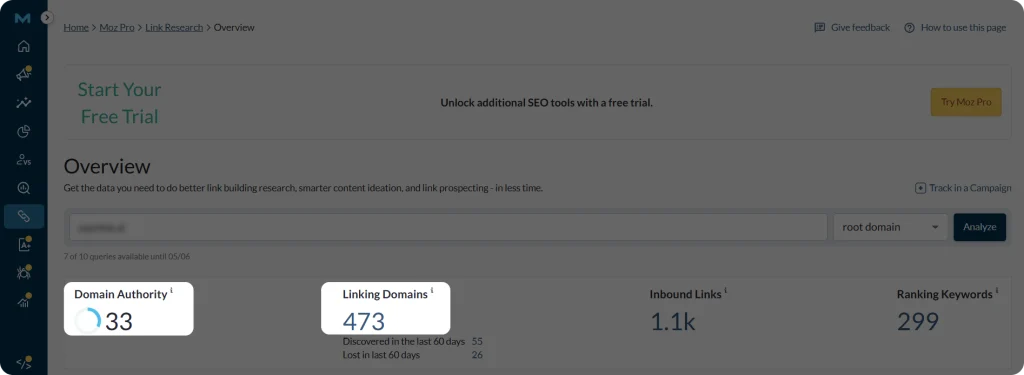
- To check your Domain Authority, go to Link Explorer and type your domain URL
- You’ll see a general overview of your website metrics with DA and Linking Domain numbers (number of unique external sources that link to you), too.
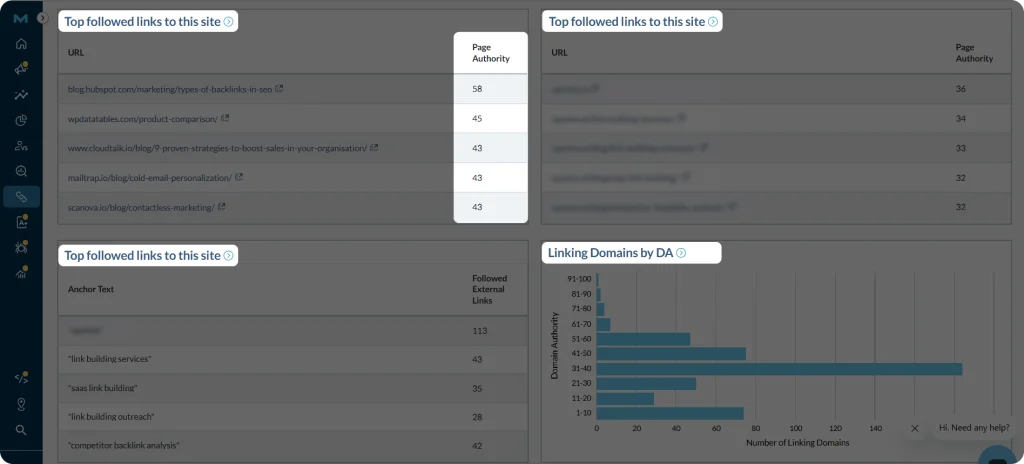
- Later as you scroll down, you can see 4 sections showing the pages that link to you (“top followed links to this site”), your pages, that are linked to (“top pages on this site”), your anchor texts (“top anchor texts for this site”), as well as a chart sorting linking domains by their DA.
You might have also heard of Domain Ranking, which is also a website authority metric, but created by Ahrefs.
- Domain Authority: Created by Moz. The scale is from 0 to 100. The goal is to predict how likely a website is to rank on SERPs
- Domain Ranking: Created by Ahrefs. The scale is from 0 to 100. The goal is to evaluate the strength of a website’s backlink profile
So, in short, Domain Authority is a relative metric that compares your site’s ability to rank on search results against competitors, making it most useful for understanding your ranking potential within your industry.
Why Do You Need to Improve Domain Authority?
If Domain Authority is a relative metric and not used by Google, a natural question arises: why should you care about improving it?
While it is not an official ranking factor, DA score is still widely used by SEO professionals and businesses as a practical benchmark.
- To earn backlinks from higher-quality websites: Many SEO and link building specialists use DA scores as a quick filter when deciding whom to collaborate with and how to further coordinate their manual link building efforts.
- To understand your competitiveness: Since it is a comparative score, it helps you see how your website compares to others in your industry.
- To shape your SEO strategy: By knowing where you stand and collecting your backlink data, you can set realistic goals and focus on actions that improve your overall search performance.
For these reasons, the DA score is still used to understand how strong a website is, especially when building links and comparing it with competitors.
So, How to Improve Domain Authority?
Now that you have a general understanding of Domain Authority, how and why it is used in SEO, let’s discuss some important steps to improve your DA.
Get Links from Authoritative Websites
Since Domain Authority is calculated based on backlink data, it means that the primary way to improve your DA is to acquire backlinks from authoritative websites.
Backlinks are important for any website’s online presence. Earning natural backlinks is one of the most important SEO strategies for improving visibility and authority.
Don’t try to buy backlinks or use other black-hat practices, as those will harm your rankings. Instead, try to identify relevant and authoritative websites and reach out for a backlink exchange.
One good option is researching which websites link to your competitors and not to you.
Here, Moz can help you.
- Log in to your Moz account (for deeper insights, you need to have a Moz Pro subscription)
- Go to the “Link Intersect” section.
- Enter your URL and then your competitors’ URLs and hit “Find opportunities”.
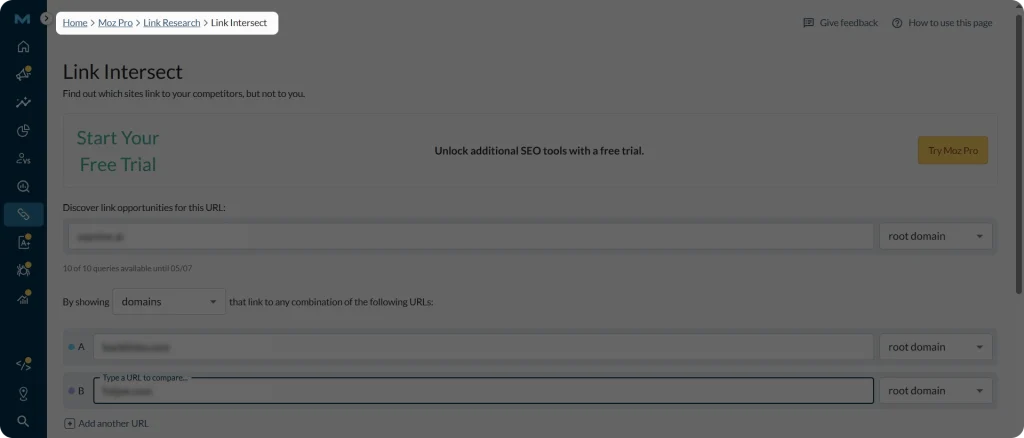
There you go, a list of all the potential link building sources is presented.
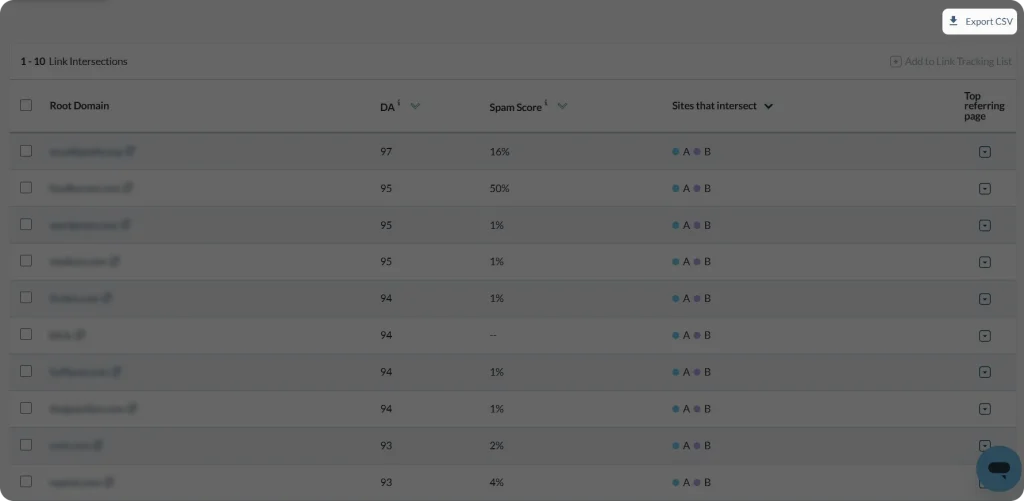
You can then download this list in a CSV format for your further analysis and filtering. Pay special attention to DA scores by sorting the ones that are higher.
After filtering all the relevant websites, find contacts and reach out for backlink opportunities.
Create Content Worth Linking to
Another reliable way to get backlinks is to create compelling content that will add value to the target website, your target audience, and search engines in general.
Don’t just generate robotic content that is stuffed with keywords. Instead, invest some time in keyword and topic research to create content that is built around people’s search queries. Make sure your keywords are relevant and fit the context without overloading your article.
Here are some tips along the way:
- Use a simple Google search to see what people are searching for. On Google, type your seed keywords (like “digital marketing”, “SEO strategy”, “SEO content writing”) and the most popular related search queries will show up. For long-tail results, scroll down to the “People also search for” section.
- This will help you understand the type of content your audience prefers, whether it is informational blog posts, in-depth guides, or case studies.
- For deeper insights, use SEO keyword research tools like Ahrefs, Semrush, or Moz. All these listed tools have free keyword research tools to uncover general keyword insight. However, if you want to go deeper, different pricing plans are available, depending on your business needs.
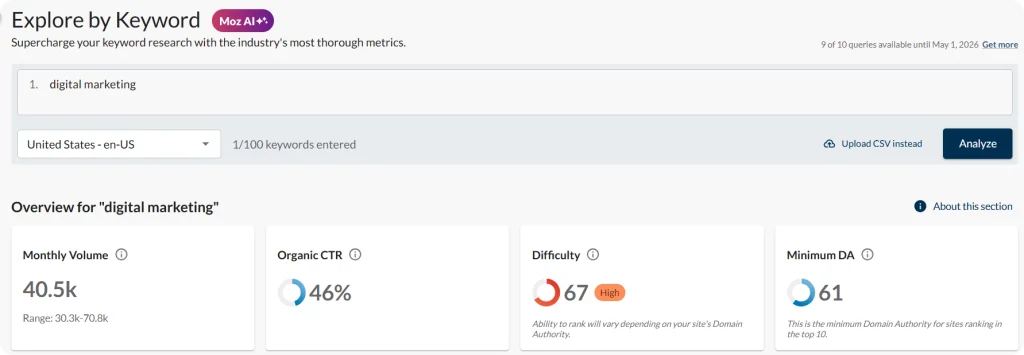
Let’s take a look at Moz Keyword Explorer, as an example. After searching for your seed keywords, you get an overview of your keywords’ search volume, difficulty, or primary search intent.
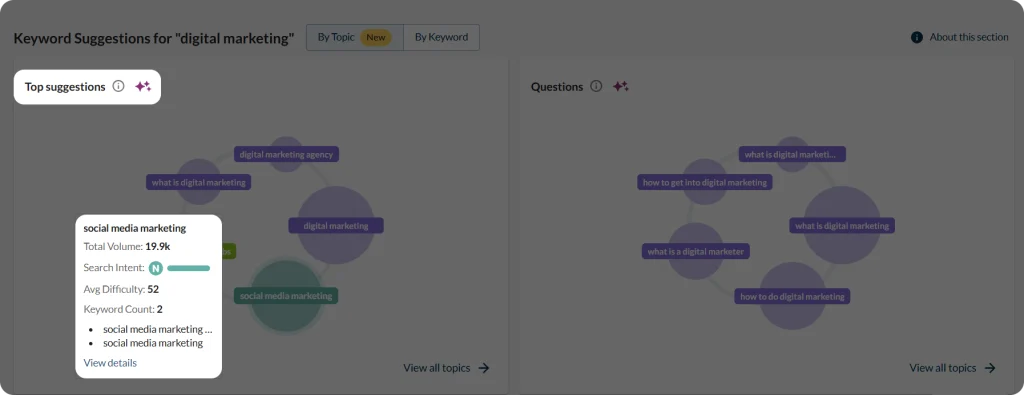
- As you scroll down, you can uncover more keyword suggestions and questions related to your general keyword, again, with respective metrics showing too.
When creating your content, also pay attention to your article structure, making sure it’s clear and readable.
In short, your content should be valuable, relevant, and genuinely worth linking to, making it a strong foundation for successful organic link building efforts.
Don’t Forget About On-Page SEO
While you may be putting a lot of effort into finding and reaching out to websites for backlinks, it is just as important to make sure your own website is worth linking to and visiting. This means having solid on-page SEO in place to deliver a smooth and reliable user experience.
If your site is slow, hard to navigate, or poorly structured, even high-quality backlink opportunities may not convert:
- Choose the right primary and secondary keywords, and use them naturally throughout your content, especially in titles and headings
- Add internal links to help users navigate easily across your website
- Use schema markup to help search engines like Google better understand your content
- Ensure your website loads quickly, is mobile-friendly, and has no broken pages
Ensuring smooth navigation, fast load times, and proper keyword usage improves the user experience, strengthens your website’s credibility in the eyes of users and search engines, and can therefore contribute to higher Domain Authority.
To Sum Up
You can think of Domain Authority as a score from 0 to 100 that shows how strong a website is compared to others in terms of SERP ranking potential.
While it is not a direct measure of ranking success, it can still help you get a quick idea of your backlink profile and guide your link building efforts, especially when learning how to improve Domain Authority.
By focusing on getting high-quality, relevant backlinks and creating useful content, you can slowly improve your website’s authority and support better long-term SEO results.