If you’re running a healthcare website, you know that ranking high on search engines is essential for attracting new patients and growing your business. One of the most effective ways to improve your search engine optimization (SEO) is through link building. Link building involves acquiring high-quality backlinks from other websites to your own. These backlinks signal to search engines that your website is reputable and trustworthy, which can help increase your ranking on search engine results pages (SERPs).

In the healthcare industry, link-building is especially important. Patients want to know that they can trust their healthcare providers, and having high-quality backlinks can help establish that trust. Additionally, healthcare is a highly competitive industry, and ranking high on SERPs can help you stand out from your competitors. However, link-building for healthcare websites can be challenging. Many healthcare websites are subject to strict regulations, and it can be difficult to find reputable websites to link to your own. In the following sections, we’ll explore some effective link-building strategies for healthcare websites.
Understanding Link Building

Link building is an essential component of search engine optimization (SEO) that involves acquiring hyperlinks from other websites to your own. These hyperlinks, also known as backlinks, are crucial to improving your website’s authority and ranking on search engines like Google.
Search engines like Google use algorithms to determine the relevance and quality of a website. One of the factors that these algorithms consider is the number and quality of backlinks pointing to the website. Websites with a higher number of quality backlinks are seen as more authoritative and are therefore more likely to rank higher in search engine results pages (SERPs).
The quality of the backlinks is also important. Backlinks from high-authority websites are more valuable than backlinks from low-authority websites. The authority of a website is measured by metrics like Domain Authority (DA) and Page Authority (PA). The higher the DA and PA, the more authoritative the website is considered to be.
Building quality backlinks takes time and effort. It involves reaching out to other websites and asking them to link to your website. To increase the chances of other websites linking to your website, you need to have high-quality content that is relevant and valuable to your target audience.
In addition to improving your website’s authority and ranking, link-building can also drive traffic to your website. When other websites link to your website, their visitors can click on the link and be directed to your website. This can increase your website’s visibility and potentially lead to more conversions.
Importance of Link Building for Healthcare Websites

Link building is a crucial aspect of Search Engine Optimization (SEO) that helps healthcare websites rank higher in search engine result pages. For healthcare websites, link building is not just about getting more traffic or improving your online visibility, it is also about building trust and credibility with patients. In this section, we will discuss the importance of link-building for healthcare websites and how it can help you to establish a strong online presence.
Building Trust and Credibility
In the healthcare industry, trust is paramount. Patients rely on healthcare professionals to provide them with accurate and reliable information about their health. Link building can help you build trust and credibility with patients by demonstrating that your website is a trustworthy source of information. When other reputable websites link to your healthcare website, it signals to patients that your website is a credible source of information.
Improving Your Online Visibility
Link building can also help you to improve your online visibility. When other websites link to your healthcare website, it signals to search engines that your website is a valuable resource. This can help you to rank higher in search engine result pages, which can lead to more traffic and more patients.
Establishing Authority and Reputation
Link building can also help you to establish authority and reputation in your niche. When other websites link to your healthcare website, it signals to patients that you are an authority in your field. This can help you to establish a reputation as a trusted healthcare provider, which can lead to more patients and more business.
Link building is an essential aspect of SEO for healthcare websites. It can help you to build trust and credibility with patients, improve your online visibility, and establish authority and reputation in your niche. By investing in link building, you can establish a strong online presence that will help you attract more patients and grow your healthcare business.
Link-Building Strategies for Healthcare Websites

If you want to improve your healthcare website’s search engine ranking, link building is an essential part of your digital marketing strategy. Here are some effective link-building strategies for healthcare websites.
Relevance and Quality of Backlinks
When building backlinks, it is important to focus on relevance and quality. Backlinks from relevant, trustworthy, and authoritative websites are more valuable than those from less reputable websites. You can use tools like Ahrefs or Moz to analyze the backlink profiles of your competitors and identify relevant websites to target.
Guest Posts and Blogging
Guest posting on healthcare blogs and websites is a great way to build high-quality backlinks. Look for healthcare bloggers who are open to guest posts and write high-quality content that is relevant to their audience. In return, you can include a link back to your website in your author bio or within the content.
Outreach and Networking
Outreach and networking are also effective strategies for building backlinks. Attend healthcare conferences and events and connect with other healthcare professionals and bloggers. You can also reach out to healthcare websites and offer to contribute content or collaborate on projects.
In addition to these strategies, social media campaigns and pages can also be used to build backlinks and promote your healthcare website. By focusing on relevance, quality, and networking, you can build a strong backlink profile that will improve your healthcare website’s search engine ranking.
Keyword Research and SEO Optimization

When it comes to link building for healthcare websites, keyword research, and SEO optimization are two crucial components that you must consider. By optimizing your website for relevant keywords, you can increase your website’s visibility on search engines and attract more traffic to your website.
Keyword research involves identifying the terms and phrases that people are using to search for healthcare-related information online. By doing so, you can optimize your website’s content with these keywords, making it easier for search engines to understand what your website is about.
To conduct keyword research, you can use tools like SEMrush, Google Keyword Planner, or Ahrefs. These tools can help you identify popular keywords related to your healthcare niche, along with their search volume, competition, and other important metrics.
Once you have identified your target keywords, you should optimize your website’s content with these keywords. This includes optimizing your page titles, meta descriptions, header tags, and body content with relevant keywords.
When optimizing your content with keywords, it’s important to use them naturally and avoid keyword stuffing. Keyword stuffing can result in penalties from search engines and can harm your website’s ranking.
In addition to keyword optimization, you should also focus on optimizing your website’s language and anchor text. Use clear and concise language that is easy for your audience to understand. When linking to other pages on your website or external websites, use relevant anchor text that describes the content of the linked page.
Monitoring and Analytics

Once you have implemented a link-building strategy for your healthcare website, it’s important to monitor and analyze its effectiveness. This will help you determine whether your efforts are paying off and identify areas for improvement.
One key metric to monitor is your website’s SEO rankings. You can use tools like Google Search Console to track your website’s rankings for specific keywords and phrases. This will help you see where your website is ranking in the search engine results pages (SERPs) and identify opportunities to improve your rankings.
In addition to monitoring your SEO rankings, you should also track your website’s overall rankings. This includes metrics like website traffic, organic traffic, and referral traffic. By tracking these metrics, you can see whether your link-building efforts are driving more traffic to your website and identify areas for improvement.
Another important metric to monitor is your website’s backlink profile. This includes the number and quality of backlinks pointing to your website. You can use tools like Ahrefs or Moz to analyze your backlink profile and identify opportunities to build more high-quality backlinks.
When analyzing your link-building efforts, it’s important to take a data-driven approach. This means using data to inform your decisions and identify areas for improvement. By tracking and analyzing your website’s SEO rankings, website rankings, and traffic metrics, you can make informed decisions about your link-building strategy and optimize your website for better search engine visibility.
Leveraging Content for Link Building

Creating high-quality content is one of the most effective ways to generate backlinks to your healthcare website. By publishing informative and engaging content, you can attract the attention of other websites in your industry and encourage them to link back to your site. Here are some types of content that can help you build links:
Infographics and Videos
Infographics and videos are highly shareable and can be an effective way to attract backlinks. By creating visually appealing and informative content, you can increase the likelihood that other websites will link to your site. Consider creating infographics or videos that explain complex medical concepts or highlight interesting healthcare trends.
Research Papers and Case Studies
Publishing original research papers or case studies can also be an effective way to generate backlinks. When you share new insights or data, other websites may link to your research to support their own articles or blog posts. Make sure your research is well-designed and relevant to your industry to increase the likelihood of attracting links.
Testimonials and Awards
If your healthcare practice has received positive reviews or awards, make sure to showcase them on your website. Other websites may link to your site to highlight the recognition you’ve received. Consider creating a dedicated page on your site to showcase your testimonials and awards, and make sure to include links to other websites that have recognized your practice.
When creating content for link building, it’s important to focus on quality over quantity. Publishing a large volume of low-quality content is unlikely to attract backlinks, and may even harm your search engine rankings. Instead, focus on creating informative and engaging content that provides value to your readers.
By leveraging high-quality content, you can attract backlinks and improve your search engine rankings. Consider incorporating infographics, videos, research papers, case studies, testimonials, and awards into your content marketing strategy to attract links and improve your online visibility.
Navigating Google’s Search Results

When it comes to link building for healthcare websites, one of the main goals is to rank higher on Google’s search engine rankings. After all, the higher you rank, the more likely people are to find your website and become potential patients or customers. But how do you navigate Google’s search results to ensure your website is ranking as high as possible?
First and foremost, it’s important to understand how Google’s search algorithm works. Google uses a complex algorithm that takes into account hundreds of factors to determine where websites should rank in search results. Some of these factors include the relevance of the content, the quality of the website’s backlinks, and the user experience of the website.
To improve your website’s search engine rankings, there are a few key strategies you can employ. One of the most important is to focus on building high-quality backlinks from other reputable websites. This can help to improve your website’s domain authority, which is a measure of how trustworthy and authoritative your website is in the eyes of Google.
Another important strategy is to optimize your website’s content for specific keywords and phrases that are relevant to your healthcare niche. This can help to ensure that your website is showing up in search results when people are searching for information related to your services.
It’s also important to ensure that your website is mobile-friendly and easy to navigate. Google places a high value on user experience, and websites that are difficult to use or navigate may be penalized in search rankings.
Local SEO for Healthcare Facilities

Local SEO is a critical strategy for healthcare facilities looking to strengthen their online presence in specific geographic areas. It helps attract relevant traffic and increase local search rankings for healthcare providers. Here are some tips on how to improve your local SEO for healthcare facilities:
1. Claim and Optimize Your Google My Business Listing
Google My Business is a free tool that allows you to manage your business information across Google Search and Maps. Claiming and optimizing your business listing can help improve your local search rankings. Ensure that your business information is accurate, including your business name, address, phone number, and hours of operation.
2. Build Local Citations
Citations are mentions of your business name, address, and phone number (NAP) on other websites. Building local citations can help improve your local search rankings. Ensure that your NAP is consistent across all citations. You can build local citations by submitting your business information to local directories, such as Yelp, Yellow Pages, and Healthgrades.
3. Get Reviews
Reviews are essential for local SEO. Positive reviews can help improve your local search rankings and attract more patients. Encourage your patients to leave reviews on your Google My Business listing and other review sites. Respond to all reviews, even negative ones, to show that you care about your patients’ feedback.
4. Use Local Keywords
Using local keywords can help improve your local search rankings. Include your city or region in your website content, meta descriptions, and title tags. For example, if you are a healthcare facility in Los Angeles, include “Los Angeles” in your website content and meta descriptions.
5. Leverage Social Media
Social media can help improve your local search rankings. Ensure that your social media profiles are complete and include your business name, address, and phone number. Share your content on social media to reach a wider audience and attract more patients.
By following these tips, you can improve your local SEO for healthcare facilities and attract more patients to your practice.
Improving User Experience

Improving user experience (UX) is a crucial part of building a successful healthcare website. A good UX will help visitors find the information they need quickly and easily, which can increase engagement and conversions. Here are some tips for improving UX on your healthcare website:
Navigation
Navigation is one of the most important elements of a website’s UX. Visitors should be able to find what they’re looking for quickly and easily. A well-designed navigation menu can help achieve this. Here are some best practices for navigation:
- Keep it simple: Don’t clutter your navigation menu with too many options. Stick to the most important sections and pages.
- Use clear labels: Make sure your labels are clear and easy to understand. Visitors should be able to tell what each section is about just by reading the label.
- Use dropdown menus sparingly: Dropdown menus can be useful for organizing sub-pages, but don’t overuse them. Visitors can get frustrated if they have to navigate through too many dropdowns to find what they’re looking for.
Experience
The overall experience of your website is also important. Visitors should enjoy using your website and feel that it is trustworthy. Here are some tips for improving the experience:
- Use high-quality images: High-quality images can make your website look more professional and trustworthy. Use images that are relevant to your content.
- Use white space: White space can make your website look more modern and can help highlight important information.
- Use clear calls to action: Visitors should know what they’re supposed to do next. Use clear calls to action to guide them.
User Experience
Finally, user experience is all about making sure your website is easy to use. Here are some tips for improving user experience:
- Use responsive design: Your website should be optimized for all devices, including desktops, laptops, tablets, and smartphones.
- Use clear typography: Make sure your text is easy to read. Use a legible font and make sure the contrast between the text and background is sufficient.
- Use fast loading times: Visitors will quickly leave your website if it takes too long to load. Use optimized images and minimize the use of scripts and plugins to improve loading times.
By improving navigation, experience, and user experience, you can create a healthcare website that is easy to use, trustworthy, and engaging.
Boosting Online Presence and Traffic

Link building is an essential part of search engine optimization (SEO) for healthcare websites. It helps search engines discover new web pages and determine which pages should rank higher in search engine result pages. By generating more organic traffic, you can improve your website’s visibility and increase your online presence.
To boost your online presence and traffic, you should focus on building high-quality backlinks from reputable sources. These backlinks should be relevant to your healthcare specialty and provide value to your target audience. For example, if you are a pediatric dentist, you should aim to get backlinks from parenting blogs or health websites that cater to children’s health.
Another way to boost your online presence is to use relevant keywords in your content. Use tools like Google Keyword Planner, SEMrush, or Ahrefs to find relevant healthcare keywords. Focus on long-tail keywords that are specific to your specialty, such as “pediatric dentist in [your city]” or “best cancer treatment center in [your state]”. By using these keywords in your content, you can improve your website’s visibility and attract more organic traffic.
To increase your website’s traffic, you should also focus on creating high-quality content that provides value to your target audience. This could include blog posts, videos, infographics, or e-books. By creating valuable content, you can attract more visitors to your website and establish yourself as an authority in your healthcare specialty.
Increasing Conversion Rates
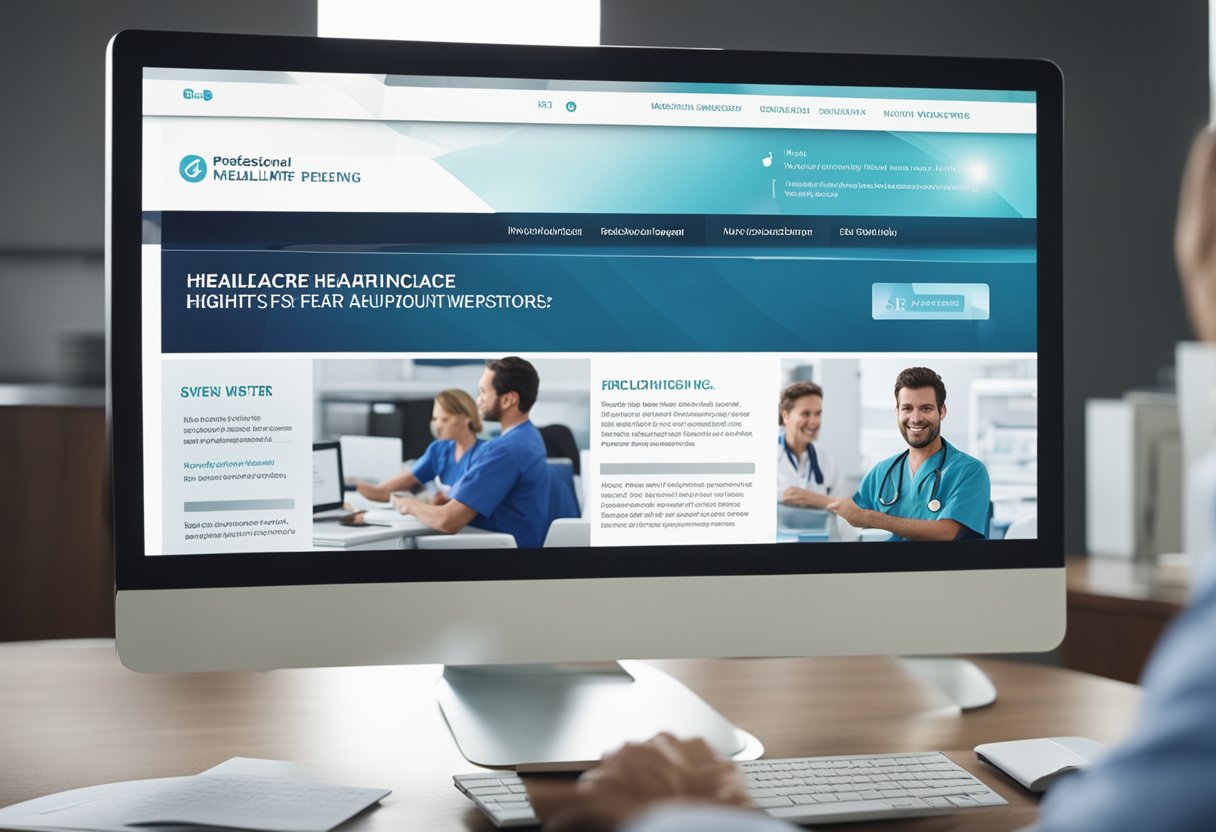
Link building is an effective strategy for driving traffic to your healthcare website, but it’s not enough to simply attract visitors. You also need to convert those visitors into patients. The conversion rate is the percentage of website visitors who take a desired action, such as booking an appointment or filling out a contact form.
Improving your website’s conversion rate can significantly increase patient acquisition and revenue. Here are some tips to help you increase your healthcare website’s conversion rates:
Provide the Information People Need to Decide
Patients have specific needs when they visit a healthcare website. If those needs aren’t met, user engagement, let alone a conversion, is improbable. Therefore, you should provide all the necessary information to help patients make an informed decision. This includes information about your services, treatments, and healthcare providers.
Include a Book-an-Appointment Button
Make it easy for patients to book appointments by including a “book-an-appointment” button on your website. This button should be prominently displayed on your homepage and throughout your website. Patients are more likely to book an appointment if the process is simple and straightforward.
Testimonials, Case Studies, and Social Media Comments
Testimonials, case studies, and social media comments can all be strong influencers that improve conversion rates. You can include these on your website to showcase the positive experiences of your patients. This social proof can help build trust with potential patients and increase the likelihood of them converting.
Allow Patients to Call Directly from an Ad
Give your audience options on how to convert by allowing them to call directly from an ad. This feature can be especially useful for patients who prefer to speak with someone directly. By providing this option, you can increase the likelihood of converting patients who might otherwise have abandoned the conversion process.
By implementing these strategies, you can improve your healthcare website’s conversion rates and increase patient acquisition.
Competing in the Healthcare Industry

In the highly competitive healthcare industry, it’s important to have a strong online presence to attract and retain patients. With an estimated global healthcare market of over $10 trillion by 2025, the competition is fierce, and healthcare organizations need to stay ahead of the game to succeed.
One of the key ways to improve your online presence is through link building. By building high-quality backlinks, you can improve your search engine rankings and drive more traffic to your healthcare website. This can result in more patient leads and conversions.
To compete in the healthcare industry, you need to stay up-to-date with the latest trends and technologies. This includes keeping an eye on your competitors and analyzing their marketing strategies. By understanding what your competitors are doing, you can identify gaps in the market and develop new ways to differentiate yourself from the competition.
When it comes to healthcare marketing and SEO, it’s important to focus on creating high-quality, informative content that provides value to your audience. This can include blog posts, videos, infographics, and more. By creating content that answers common patient questions and addresses their concerns, you can establish yourself as a thought leader in the industry and build trust with your audience.
In addition to content creation, you should also focus on building relationships with other healthcare organizations and providers. This can include partnering with other organizations to host events, collaborating on research projects, or even just sharing each other’s content on social media. By building these relationships, you can expand your reach and tap into new patient markets.
Conclusion
In conclusion, link-building is a crucial aspect of digital marketing for healthcare websites. By building quality backlinks, you can improve your website’s online presence, increase traffic, and boost your search engine rankings.
Link building is not a one-time task, but an ongoing process that requires consistent effort and strategy. It involves identifying relevant and authoritative websites, creating valuable content, and reaching out to webmasters for link opportunities.
By implementing a strong link-building strategy, you can improve your website’s domain authority, trust score, and search engine rankings. This, in turn, can lead to more visibility, traffic, and conversions for your healthcare business.
However, it’s important to note that link-building should be done ethically and naturally, without resorting to spammy or black-hat tactics. Focus on creating valuable content that people want to link to, and building relationships with relevant websites in your niche.
Overall, link building is a powerful tool for improving your healthcare website’s online presence and driving traffic to your business. By implementing a solid link-building strategy, you can stay ahead of the competition and achieve your digital marketing goals.