Business

  • Using WooCommerce’s WordPress Foundation for Content-Led Ecommerce SEO

    Using WooCommerce’s WordPress Foundation for Content-Led Ecommerce SEO

    Content is an afterthought at most e-commerce sites. Product pages go up, a few category descriptions get written, and the blog collects dust between seasonal promotions. In WooCommerce, built on WordPress, content is a first-class citizen with the same level of infrastructure and flexibility that dedicated publishing platforms are built around. 

    For store owners who recognize this, it is one of the most underused advantages in online retail and one of the few areas where a well-run WooCommerce store can build a lead that pure commerce platforms simply cannot close.

    The SEO Gap That Most E-Commerce Platforms Cannot Close

    Spend any time comparing e-commerce platforms from an SEO angle, and a pattern emerges quickly. Hosted platforms like Shopify and BigCommerce cover the technical basics well enough, but their content capabilities are limited by design. They are commerce platforms first, content platforms second. Building topical authority across a product category requires the kind of deep content infrastructure that most hosted platforms were never designed to support.

    That gap shows up in predictable ways:

    • Blogging exists, but lacks real editorial depth or flexibility
    • Content and commerce operate as separate layers rather than one integrated system
    • The interconnected content architecture needed for sustained organic growth simply isn’t available at the level a dedicated CMS provides

    WooCommerce is in a whole different situation. It’s built on WordPress (the world’s most 

    popular content management system), and so it offers a package of features and options that are second to none, especially when it comes to content management. WooCommerce offers all of WordPress’s post types, taxonomies, custom fields, and workflows for editing posts. Commerce layer and content layer are truly integrated, and that makes the SEO strategy that can be carried out on a WooCommerce store just much stronger than any pure commerce platform.

    Not all WooCommerce store owners take advantage of this. Many use the blog for occasional announcements and treat product pages as their only SEO surface. The stores that invest properly in content-driven SEO build organic search presences that compound over time and become very hard for competitors to match. 

    Why Content-Led SEO Works Differently for E-Commerce

    Content-led SEO isn’t about having a blog. It’s about building a content framework that matches search intent at every stage of the buyer’s journey:

    • Awareness: informational queries where shoppers are learning and researching
    • Consideration: comparison content that helps narrow down options
    • Transaction: product and category pages built for purchase intent

    When someone wants to buy a standing desk, they rarely start with a specific product search. They start with questions: best standing desk heights, do standing desks improve productivity, fixed vs. adjustable. These informational queries carry significant search volume and far less competition than the direct product terms every e-commerce store fights over. 

    A site that answers these questions well, and links them intelligently to product and category pages, earns the visitor’s trust long before they are ready to buy.

    WordPress makes this kind of content organization straightforward. Categories, tags, custom post types, and internal linking at scale are all built in. On most other platforms, replicating this would require considerable workarounds.

    In competitive e-commerce categories, the stores that win organic search are not always the ones with the best product pages. They are the ones who earn the visit before the purchase decision is even made.

    Structuring the Content Architecture for SEO Impact

    Mapping the Search Landscape First

    The gap between a blog that gets occasional traffic and a content strategy that keeps growing comes down to structure. Random publishing produces random results. A planned content architecture, built around real search demand for the store’s products and customers, creates rankings that reinforce each other over time.

    Understanding why internal SEO links matter goes beyond navigation and is the foundation of any content architecture that actually performs in search.

    Before publishing anything, every piece of content should clearly answer three questions:

    • Which keyword is it targeting?
    • Which stage of the buyer’s journey does it serve?
    • Which commercial page does it support through internal linking?

    Technical Implementation in WooCommerce

    In WordPress and WooCommerce, this structure is put into practice through post categories that reflect the product taxonomy, internal linking that connects informational and transactional content in both directions, and URL structures that communicate topical relevance to search engines.

    Getting this right from the start is far more effective than retrofitting it later. It’s also the kind of basic-level work that will truly combine the expertise of experienced WooCommerce Development Services and SEO strategy, as it’s not possible to implement the technical part without understanding the content strategy, and vice versa.  Agencies managing multiple WooCommerce projects can also use white label WordPress development services to handle the development work while their team focuses on the content strategy.

    Product and Category Pages as Content Assets

    Content-led SEO applies to the commerce layer too, not just editorial content. Product pages and category pages are content assets, and they are consistently underdeveloped in most WooCommerce stores. Many category pages are little more than a product grid with filters, which leaves a lot of organic search opportunity unused.

    WooCommerce makes it easy to go further. A well-built category page can include:

    • An introduction optimized for the primary keyword
    • Copy that addresses common buyer questions
    • Links to supporting content that builds topical authority

    Product pages can be developed with original, substantive content that informs the customer and gives search engines something meaningful to rank, rather than duplicated manufacturer descriptions found across dozens of other stores.

    Schema markup is another area where WooCommerce’s WordPress foundation provides a structural edge. Implemented cleanly and at scale, the right schema types improve how search engines understand and display the store’s content:

    • Product schema: price, availability, and product details in search results
    • Review schema: star ratings that lift click-through rate
    • Breadcrumb schema: site structure shown directly in the SERP
    • FAQ schema: expanded listings that capture more visibility and answer intent

    This kind of work sits at the intersection of development and content strategy, and it produces the best results when both disciplines are genuinely working together.

    Building Domain Authority Through Content That Earns Links

    One of the strongest long-term benefits of WooCommerce’s WordPress foundation is what it makes possible for link acquisition. Editorial content, original research, and useful tools attract inbound links from other publications and industry sites in ways that product pages simply cannot.

    A WooCommerce store with a proper content operation can build the kinds of assets that earn links naturally:

    • Original data studies and industry research
    • Definitive category guides that become go-to references
    • Interactive tools that solve real problems for the target audience

    These won’t drive immediate traffic to product pages, but the domain authority they build has a compounding effect on overall organic search performance. Domain authority is one of the few things in SEO that cannot be bought or replicated quickly, which is exactly why consistent investment in it creates a lasting competitive edge. That investment means paying close attention to backlink quality, since a smaller number of relevant, high-authority links will always outperform a large volume of weak ones. 

    To make this work, content strategy, development architecture, and ongoing technical SEO need to function as one connected system. The right WooCommerce development services partner understands that the store’s technical infrastructure exists to enable its content strategy, and builds with that in mind so every piece of content published has the best possible chance of ranking, converting, and building value over time.

    Final words

    WooCommerce’s WordPress foundation is a strategic advantage that most store owners never fully use. When content architecture, internal linking, schema markup, and domain authority building work together as one system, the result is organic growth that compounds over time and becomes hard for competitors to match.

    That does not happen by accident. It requires the right technical setup, a clear content plan, and consistent execution. For WooCommerce stores willing to commit to that approach, the opportunity is wide open.

  • 5 SEO Audit Services for Your Website Success

    5 SEO Audit Services for Your Website Success

    Picture this: your website is not performing well online, and you are not sure what is causing the problem. It could be site speed, content quality, or even the overall site structure.

    This is where SEO audit services come in. They help identify issues on your website and provide clear guidance on how to fix them.

    If you do not have the technical knowledge or experience to carry out an audit yourself, it is often better to rely on specialized services. To help you choose the best option for your business, in the article below, we have offered the most popular SEO audit providers you can explore.

    What is an SEO Audit?

    An SEO audit is an analysis of a website to identify issues that may be limiting its ranking potential. It also helps create a clear roadmap for fixing these problems and improving the website’s performance in search engine results.

    Generally, an SEO audit includes key areas such as:

    • On-page SEO audit: Here, your main goal is to check and fix all the internal issues within your website, such as meta tags, internal links, and the overall website content. Using an AI SEO tool can help identify on-page issues more efficiently by analyzing meta tags, internal linking structures, content quality, and other optimization opportunities across your website.
    • Off-page SEO audit: You check external backlinks pointing to your website, including any lost or broken backlinks.
    • Technical SEO audit: In this phase, you check the technical aspects of your website, such as its speed, mobile-friendliness, and overall site performance.

    And if you are wondering why you should do an SEO audit, here are the core reasons:

    • Finding and fixing issues that are blocking your website from ranking higher on search engines
    • Maintaining strong site performance and a smooth user experience
    • Monitoring your website’s overall online performance over time
    • Analyzing your website’s performance against competitors, identifying gaps, and addressing them

    So, an SEO audit is an important step you should not skip if you want your website to deliver a smooth user experience, have strong ranking potential, and perform effectively overall. Modern SEO audits also take into account SEO and AI-driven search, ensuring your website is optimized not only for traditional ranking factors but also for evolving AI-powered search experiences and intent-based results.

    SEO Audit Services: 5 Options to Consider

    There are thousands of SEO audit services available, each offering different features, scopes of work, and pricing structures.

    Here are five popular agencies you can consider:

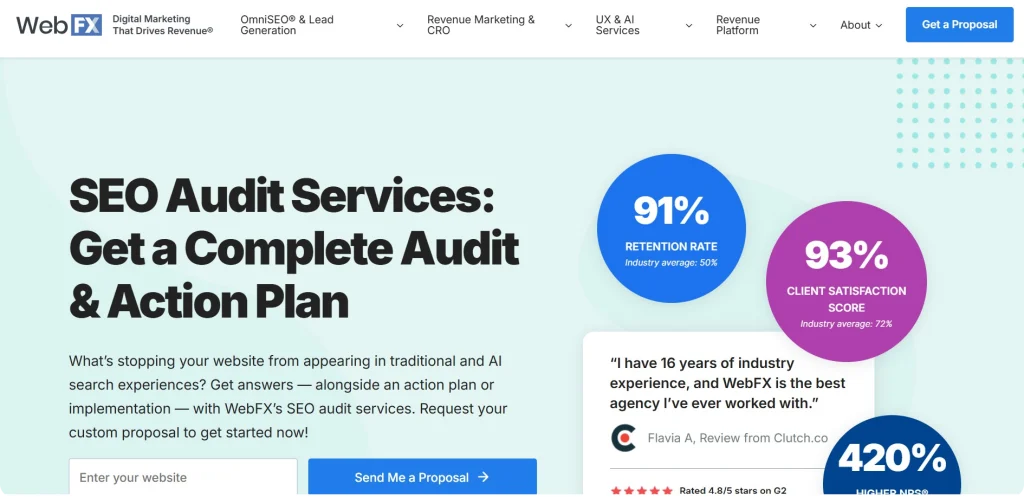
    WebFXScreenshot of WebFX website SEO audit services section

    WebFX is a digital marketing agency with over 25+ years of experience in the industry. WebFX provides data-driven marketing services that focus on improving online visibility, lead generation, and conversions. 

    One of their core services provided is SEO audit services, which covers the following areas:

    • On-page SEO audit
    • Off-page SEO audit
    • Technical SEO audit
    • AI SEO audit
    • SEO report
    • Audit implementation
    • SEO strategy
    • Pricing:

    WebFX offers custom SEO audit plans starting at $8,600/ month. Pricing depends on each website’s SEO needs and website size.

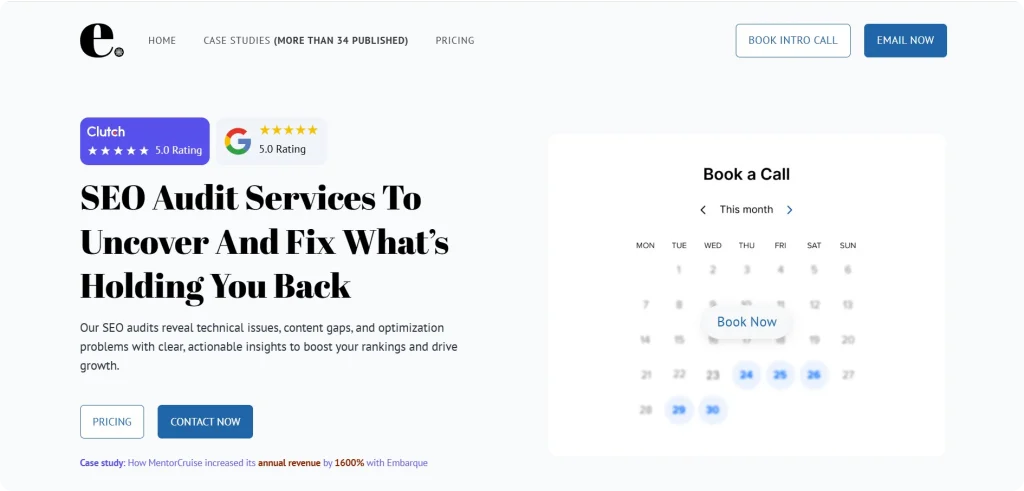
    EmbarqueScreenshot of the Embaruqe website SEO audit services section

    Embarque is an SEO and AI-driven search agency that helps businesses grow through organic search. The company provides services like technical SEO, content strategy, and SEO link building, all designed to increase traffic, generate leads, and drive revenue. 

    At the same time, Embarque’s SEO audit services are designed to reveal the website’s technical and content gaps and provide actionable recommendations to fill them and boost rankings. 

    Among the core areas covered within the audit services are:

    • Technical SEO audit
    • On-page SEO audit
    • Topical authority audit
    • Backlink profile audit
    • UX and core web vitals audit
    • Pricing:

    Pricing plans depend on the scale of services provided.

    • Tier 1: $2,799/ month (includes content creation, Backlinks, Account management, Revenue-based strategy & tracking, GMB listing optimization, Localized directory listings inclusion, Basic optimisations, Monthly reports)
    • Tier 2: $4,900/ month (includes everything in Tier 1 + heatmap tracking, AI/LLM SEO, Reddit, and forum marketing)
    • Tier 3: $5,999/ month (includes all tier 2 services + Programmatic SEO, Technical SEO, Multilanguage SEO)
    • Enterprise: Starting at $11,000/ month (includes every tier 3 capability + A/B testing, full-funnel analytics integration, Programmatic SEO, Multilanguage SEO)

    For further information on audit services tailored to your specific needs, you can contact Embarque’s team via email directly from their website.

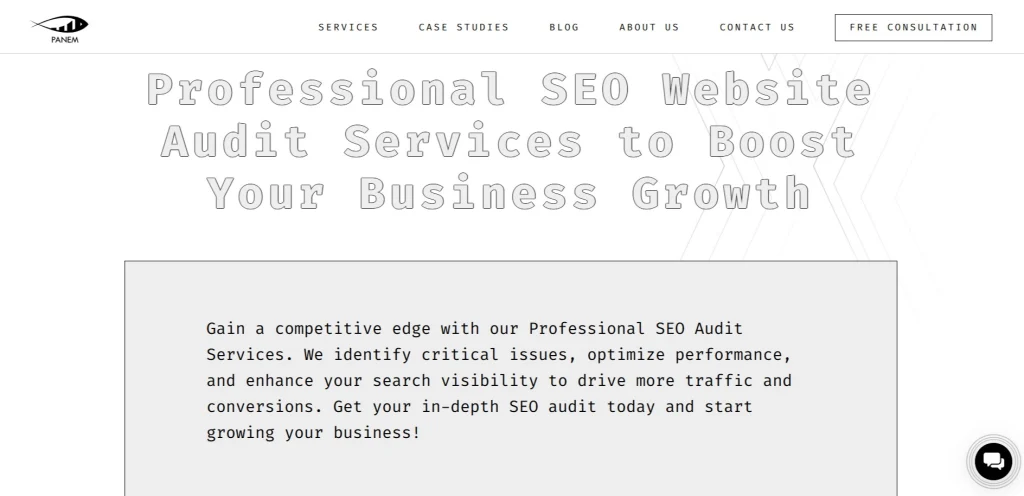
    Panem Agency

    Panem Agency is a full-service SEO and digital marketing agency, working with clients across the US, EU, and Canada. It specializes in SEO, PPC, content strategy, and AI-driven optimization for international brands. 

    Panem Agency also provides SEO audit services, encompassing areas such as:

    • Usability analysis
    • Keyword analysis
    • Content optimization
    • Technical analysis
    • Domain analysis
    • Google penalties
    • Competitor analysis
    • Backlink audits
    • Local SEO audit
    • Pricing:

    Panem Agency offers 3 pricing plans, depending on the services provided.

    • Essential SEO audit: Best for small businesses or startups looking for a foundational SEO check-up, from $500
    • Advanced SEO audit: Growing businesses needing an in-depth analysis of technical SEO, content, and rankings, from $1000
    • Premium SEO audit and strategy package: Enterprises and businesses requiring a comprehensive, data-driven SEO strategy with a roadmap for long-term growth, Custom pricing based on project scope

    Panem Agency allows you to get a free consultation directly from their website to get a deeper understanding of their services.

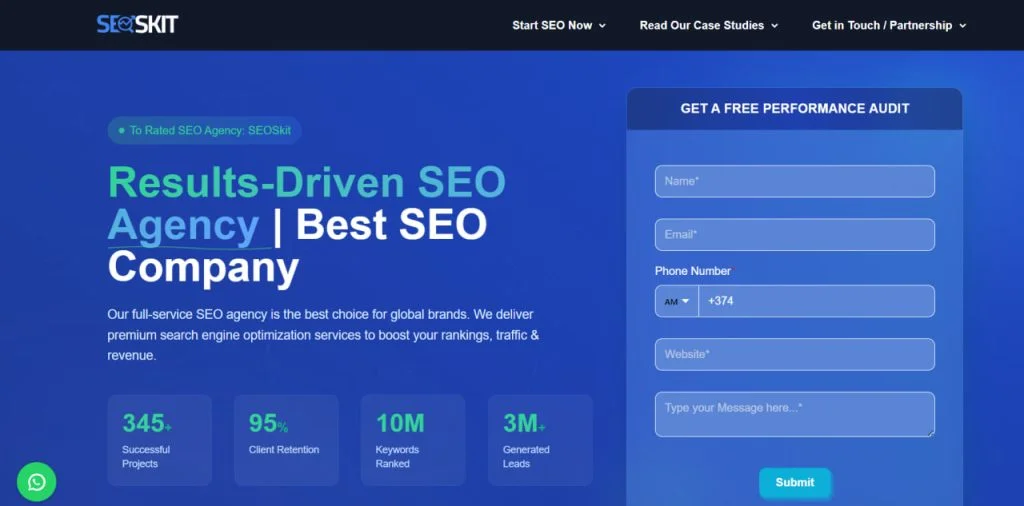
    SEOSkit

    Screenshot of the SEOskit website SEO audit services section

    SEOSkit is an SEO agency that provides search engine optimization services for businesses looking to improve their online visibility and organic traffic.

    It offers services such as SEO audits, technical optimization, keyword research, on-page SEO, link building, content strategy, and guest posting to help websites improve their rankings.

    Some of the key SEO audit services that the agency offers include:

    • Technical SEO analysis
    • On-Page SEO Evaluation
    • Site Speed Assessment
    • Mobile Responsiveness Check
    • XML Sitemap Review
    • Robots.txt Configuration Analysis
    • Basic Backlink Profile Overview
    • Complete Backlink Profile Audit
    • Comprehensive On-Page Audit
    • Core Web Vitals Deep Dive
    • Pricing:

    The agency offers 3 pricing plans depending on the scope of audit services provided.

    • Basic SEO audit: One-time comprehensive analysis, $499/ audit
    • Professional SEO audit: In-depth analysis with action plan, $999/ audit
    • Enterprise SEO audit: Complete analysis with ongoing support, $2999/ audit

    If you need further information, you can both contact the agency through their website and book a consultation to ask your questions.

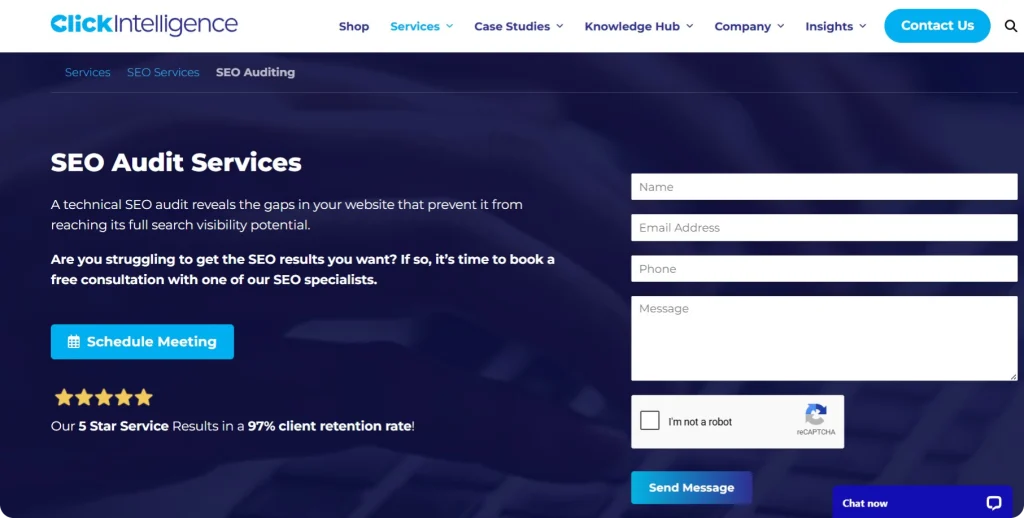
    Click Intelligence

    Screenshot of the Embaruqe website SEO audit services section

    Click Intelligence is a UK-based SEO and digital marketing agency that provides a range of SEO services, including technical SEO audits, keyword research, content optimization, and link building.

    Its audit services focus on areas such as:

    • Keyword Research
    • Technical SEO
    • Technical Audit
    • Content Optimization
    • Backlink Analysis 
    • Pricing:

    There are 3 SEO audit service pricing plans that vary by the services provided.

    • SEO Audit Basic: Designed for startups, from $1,147 – $2,025/ audit
    • SEO Audit Standard: Designed for SMEs, from $2,700 – $6,750/ audit 
    • SEO Audit PRO: Designed for growing enterprises, from $8,100 – $10,800/ audit

    To get more information on the SEO results and audit services, you can send a message to Click Intelligence directly through the website or book a consultation with agency experts.

    How to Choose SEO Audit Services?

    Now that you understand the importance of SEO audit services and have shortlisted a few of them to consider, here are some tips to keep in mind when planning your collaboration.

    • Check agency expertise: Choose an agency with rich experience and background, especially in multiple industries. Make sure they have worked within your industry and can quickly adapt to your specific needs.
    • Ask for case studies: To evaluate their expertise and quality of work, ask for previous projects, case studies, or client testimonials to understand how they have handled similar work. Pay close attention to timelines, results achieved, and the industries they have worked in. It is also important to review their website carefully for additional insights and information.
    • Clarify pricing: Although the pricing plans are usually available on agency websites, the costs of audit services may still vary depending on specific cases and the needs of each client. So, make sure to clarify the final pricing for your website and project. Include it in the final contract to avoid hidden costs and misunderstandings.
    • Clarify communication and reporting: Clear communication is key to any successful collaboration. Make sure you understand which channels will be used, how often updates will be shared, and how reports and deliverables will be provided throughout the project.

    Remember that choosing the right agency is a key step toward achieving your desired results in website marketing and long-term online success. Take the time to research your options thoroughly, clarify all details, and ask the right questions before making a decision.

    Summing Up

    A full SEO analysis is an integral part of your digital marketing efforts. It is a detailed and thorough process, which is why many businesses choose to outsource SEO audit services.

    While there are many providers available, this list of five agencies offers a helpful starting point. 

    With careful research and clear communication, you can find the right partner to ensure the results meet your expectations.

  • 6 Factors That Contribute to Successful New Product Development

    6 Factors That Contribute to Successful New Product Development

    Every product starts with an idea. Sometimes it’s a spark in a meeting room. (Other times, it’s a late-night thought scribbled on a napkin.)

    But turning that idea into a product people love and buy is where the real work begins. 

    The product development process can be unpredictable and full of tough calls. Yet some companies make it look effortless. So, what’s their secret?

    They build connected teams and invest in people just as much as in the process. They also treat product development as a continuous learning and adaptation system.

    Let’s take a closer look at what today’s top-performing product developers do differently. 👇

    Key Pillars To Successful New Product Development

    Product development suffers from too many moving parts pulling in different directions. 

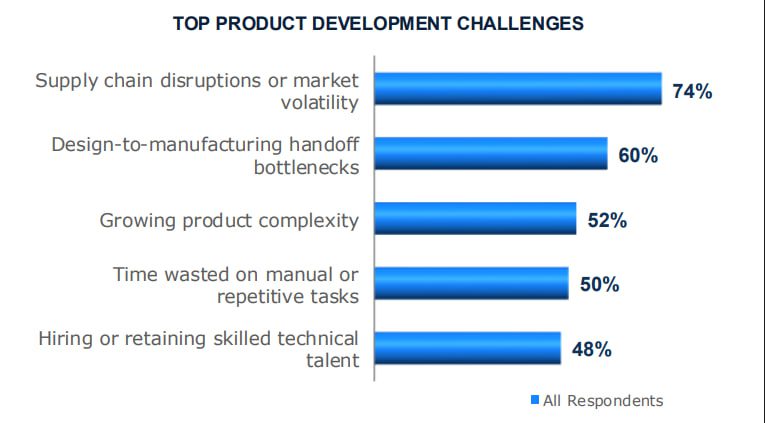
    According to Tech-Clarity’s 2025 State of Product Development report, the top product development challenges include supply chain disruptions and process bottlenecks between design and manufacturing. 

    Screenshot from solidworks.com articlr

    (Image Source)

    Top-performing teams do things differently to overcome these challenges. 

    They focus on fundamentals such as clear communication and continuous feedback. This keeps the product development process moving smoothly from idea to launch.

    Here’s how you can follow suit. 👇

    1. Understand Your Customers First

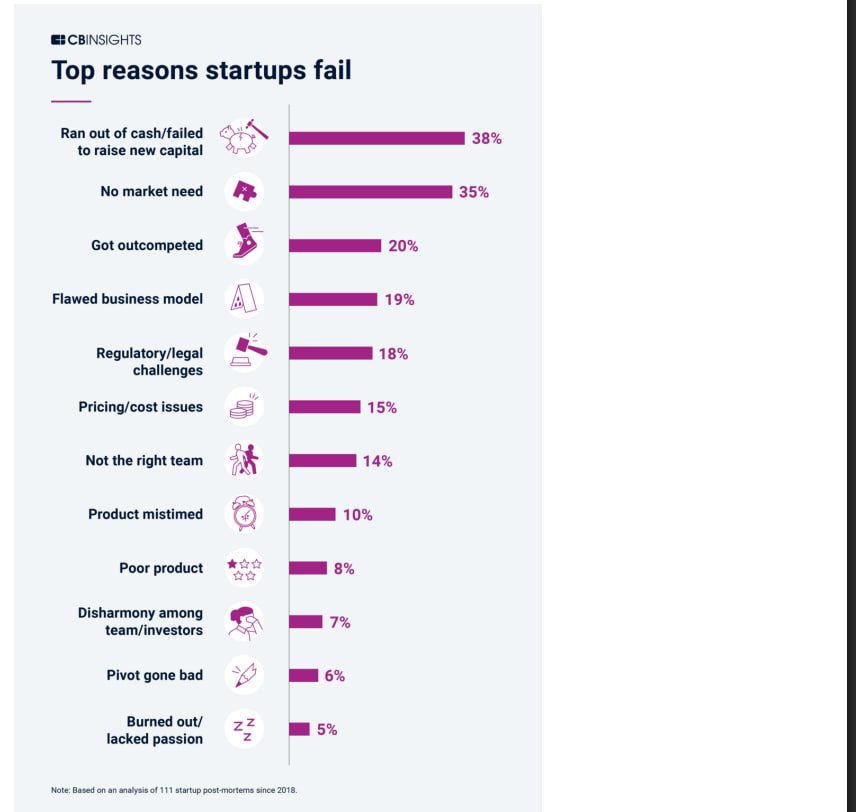
    According to CB Insights, the second biggest reason startups fail is that there’s no market need for their product. In other words, they never truly understood their target market. (And this is why market research is important)

    Screenshot of cbinsights.com

    (Image Source)

    Top Reasons Startups Fail

    But knowing your audience is the first step toward building something people want.

    And the best place to start? Look at what people are searching for. 

    Keyword research is your cheat sheet to customer intent. It shows you what they want, what they’re comparing, and what’s missing from the market.

    Then go deeper. Social listening tells you how people feel about products like yours. You’ll find their frustrations, favorites, and unfiltered opinions. Combine that with your own customer data, and you’ll see patterns.

    Finally, test those ideas before you scale. Launch a minimum viable product (MVP), collect customer feedback, and let real data steer your product innovation. Many teams use an AI form builder to quickly create feedback forms, surveys, and customer research workflows without spending weeks on setup. This is where a Product Owner plays a critical role by aligning stakeholders, development teams, and business objectives to keep product initiatives moving in the right direction.


    After you know who you’re targeting and what they want, it’s much easier to build something your potential lead list cares about.

    2. Build Bridges Across Teams

    Product-Led Alliance’s 2025 State of Product Ops report found that 24% of product teams struggle with cross-department alignment. This is a major problem, since collaboration is what separates top performers from everyone else. 

    When everyone’s on the same page and has the same resources, work moves faster and more accurately. 

    Collaborations also help spot issues earlier and solve problems before they slow down the product development process. 

    For example, when product design and manufacturing teams share real-time updates, they can catch material or dimension changes instantly and prevent weeks of changes.

    To achieve better alignment between teams, make sure to have shared tools and transparent workflows. You might also need to host a collaboration training day to show departments how to work together successfully. 

    3. Let Future-Forward Technology Do the Heavy Lifting

    AI is fast becoming a significant part of research and development across all industries. Product development is no different.

    In fact, Tech-Clarity found that top product development teams are nearly twice as likely to use AI tools as others. 

    And for good reason. From generative AI that designs early prototypes to machine learning models that predict demand, AI models free teams from repetitive work and open creative bandwidth.

    On top of AI, top product developers are using simulations to test products. Teams can run thousands of virtual experiments before ever touching production. 

    Screenshot from technia.com

    (Image Source)

    As Tech-Clarity found, 99% of the companies using these tools say it’s improved testing since it reduces physical prototypes and increases efficiency.

    4. Streamline the Product Development Workflow

    If your product development process feels chaotic, you’re not alone. 

    The Product-Led Alliance found that 40% of teams believe streamlining workflows would solve most of their issues.

    This is where product lifecycle management (PLM) systems are immensely helpful. They help you standardize how work moves through each stage. (From the fuzzy front end of ideation to market launch and beyond.)

    Everyone follows the same structure, reducing confusion and making handoffs between teams quicker and cleaner.

    5. Invest in Your People and Culture

    Even the best product process will fail without strong teams behind it. The problem is that nearly half of the teams struggle to hire or retain skilled technical talent. (See the first chart above.)

    Improving this starts with hiring for potential, not solely credentials. You need to look for people who learn quickly, thnk creatively, and collaborate well. You also need to build clear career paths so top performers see a future with your company.

    But hiring is only half the picture. 

    You also need to empower the people you already have. The top organizations invest in continuous learning, mentorship, and collaboration tools that improve knowledge and make it easy to share. 

    6. Measure, Learn, Repeat

    After market launch, be sure to gather customer feedback, monitor the user experience, and track performance metrics. This continuous data loop is the engine of product optimization, allowing you to refine features and fix friction points before they drive users away.

    This evaluation process shows you where you can adapt and improve, so you can strengthen the product life cycle and build long-term customer success.

    Wrap Up

    The best product development teams rely on data, collaboration, and reiteration. 

    But this all starts with doing market research to understand your audience so you’re building products they want. 

    This is why you need an agency that understands search from every angle.

    Desire Marketing is the partner you’ve been looking for. We use search insights and data-driven storytelling to help you fully understand your audience, so every product idea starts with real customer demand.

    Get in touch today to learn how to turn your next great idea into a product people can’t wait to discover and have a successful business growth.

  • SaaS Growth Engine: The Architecture of Scalable Modern SaaS

    SaaS Growth Engine: The Architecture of Scalable Modern SaaS

    In the current software-as-a-service landscape, the barrier to entry has never been lower, but the barrier to scale has never been higher. Most SaaS founders and marketing leaders operate in silos; the product team focuses on efficiency, the marketing team on acquisition, and the finance team on cost management. 

    However, true market leaders understand that sustainable growth is a byproduct of a unified ecosystem where data flows seamlessly between operational tools and growth strategies.

    To survive the “SaaS plateau,” companies must move beyond basic subscription models and embrace a sophisticated tech stack that prioritizes visibility, precision, and automated intelligence.

    Unifying Growth, Data, and Revenue Operations

    Part I: Building the Core Growth Stack

    Data-Driven Relationship Management

    At the heart of every successful SaaS enterprise is a robust system for tracking user behavior and lifecycle stages. Managing thousands of concurrent users requires more than a simple spreadsheet; it demands a centralized hub where every interaction — from the first sign-up to the latest support ticket – is logged. 

    When a CRM is properly integrated into the product backend, it allows for hyper-personalized messaging and automated churn intervention, ensuring that the cost of acquisition is eventually outweighed by the lifetime value of the customer. Organizations are increasingly leveraging AI agents for lead qualification to automatically identify high-intent prospects, enrich customer data, and route qualified opportunities to the appropriate sales teams, improving both conversion rates and operational efficiency. Similar principles of HR automation can streamline internal workflows and improve overall organizational efficiency.

    The Foundation of Search Visibility

    While paid ads offer a quick spike in traffic, organic search remains the most cost-effective long-term growth lever for B2B software. However, modern search engines demand more than just keyword-stuffed blog posts. Sites must be fast, crawlable, and architecturally sound. 

    Partnering with a specialized technical SEO agency ensures that your platform’s infrastructure supports your content efforts, fixing issues like JavaScript rendering, Core Web Vitals, and complex site migrations that often plague growing SaaS domains.

    Operational Intelligence and Efficiency

    Scaling a SaaS business often introduces “organizational debt” — inefficient workflows that slow down product releases and customer onboarding. Identifying these bottlenecks manually is nearly impossible in a remote or hybrid environment, making workflow automation essential for scaling operations efficiently.

    Utilizing process mining software allows leadership to visualize actual workflows based on event logs, highlighting exactly where tasks are stalling and where automation can be applied to streamline the path to revenue.

    Advanced Measurement and Attribution

    As marketing budgets face increased scrutiny, “last-click” attribution is no longer sufficient to prove ROI. SaaS companies often use a mix of content, social proof, and performance marketing. 

    Implementing mmm marketing (Marketing Mix Modeling) provides a holistic view of how various channels interact. By using statistical analysis to account for external factors and non-digital touchpoints, leaders can allocate budgets more effectively, ensuring that every dollar spent contributes to incremental growth rather than just cannibalizing organic leads.

    Optimizing the Supply Chain of Software

    Efficiency isn’t just about how you sell; it’s about how you spend. As SaaS companies grow, their own internal “tool bloat” can become a significant financial drain. 

    Integrating AI procurement software into the finance workflow helps teams manage vendor relationships, negotiate better contracts, and eliminate redundant subscriptions. This level of automated oversight ensures that the company remains lean and that capital is preserved for R&D and market expansion.

    The New Standard of Output

    Finally, the speed of development is the ultimate competitive advantage in software. The integration of artificial intelligence into the developer workflow has shifted the baseline for what a small team can achieve. 

    Prioritizing AI productivity within engineering and marketing departments allows for faster shipping cycles and rapid content iteration. When teams spend less time on repetitive syntax or basic formatting, they can focus on high-level architecture and creative strategy — the real drivers of long-term brand equity.

    For SaaS teams that also need to unify tasks, calendars, meetings, messages, and follow-ups across multiple apps, an all-in-one productivity tool like Akiflow can centralize daily execution, reduce context switching, and help teams stay aligned as they scale.

    Part II: Scaling Beyond the First $10M ARR

    Scaling the Human Element in an Automated World

    While the tools and frameworks above provide the structural integrity needed to reach the first $10M in Annual Recurring Revenue (ARR), the transition to $100M requires a shift from managing tools to managing ecosystems. In this phase, the data generated by your internal systems becomes your most valuable intellectual property. 

    The challenge for modern leadership is ensuring that the influx of automation does not lead to a “black box” culture where decisions are made by algorithms without human oversight. Instead, the goal should be “augmented intelligence” – where the technical stack handles the cognitive load of data processing, freeing up human talent to solve complex architectural problems and cultivate deep-market empathy.

    The democratization of high-level analytics means that even seed-stage startups can now access the same caliber of insights once reserved for enterprise giants. However, this accessibility creates a new kind of competition: the race for execution speed. It is no longer enough to have the best data; you must have the shortest path from “insight” to “action.” This is where the integration of your growth stack becomes critical. If your marketing models aren’t talking to your procurement systems, or if your technical SEO audits aren’t influencing your product roadmap, you are leaving money on the table through “fragmentation friction.”

    The Ethics of Algorithmic Growth

    As we lean further into AI-driven operations, SaaS companies must also navigate the burgeoning field of digital ethics. Transparency in how data is utilized, not just for the end-user, but within internal operations, builds a culture of trust that is vital for talent retention. 

    When employees understand that tools are being implemented to enhance their capabilities rather than replace their roles, the adoption rate of new technologies skyrockets. This cultural alignment is the “secret sauce” that allows some SaaS companies to pivot and adapt with agility, while others remain stuck in legacy mindsets.

    Building a Composable, Future-Ready Architecture

    Looking toward the next decade, the “composable SaaS” trend suggests that the most successful platforms will be those that play well with others. The ability to integrate seamlessly with a client’s existing stack is a primary selling point. 

    Therefore, maintaining a clean technical foundation and a flexible data architecture isn’t just an internal preference, it is a core product requirement. By investing in the backend today, you are essentially pre-paying for the flexibility you will need to dominate the market tomorrow.

    Part III: Navigating Market Volatility and the Long Game

    Efficiency as the Only True Hedge

    The volatility of the global economy has taught us that efficiency is the only true hedge against uncertainty. In a “growth at all costs” era, waste was often overlooked. In the current “growth at an efficient cost” era, every redundancy is a risk. This shift in philosophy is why the convergence of marketing, operations, and finance tools is so pivotal. 

    When you can see a direct line from a technical site fix to a lead in your database and then to a closed-won deal reflected in your modeling — you gain the confidence to double down on what works and cut what doesn’t with surgical precision.

    Ultimately, the SaaS companies that will define the next generation are those that treat their operational stack as a product in its own right. It requires constant iteration, bug fixes, and feature updates. By viewing your business as an interconnected organism powered by data and refined by AI, you move beyond the limitations of traditional software management and into a realm of sustainable, scalable, and highly profitable innovation.

    Conclusion: Building for the Long Term

    The future of SaaS is not found in a single “silver bullet” feature, but in the orchestration of various specialized systems. By aligning technical foundations with intelligent data analysis and modern procurement practices, companies can build a growth engine that is both resilient to market shifts and primed for exponential scaling. The goal is to move from a collection of tools to a unified platform that works in harmony to serve both the business and the end-user.

  • How to Improve Domain Authority: Core Tips Reviewed

    How to Improve Domain Authority: Core Tips Reviewed

    Have you ever received outreach emails saying “get backlinks from websites with high DA” or “DA 30+”? Or noticed that your potential link partners lose interest because your site’s authority seems too low?

    This often leads to a common question: how to improve Domain Authority to unlock better link building opportunities and strengthen your site’s overall SEO performance?

    If you are new to SEO and link building, this guide will help you understand what Domain Authority is, why it matters in link building, and the most effective steps to improve it.

    What is Domain Authority?

    Domain Authority is a metric (or a relative score) developed by Moz to evaluate a website’s potential and competitiveness on SERPs. Although it is widely used by digital marketers and business owners, it is not an official Google ranking metric.

    Domain Authority score can change over time, and various factors affect these changes, such as:

    • Changes in your backlink profile (losing or getting backlinks)
    • Changes in your competitors’ backlink profile
    • Search engine algorithm changes

    Since DA was developed by Moz, it is calculated using data from its Link Explorer index, taking multiple factors into account.

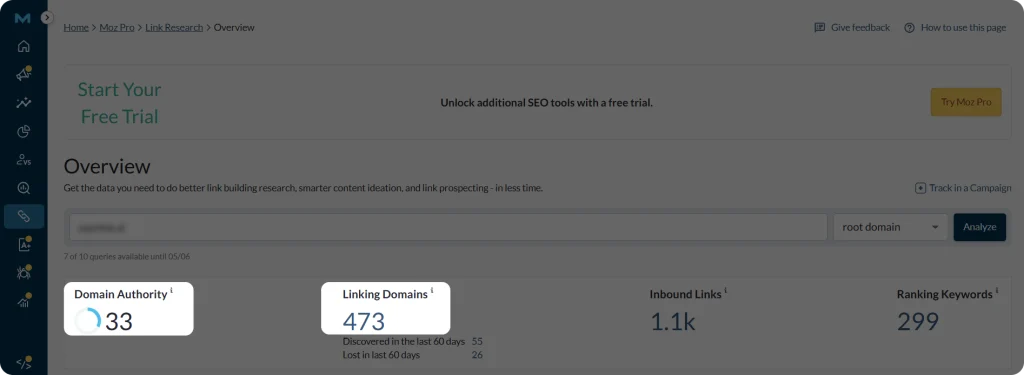
    • To check your Domain Authority, go to Link Explorer and type your domain URL
    • You’ll see a general overview of your website metrics with DA and Linking Domain numbers (number of unique external sources that link to you), too. Screenshot of Moz Overview section
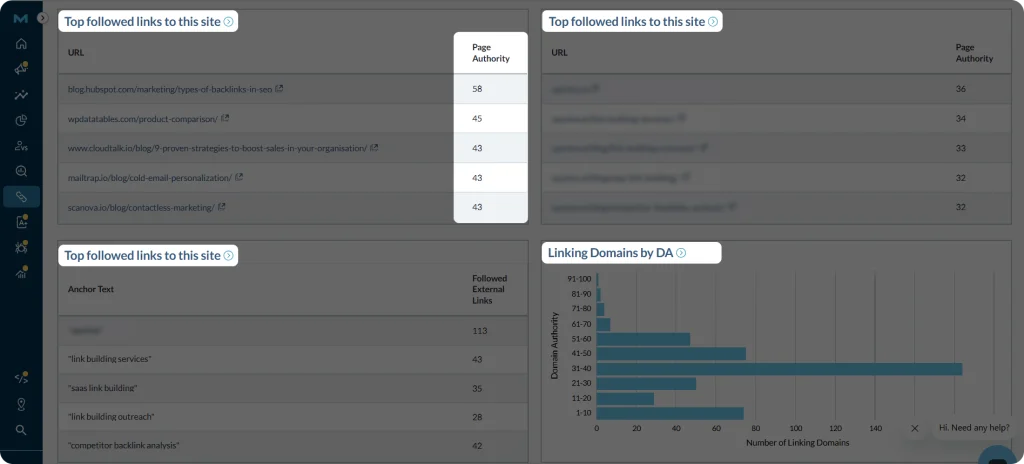
    • Later as you scroll down, you can see 4 sections showing the pages that link to you (“top followed links to this site”), your pages, that are linked to (“top pages on this site”), your anchor texts (“top anchor texts for this site”), as well as a chart sorting linking domains by their DA.Screenshot of Moz Overview section

    You might have also heard of Domain Ranking, which is also a website authority metric, but created by Ahrefs. 

    • Domain Authority: Created by Moz. The scale is from 0 to 100. The goal is to predict how likely a website is to rank on SERPs 
    • Domain Ranking: Created by Ahrefs. The scale is from 0 to 100. The goal is to evaluate the strength of a website’s backlink profile

    So, in short, Domain Authority is a relative metric that compares your site’s ability to rank on search results against competitors, making it most useful for understanding your ranking potential within your industry.

    Why Do You Need to Improve Domain Authority?

    If Domain Authority is a relative metric and not used by Google, a natural question arises: why should you care about improving it?

    While it is not an official ranking factor, DA score is still widely used by SEO professionals and businesses as a practical benchmark.

    • To earn backlinks from higher-quality websites: Many SEO and link building specialists use DA scores as a quick filter when deciding whom to collaborate with and how to further coordinate their manual link building efforts.
    • To understand your competitiveness: Since it is a comparative score, it helps you see how your website compares to others in your industry.
    • To shape your SEO strategy: By knowing where you stand and collecting your backlink data, you can set realistic goals and focus on actions that improve your overall search performance.

    For these reasons, the DA score is still used to understand how strong a website is, especially when building links and comparing it with competitors.

    So, How to Improve Domain Authority? 

    Now that you have a general understanding of Domain Authority, how and why it is used in SEO, let’s discuss some important steps to improve your DA.

    Get Links from Authoritative Websites 

    Since Domain Authority is calculated based on backlink data, it means that the primary way to improve your DA is to acquire backlinks from authoritative websites. 

    Backlinks are important for any website’s online presence. Earning natural backlinks is one of the most important SEO strategies for improving visibility and authority.

    Don’t try to buy backlinks or use other black-hat practices, as those will harm your rankings. Instead, try to identify relevant and authoritative websites and reach out for a backlink exchange.

    One good option is researching which websites link to your competitors and not to you. 

    Here, Moz can help you.

    • Log in to your Moz account (for deeper insights, you need to have a Moz Pro subscription)
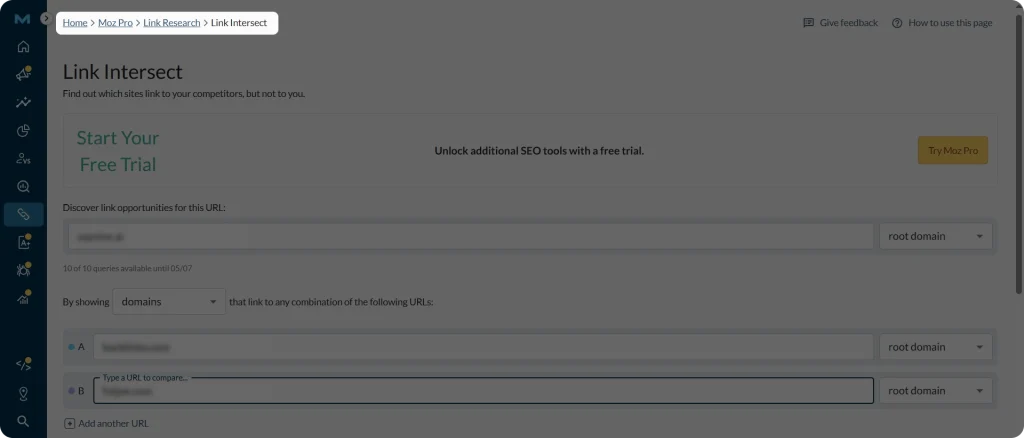
    • Go to the “Link Intersect” section.
    • Enter your URL and then your competitors’ URLs and hit “Find opportunities”. Screenshot of Moz Link intersect section

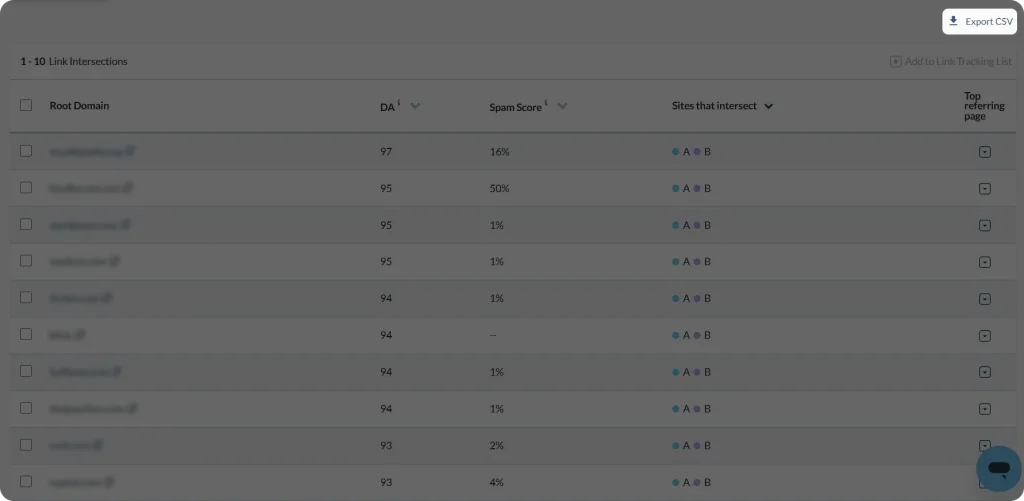
    There you go, a list of all the potential link building sources is presented.

    Screenshot of Moz Link intersect section

    You can then download this list in a CSV format for your further analysis and filtering. Pay special attention to DA scores by sorting the ones that are higher.

    After filtering all the relevant websites, find contacts and reach out for backlink opportunities.

    Create Content Worth Linking to

    Another reliable way to get backlinks is to create compelling content that will add value to the target website, your target audience, and search engines in general.

    Don’t just generate robotic content that is stuffed with keywords. Instead, invest some time in keyword and topic research to create content that is built around people’s search queries. Make sure your keywords are relevant and fit the context without overloading your article.

    Here are some tips along the way:

    • Use a simple Google search to see what people are searching for. On Google, type your seed keywords (like “digital marketing”, “SEO strategy”, “SEO content writing”) and the most popular related search queries will show up. For long-tail results, scroll down to the “People also search for” section.
    • This will help you understand the type of content your audience prefers, whether it is informational blog posts, in-depth guides, or case studies.
    • For deeper insights, use SEO keyword research tools like Ahrefs, Semrush, or Moz. All these listed tools have free keyword research tools to uncover general keyword insight. However, if you want to go deeper, different pricing plans are available, depending on your business needs.

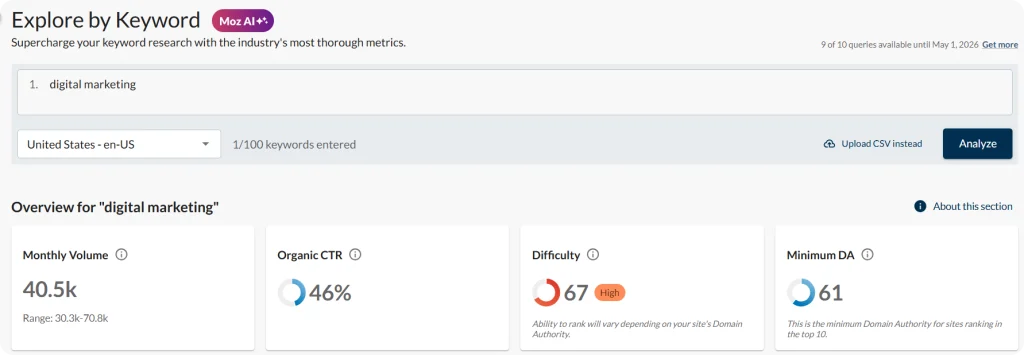
             Let’s take a look at Moz Keyword Explorer, as an example. After searching for your seed keywords, you get an overview of your           keywords’ search volume, difficulty, or primary search intent.

    Screenshot of Moz Keyword Explorer section

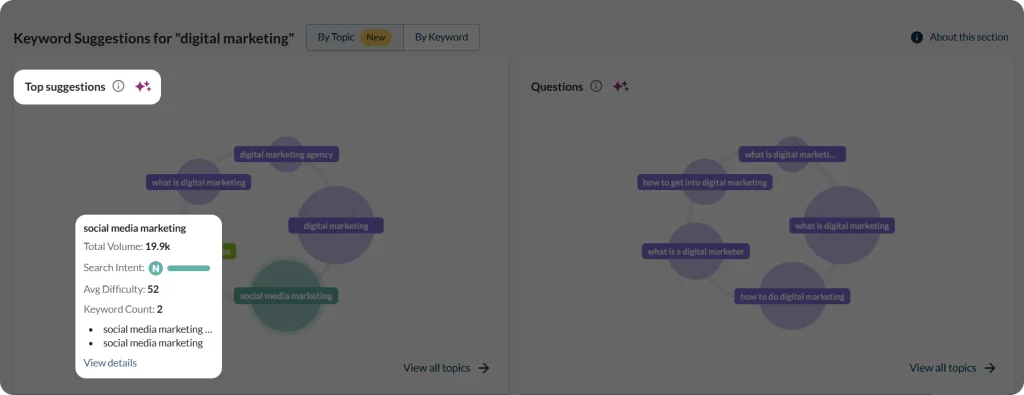
    • As you scroll down, you can uncover more keyword suggestions and questions related to your general keyword, again, with respective metrics showing too.Screenshot of Moz Keyword Explorer section and top keyword suggestions

    When creating your content, also pay attention to your article structure, making sure it’s clear and readable.

    In short, your content should be valuable, relevant, and genuinely worth linking to, making it a strong foundation for successful organic link building efforts.

    Don’t Forget About On-Page SEO 

    While you may be putting a lot of effort into finding and reaching out to websites for backlinks, it is just as important to make sure your own website is worth linking to and visiting. This means having solid on-page SEO in place to deliver a smooth and reliable user experience.

    If your site is slow, hard to navigate, or poorly structured, even high-quality backlink opportunities may not convert:

    • Choose the right primary and secondary keywords, and use them naturally throughout your content, especially in titles and headings
    • Add internal links to help users navigate easily across your website
    • Use schema markup to help search engines like Google better understand your content
    • Ensure your website loads quickly, is mobile-friendly, and has no broken pages

    Ensuring smooth navigation, fast load times, and proper keyword usage improves the user experience, strengthens your website’s credibility in the eyes of users and search engines, and can therefore contribute to higher Domain Authority.

    To Sum Up

    You can think of Domain Authority as a score from 0 to 100 that shows how strong a website is compared to others in terms of SERP ranking potential.

    While it is not a direct measure of ranking success, it can still help you get a quick idea of your backlink profile and guide your link building efforts, especially when learning how to improve Domain Authority.

    By focusing on getting high-quality, relevant backlinks and creating useful content, you can slowly improve your website’s authority and support better long-term SEO results.

  • End-to-End AI Marketing Funnel: From Product Idea to Video Ads to Sales

    End-to-End AI Marketing Funnel: From Product Idea to Video Ads to Sales

    If you’re a student with an early-stage product idea and wondering how to turn it into actual sales without spending heavily or hiring a team, you’re in the right place.

    Traditionally, building a marketing funnel involves multiple steps such as brainstorming, hiring designers, producing content, and running ads. All of this can be time-consuming and expensive, with no guaranteed results.

    However, with the rise of generative AI, this process has been transformed. Today, you can go from a simple idea to creating compelling video ads and generating sales within just a few days using entirely free tools.

    This end-to-end AI-driven marketing approach is especially powerful for students looking to promote side hustles, whether it is digital products or handmade creations.

    No fluff. Just clear steps that actually work.

    Why Does This Full AI Funnel Matters for Students?

    Traditional marketing funnels break because students lack time and money. AI fixes it by automating the boring parts: idea validation, content creation, ad targeting, and follow-ups.

    Businesses using AI across the whole journey see faster results and higher conversions. For you, it means testing ideas cheaply and scaling what works. Think of it as a complete system: idea → research → video ads → landing page → sales → optimization.

    Let’s walk through it stage by stage.

    5 Stages for Launching a Product Using AI

    Stage 1: Generate and Validate Your Product Idea with AI

    Most guides skip this. They assume you already have a finished product. Big mistake.

    Start with AI to brainstorm and check if anyone actually wants what you’re building.

    Step-by-step:

    • Use ChatGPT or Google Gemini (both free). Prompt: “Brainstorm 10 product ideas for [your niche, like study tools for college students]. Make them unique, solve real pains, and include why they’d sell.”
    • Pick one idea. Then validate it fast. Ask Gemini: “Act as a market researcher. Analyze demand for [product idea] among college students. Pull insights from trends, Reddit-style pain points, and competitor gaps.”
    • Go deeper with free tools like Perplexity.ai for real-time search summaries or Gemini’s Deep Research mode to scan forums and reviews without paying for surveys.

    Real example: A student I know had an idea for AI-generated study summaries. AI showed high demand on Reddit (students hate long textbooks) and low competition in her niche. She moved forward. Without this step, you’d waste weeks on something nobody wants.

    This stage takes 30-60 minutes and saves you from bad ideas.

    Stage 2: Build Buyer Personas and Do Smart Market Research

    Now turn your validated idea into something people will buy.

    AI creates detailed buyer profiles and uncovers hidden insights competitors miss.

    How to do it:

    • Prompt ChatGPT: “Create 3 detailed buyer personas for [product]. Include age, pains, goals, where they hang out online, and what would make them buy.”
    • Use Gemini for research: “Summarize top 5 customer complaints about [similar products] from recent reviews and forums.”
    • Spot gaps: Ask “What features are missing in top competitors like [name them]?”

    Output: Clear personas like “Busy engineering major who needs quick, mobile-friendly notes.” This guides every later step—scripts, ad copy, even pricing.

    Students win here because AI does the research homework for you.

    Stage 3: Create High-Converting Video Ads with AI (From Script to Finished Video)

    Video ads drive the most attention right now, especially short ones for TikTok, Instagram, or Meta. Traditional production costs thousands. Generative AI does it for free or under $20.

    Practical workflow (takes 1-2 hours):

    Script generation: Enter your personas and product information into the chatbot. Prompt for the chatbot: “Write a script for a 15-30 second video ad for [product] targeting [persona]. Begin with pain points, show the solution, end with a call to action. Make it friendly and engaging.”

    Visuals and video:

    • Canva Magic Studio (free version) or Kapwing can transform the script into a complete video – auto-adds images, animations, voiceover, and subtitles.
    • Better videos can be created using Leonardo.Ai (free tokens every day) or Runway (free version) – generates customized scenes from text descriptions like “college student smiling while using app on phone.”
    • Voiceovers: ElevenLabs (free version) or CapCut AI voiceover tool.

    Polish: Edit in CapCut (completely free) to match your style, add text overlays, and test hooks.

    Add interactive video elements (this boosts engagement big time—think polls, questions, or clickable stickers that turn passive viewers into active participants). In 2026, platforms reward this: interactive features can double watch time and lift completion rates way above normal videos.

    Here’s how to do it easily in your workflow:

    • In CapCut (your main polish tool): Once your video is built, go to the stickers/effects section. Add a poll sticker, question stickers, or even an emoji slider directly on your frames. For example, at the end of your ad, add a poll asking “Need better study notes? Yes/No” or a question asking “What’s your biggest exam struggle?”
    • For TikTok native upload: Once your ad is exported from CapCut, go to TikTok. Tap “create,” then “upload.” Tap “edit,” then go to “stickers.” Select “Poll” or “Question.” Place it on your ad, especially on key frames (e.g., right after showing your pain point). Your viewers will then tap to vote or reply, perfect for comments, shares, and algorithm love.
    • For Instagram Reels: When creating your Instagram Reels, add a poll, quiz, question, or even an emoji slider. Export your AI video, then go to Instagram. Tap “create,” then “upload.” Tap “edit,” then go to “stickers.” Select “Poll,” “Quiz,” “Question,” or “Emoji Slider.” Place it strategically on your Reels, e.g., “Swipe up if this helped!” or even a quick quiz on your benefit.
    • Pro tip for students: One interactive element per 15-30 second ad, max! Don’t overload your ad with too much. Test what works: polls on pain points get replies; questions on solutions spark DMs and leads.

    Example: 

    • A student created a 20-second ad for custom planners
    • The ad followed a simple flow: tired student → organized life → buy now
    • They added an interactive poll sticker using CapCut or TikTok
    • Poll question: “Struggling with deadlines? Yes or No”
    • The video gained thousands of views on TikTok without any filming
    • It also generated a large number of poll responses
    • These responses were used for follow-up direct messages
    • Resulted in meaningful engagement and actual sales

    These videos (now with interactive boosts) feed straight into your ads and funnel. Higher engagement = cheaper clicks and warmer leads. Start adding one interactive element to your next test—watch the difference.

    Stage 4: Build Your Sales Pages, Emails, and Automation

    Video ads send people somewhere. Make that landing page convert especially if you’re doing eCommerce marketing with digital downloads or print-on-demand merch.

    Easy steps:

    • Try free AI builders like Framer AI or Carrd, and give the AI the following prompts: “Design a simple landing page for my [product] with a headline, benefits, testimonials, and buy now.” (Follow a basic SEO guide: Make sure your website is easily readable with clear headings, fast-loading design, a mobile-friendly layout, and incorporate the keywords into the titles/descriptions so Google and AI searches can find you!)
    • Write engaging content with ChatGPT: “Write persuasive copy for my new buyers, including the product description, FAQ, email sequence, etc.”
    • Use automation with free tools like Mailchimp, an AI email writer, or ManyChat, an Instagram DM auto-responder. Give the AI the following prompts: “Write a follow-up email to a person who watched my video ad but didn’t buy my [product]…”

    Add a simple checkout with Stripe (free to start). The whole page and emails can be live in under an hour.

    Stage 5: Launch Ads, Nurture Leads, Close Sales, and Optimize

    Run targeted ads, let AI tools handle the rest, and watch sales come in.

    Launch and run:

    • On Meta or TikTok Ads (low budget start at $5/day), upload your AI video. Use platform AI suggestions for targeting based on your personas.
    • Track using free Google Analytics or insights provided by Meta. Ask ChatGPT: “Analyze these ad results and suggest improvements.”

    Nurture and sell:

    • Free AI chatbots on ManyChat/Tidio can be used to answer questions 24/7.
    • Predictive Lead Scoring: Utilize free versions of HubSpot or even ChatGPT analyzing email opens.

    Optimize the loop:

    • Feed results back into AI: “Based on these sales data, improve my next video script.”
    • AI spots patterns—like which video hook works best—and auto-suggests A/B tests.

    Real student win: One launched study-note templates. AI video ads cost $10, generated 200 clicks, and closed 35 sales in week one. Then AI optimized the emails to double repeat buyers.

    What Most Guides Overlook and What Makes This Different?

    Most well-known marketing guides, including those from industry voices like Neil Patel, focus on refining existing funnels rather than building one from the ground up. They highlight strategies like personalization and data analysis, but often skip the crucial first step: turning a simple idea into a working system that generates attention and sales.

    They also tend to overlook practical execution. There is little emphasis on using free tools or creating video content efficiently from start to finish.

    This guide takes a different approach. It focuses on helping you move from idea to execution with clarity and speed. You will learn how to validate your concept, create engaging AI-powered videos using tools like Canva and Kapwing, and set up simple automation to convert interest into sales.

    The entire process is designed to be accessible, requiring no large budget, no advanced skills, and no team.

    Actionable Tips to Get Started Today:-

    • Begin small: Pick one idea, build one video ad, run $10 in ads.
    • Stay human: Always review AI output for your voice—AI drafts, you approve.
    • Track simply: Use a free Google Sheet. Log cost, clicks, sales weekly.
    • Test ethically: Be honest in ads. AI speeds things up, but trust builds sales.
    • Scale what works: Once one funnel hits, duplicate for new products.

    Conclusion

    The end-to-end AI marketing funnel turns students from dreamers into sellers. You now have every stage from raw product ideas through killer video ads to actual money in your account covered with free or cheap tools.

    Starting tonight. Pick your idea, open ChatGPT, and build the first piece. In a week, you’ll have something to live and learn. The tools are ready. The only question is: what’s your first product?

    FAQs

    Can I really do this with zero budget?

    Yes. ChatGPT, Gemini, Canva, and CapCut cover 90% for free. Spend only on small ad tests once you’re ready.

    How long does the whole funnel take?

    First version: 1-2 days. Then it runs mostly on autopilot.

    What if my video ads don’t convert?

    AI analyzes results and suggests fixes in minutes. Tweak the hook or targeting and relaunch.

    Is this only for digital products?

    No. Works for physical items too (use AI for mockups and print-on-demand links).

    Will AI replace me as the creator?

    No. It handles the grind. You bring the ideas and final judgment—customers buy from real people.

    Ready to build yours? Grab your laptop and go. You’ve got this.

  • Top 15 IT and Software Companies in Bangladesh In 2026

    Top 15 IT and Software Companies in Bangladesh In 2026

    With around 5000 registered software companies in Bangladesh, Its growing ICT sector is meeting more than a billion USD worth of software demand in the local industry. UNCTAD affirms the ICT sector has been observing an annual growth of 40% since 2010, and the trend isn’t slowing down.

    Such a saturated market often makes it difficult to identify the right company to accommodate your goals. Our round-up of the Top 15 IT and Software Companies in Bangladesh will give you a solid idea of what to look for when choosing your ICT partner.

    Our selection is based on the following:

    • Clients served
    • Projects done
    • Unique selling propositions

    Be it an e-commerce venture or your next big app idea; by the end of this article, you will have all the necessary information to choose wisely.

    Top 15 IT and Software Company in Bangladesh in 2024

    1. Data Soft– Software Company in BD

    Datasoft

    First on our list is Data soft. Since 1998, this software company has built an impressive track record serving clients in the corporate and public sectors.

    Their clientele includes:

    • The Government of Bangladesh
    • UNDP
    • British American Tobacco
    • BRAC
    • bKash
    • WASA, and many more.

    They have developed several products within the domains of:

    • Financial ecosystems (remit 365, Co-Op360, Central bank reporting)
    • Port and logistics
    • Virtual reality
    • ERP-Smart enterprise
    • E-commerce solutions

    Known for their Enterprise resource planning and Fintech projects, the software company helped automate a wide range of business processes and mainstream various banking operations.

    2. LEADS– IT Company in BD

    Leads

    Starting their journey in 1992, Leads has made quite a name for themselves, securing several ICT awards including:

    1. Best ICT solution provider 2017
    2. Champion award from BASIS national ICT awards 2020
    3. ICT Pioneer award 2020.

    They have served

    • The planning commission
    • The national board of revenue
    • The life insurance corporation

    And international brands like:

    • H&M
    • Coca Cola
    • G4S

    However, they specialize in simplifying banking and financial services.

    Their portfolio mostly consists of:

    • Banking and NBFI (non-banking financial institution) solutions,
    • Capital market solutions,
    • ERP
    • Insurance solutions,
    • Data warehouse and analytics,
    • Digital innovations.

    They excel in automating processes involving transactions and large data volumes.

    3. IBOS– Best Software Company in BD

    Ibos

    Intelligent Business Automation System, an AKIJ company operating for more than a decade, is an IT consulting company focused on bringing top-of-the-line business solutions. Besides handling all of AKIJ’s software needs, the company has served major brands like:

    • The Uttara group of industries
    • The Hi-tech group
    • The Madina group.

    They have done projects concerning business automation, be it streamlining salesforce management, VAT and tax returns, HRM, Finance, procurement, or even distribution.  

    Despite of not having a diverse portfolio, they are highly skilled and experienced in business process automation. Hence, when it comes to business automation, IBOS is one of the prime choices. 

    4. Brain Station 23-Best IT Company in BD

    Brainstation-23

    Powered by the bright minds of BUET, Brain station 23 started their journey back in 2006. Though the initial focus was on the international market, they started gaining pace locally in 2010. 

    Although they expertly handle several sectors, the majority of their projects are in the realms of:

    • Ecommerce 
    • Android and iOS applications
    • Artificial intelligence and machine learning 
    • Cloud computing
    • .NET framework

    Impeccable track record and top-notch service helped them acquire major clients like:

    • Incepta pharmaceuticals
    • Aristo Pharma Ltd. 
    • British American Tobacco
    • Othoba
    • Apex
    • Otobi
    • ACI
    • Berger
    • Polar
    • Nissan

    From developing apps to building games, they have done it all. If you are looking for a software company in Bangladesh to handle all your IT needs, Brain Station 23 can be a viable option. 

    5. Tiger IT– #1 IT Company in Bangladesh

    Tiger IT

    Next on our list is Tiger IT, a prominent software company in Bangladesh capable of providing nationwide solutions. Their public sector clientele includes:

    • UNDP
    • Department of Immigration and passports
    • Bangladesh Road Transport Authority
    • Election Commission of Bangladesh 
    • Ministry of Labor, India
    • Department of Transport Management, Nepal.
    • Department of Immigration, Bhutan. 
    • National database and registration authority, Kenya

    And in the private sector, they have served renowned brands like:

    • Grameen phone ltd
    • Banglalink
    • Robi

    The projects they excel in are:

    • Biometric registration and identity management system
    • Voter registration system
    • E-passport system
    • Identity access management system

    With close to two decades of experience in biometric research and extensive expertise dealing with large population data, Tiger IT is ideal for nationwide service projects. 

    6. Synesis IT– Software Company in BD

    Synesis IT

    With over 15 years of experience, Synesis IT has been providing solutions to the health, education, telecom, finance, local governance, Education, Energy and power, and BPO sectors of Bangladesh, along with overseas clients. 

    Some of the noteworthy clients are:

    • Bangladesh government 
    • Borger guard Bangladesh
    • IDCOL
    • Bangladesh Army  
    • UKAID

    Major projects of the company include:

    • Electronic Fiscal device management system
    • Consumer rights and complaint management system 
    • Online E-tin registration system 
    • Medical counseling and consultation service system
    • Decentralized education management information system 

    Having extensive experience in IT infrastructure design and large-scale system integration, Synesis IT is ideal for national and international projects regarding service process simplification. 

    7. Southtech– IT Company BD

    South Tech Group

    Already in their third decade of operation, Southtech group is a seasoned software company in Bangladesh, serving clients like:

    • BRAC
    • Icddr,b
    • FAO
    • A&W
    • Intercontinental 
    • Bangladesh government (NATP 2)

    Southtech provides UI/UX solutions, data center services, Consultation services, and Software development services. Their expertise includes managing data centers located strategically to ensure high performance and reliability for their clients. Some of their major software are:

    • Ascend financials (microfinance)
    • EasyVAT (VAR management)
    • SCALED (HR management)
    • Ascend smart lending (Loan organization system)
    • EasyCom (Ecommerce solution)

    Business process and service automation are their strong suits. Startups or established businesses looking to automate various processes could find them to be strong strategic partners. 

    8. Spectrum– IT Company in BD

    Spectrum

    In their 10 years of operations, Spectrum has served The Bangladesh government, developing various websites. They specialize in projects involving smart identity, health care, education, e-library, e-commerce, digital payment service, central biometric attendance, and ERP. 

    Spectrum can be a good option if you are looking for a strategic partner with web development skills.            

    9. ITCL

    Itcbd

    The company has been operating since the turn of the millennium and has served major private banks in Bangladesh using their third-party payment processing service Q-Cash. Along with that, they have a track record of serving:

    • UNDP
    • GrameenPhone
    • Teletalk 
    • Robi 

    Noteworthy projects include:

    • Q-Cash
    • Point of sale (POS)
    • Kiosk (deposit machine)

    This software company can be a good choice for projects involving transaction switching, biometric ATM solutions, and card management systems. 

    10. Business Automation ltd. 

    Business Automation ltd

    As the name suggests, Business automation ltd. specializes in automating business processes. They have served clients in the government, banking and health sectors including:

    • a2i 
    • Bangladesh Bank
    • icddr,b

    Some of their products are:

    • One-stop service platform for interoperable online service delivery.
    • Insightdb, for monitoring business data from one dashboard.
    • Enterprise business solution for mobilizing organizational operations. 

    If you have a business that could benefit from kiosks and digital elements in pursuit of automation, Business automation Ltd. could be a smart choice. 

    11. Shurjo Mukhi Limited

    Shurjo Mukhi Limited

    As one of the early adopters of online payment gateway systems, Shurjomukhi has made quite a name for themselves as a prominent Fintech company in Bangladesh since their inception in 2011. Their clientele includes:

    • IBA
    • The Daily Ittefaq 
    • Dhaka stock exchange
    • Bangladesh armed forces  

    Major projects

    • Online payment gateway
    • Payment link generator
    • QR-based payment solution 

    Shurjo Mukhi can be a valuable strategic partner for online businesses and services that require wired transactions. 

    12. Workspace Infotech

    Workspace Infotech

    Workspace Infotech is a renowned software outsourcing firm serving clients from Bangladesh and Australia. Though they provide software development services, their main competency lies in IT staff augmentation, where Companies can hire their engineers to complete specific projects and tasks.

    13. BJIT

    BJIT

    BJIT is an offshore software company in Bangladesh with global offices in Japan, The U.S.A., Finland, Singapore, Sweden, and The Netherlands. They uphold global standards serving clients like:

    • Google
    • Sony
    • Rakuten
    • Toshiba

    Their expertise lies in 

    • AI and machine learning
    • Data collection 
    • Object detection

    BJIT is ideal for projects within the domains of cybersecurity and QA & test automation. 

    14. Magnito Digital

    Magnito Digital

    With 18 international and national awards, Magneto Digital is one of Bangladesh’s most decorated Software companies. Along with several renowned Bangladeshi brands, they have served clients like:

    • Uber
    • USAID
    • Nestle 
    • Le Meridien

    Their products include:

    • Designing
    • Content creation
    • Software development
    • Advertisement

    They are adept in digital marketing campaigns and digital content creation that could take your ventures to the next level. 

    15. Divine IT Limited

    Divine IT Limited

    Divine IT is another behemoth of a software company in Bangladesh, sporting a portfolio of over 5000 thousand completed projects for more than 500 clients. They have served clients across all sectors in the national and international markets. Some renowned clients include:

    • Keya
    • Singer
    • Anwar Group

    Though they provide services on everything from cyber security to mobile app development, their expertise lies in the following:

    • Enterprise resource planning
    • HR & payroll software
    • VAT system
    • Production and planning control 

    Learn more about the top 10 Web Design Companies in Bangladesh

    Conclusion

    We recommend you consider three major aspects when looking for an ICT partner.

    • Your budget
    • Nature of your project
    • The scale of your project

    For app development, we recommend Brain Station 23. For eCommerce solutions, Southtech can be quite effective. And for ERP, we recommend Data Soft.

  • Top 15 Small Business Ideas in Bangladesh

    Top 15 Small Business Ideas in Bangladesh

    Looking for Small Business Ideas in Bangladesh? Dreaming of starting your own business in Bangladesh? You’re in the right place! Bangladesh is buzzing with opportunities, and we’ve got the inside scoop on the hottest small business ideas for 2024. Whether you’re looking to turn a passion into a profession or want to try something completely new, our list of the top 15 small business ideas is packed with inspiration.

    So, grab a cup of tea, sit back, and let’s explore these exciting opportunities together. Your next big business idea might just be a few scrolls away!

    What is a small business?

    A small business is a type of business that is usually run by one person or a small group of people. It doesn’t need a lot of money to start, and it often focuses on providing services or selling products to a local community. Small businesses can be anything from a neighborhood grocery store to a tailoring shop or even an online store that sells handmade items. They are usually easy to manage, and the owners are often directly involved in day-to-day work.

    Unlike big companies with many employees and huge budgets, small businesses work on a smaller scale. They may have just a few workers or sometimes only the owner doing everything.

    We see the best part about starting a small business is that it can be more flexible, meaning you can work in a way that suits you, decide your working hours, and focus on something you love or are good at. Small businesses are great because they provide people with jobs and make it possible for anyone with a good idea to succeed without needing a lot of money.

    In Bangladesh, small businesses are especially important because they help boost the economy and improve people’s lives by giving them opportunities to earn money and be their own boss.

    We can start with simple ideas and grow as more customers find value in what we offer.

    Here’s a list of the top 15 Small Business Ideas in Bangladesh 2024

    Online Clothing Store

    Online Clothing Store

    The fashion industry is booming in Bangladesh, and with the increasing demand for stylish and trendy clothing, an online clothing store can be an excellent business idea. You can source products from local suppliers or import them from other countries. A well-designed website and effective marketing strategies can help you establish a successful online clothing business.

    E-commerce Platform

    E-commerce platforms provide a marketplace for sellers to sell their products and buyers to make purchases. You can create an e-commerce platform that caters to the needs of the local market, offering a variety of products from different categories such as electronics, clothing, and home appliances. Invest in a user-friendly website and promote your platform using digital marketing techniques to attract sellers and buyers.

    Mobile Phone Accessories Store

    The mobile phone industry is thriving in Bangladesh, with an increasing number of people using smartphones. A mobile phone accessories store can be a profitable business idea, as these accessories are in high demand. You can sell items such as phone cases, chargers, headphones, and screen protectors. Always focus on offering quality products and excellent customer service to create a loyal customer base.

    Fast Food Restaurant

    Fast Food Restaurant

    The fast-food industry is growing rapidly in Bangladesh, with both international and local chains gaining popularity. Opening a fast-food restaurant offering popular local and international dishes can be a profitable business opportunity. Ensure that your menu offers a variety of tasty and affordable options, and focus on cleanliness and quick service to attract customers.

    One of my friends started a fast-food business earlier in 2022. He started with just two items which are not very common in his area. Within a few month, he were able to attract 100s of regular customers by his quality service.

    From his experience, people just like clean environments and quality foods.

    Freelance Graphic Design Services

    Graphic design is an essential aspect of branding and marketing for businesses. Offering freelance graphic design services can be an excellent business idea for those with creative skills. Start by building a portfolio showcasing your work, and promote your services on social media platforms and freelance websites. As your reputation grows, you can establish your own design agency.

    At first, you can start offering your design services in online marketplaces like Upwork, Fiverr etc. The necessary skillsets are available on youtube and you just need to find them. This small business requires no investment.

    Organic Food Store

    This is one of the best local businesses. The demand for organic and healthy food products is on the rise in Bangladesh. Opening an organic food store that offers a range of fresh and processed organic foods can be a successful business venture. Source products from local farmers and producers to ensure quality and support the local economy.

    Event Management Services

    Organizing events such as weddings, corporate gatherings, and parties can be a lucrative business opportunity in Bangladesh. Offer comprehensive event management services that include planning, budgeting, venue selection, and coordination. You can also expand your offerings with creative services like wedding invitation design to add more value for clients. Build a team of skilled professionals, and focus on delivering exceptional service to create a strong reputation in the market.

    Tourism and Travel Agency

    Bangladesh has many beautiful tourist destinations, and the tourism industry has significant growth potential. Establish a travel agency offering tour packages, hotel bookings, and transportation services to both local and international tourists. Create attractive packages that cater to various budgets and preferences, and promote your agency using digital marketing techniques.

    Facebook can be a great place to let people know about your tourism guides. First, you can start offering your tourism management services to your Facebook friends, and after a certain time your service will grow to the whole country.

    Tutoring Services

    Education is highly valued in Bangladesh, and there is a growing demand for tutoring services for students of all ages. You can start a tutoring business offering one-on-one or group classes in subjects such as English, mathematics, and science. As your business grows, you can expand to offer online tutoring services and establish a tutoring center.

    Fitness Center

    Health and fitness awareness is increasing in Bangladesh, and opening a fitness center can be a profitable business idea. Provide modern equipment, group classes, and personal training services to cater to the needs of various clients. Focus on

    maintaining a clean and inviting environment, and offer promotional packages and memberships to attract customers. Collaborate with nutritionists and dietitians to provide additional value to your clients.

    Home-based Catering Services

    With a passion for cooking and culinary skills, you can start a home-based catering business in Bangladesh. Offer a variety of dishes for occasions such as birthdays, weddings, and corporate events. Focus on delivering high-quality, delicious food, and personalized service to create a strong reputation. As your business grows, you can expand to a commercial kitchen and hire additional staff.

    Digital Marketing Agency [Online Business Ideas]

    The importance of digital marketing is growing as businesses recognize the need for an online presence to reach their target audience. Starting a digital marketing agency can be a lucrative business opportunity for those with expertise in online advertising, search engine optimization (SEO), and social media marketing. Offer comprehensive marketing solutions to help businesses grow their online presence and increase sales.

    Agricultural Consultancy [Unique Business Ideas]

    Agriculture is a significant sector in Bangladesh, and offering agricultural consultancy services can be a profitable business idea. Provide guidance and support to farmers on crop selection, cultivation techniques, and pest management. Incorporating a smart irrigation system can further enhance agricultural productivity by ensuring optimal water usage. Collaborate with agricultural experts and institutions to stay updated on the latest advancements and trends in the industry.

    Recycling Business

    Environmental awareness is increasing in Bangladesh, and a recycling business can be both profitable and eco-friendly. Start by focusing on recycling materials such as paper, plastic, and metal. Collect recyclable materials from households and businesses, and process them to create new products. Collaborate with local manufacturers to sell recycled materials and create a sustainable business model.

    Home-based Bakery [Fast Growing Business in BD]

    A home-based bakery can be a rewarding business opportunity for those with a passion for baking. Offer a variety of baked goods such as cakes, pastries, and cookies, and cater to special occasions such as birthdays and weddings. Focus on using high-quality ingredients and creating delicious, visually appealing products. Promote your bakery through social media platforms and word-of-mouth referrals. Instagram, with its strong visual focus, is especially effective for showcasing beautifully crafted baked goods and attracting local customers. To accelerate growth on the platform, some bakers choose to buy Instagram followers to boost visibility and build initial trust with potential buyers.

    Challenges Facing Small Businesses

    Business funding

    Running a small business comes with its own set of challenges. One of the biggest challenges is limited access to funding. Many small business owners struggle to get business loans for bad credit or investments to grow their business Without enough money, it can be difficult to buy the supplies, hire the right people, or expand the business when needed.

    Competition with Big Companies

    Another challenge is competition. Small businesses often have to compete with larger companies that have more resources, which can make it tough to attract and keep customers. Larger companies may be able to offer lower prices or more variety, making it harder for small businesses to stand out.

    Small business management

    Managing day-to-day operations can also be overwhelming. Small business owners often wear many hats, handling everything from marketing to customer service to bookkeeping. This can lead to stress and burnout, especially if there are not enough employees to share the workload or a business management software at hand.

    Lack of Instruments

    In Bangladesh, small businesses may also face challenges like lack of proper infrastructure, difficulties in accessing technology, and limited knowledge about best business practices. These obstacles can slow down growth and make it harder for small businesses to succeed.

    Despite these challenges, many small business owners find ways to adapt and thrive by being resourceful, building strong customer relationships, and staying committed to their goals.

    Conclusion

    Bangladesh offers numerous opportunities for entrepreneurs to start small businesses and contribute to the country’s economic growth. Consider your skills, interests, and market demand when selecting a business idea from the list above. With dedication, hard work, and effective marketing strategies, you can achieve success as an entrepreneur in Bangladesh.

    Read Also:
    Top 10 Web Developers in Bangladesh

    Top 15 Best Domain Hosting Companies in Bangladesh

    FAQs about Small Business Ideas in Bangladesh

    Which Business is Best in Bangladesh?

    The “best” business in Bangladesh depends on various factors, including market conditions and individual interests. Some promising sectors in Bangladesh include the garment and textile industry, agriculture, IT, e-commerce, healthcare, renewable energy, tourism, education, real estate, and food and beverage.

    Which Business is Profitable in Bangladesh?

    Profitability in Bangladesh can vary, but businesses with potential for profit include garment manufacturing, agriculture and agribusiness, IT and software development, e-commerce, healthcare and pharmaceuticals, renewable energy, and real estate. Conducting thorough market research and considering local demand are crucial for success in any chosen sector.