For most of the internet’s history, digital success followed a simple rule:
If people can find you, they will trust you.
That rule quietly broke.
Today, many brands are highly visible. Ranking well, publishing frequently, appearing across platforms, yet still struggle with credibility, conversion, and long-term trust. The problem isn’t effort or execution. It’s that visibility and trust are no longer the same thing.
The Old Internet Rewarded Presence
Search-driven systems were built to retrieve information. If you optimized correctly, you appeared. If you appeared consistently, you won.
Presence became a proxy for credibility.
Marketing strategies, performance metrics, and budget allocations were all designed around this assumption, yet today a broader digital strategy like content types that connect with your audience matters more than just visibility. Being found was treated as proof of relevance. And relevance was assumed to lead to trust.
The Internet’s Decision Layer Has Changed
AI-driven systems don’t just retrieve information. They evaluate it.
Before showing an answer, AI looks at multiple sources to see which ones are consistent, credible, and dependable. It doesn’t reward the loudest brand. It favors the one it can trust.
This shift is already happening. AI-driven interfaces now capture attention before users reach traditional results, with AI-generated overviews taking up most of the visible space on many search pages.
Pushing even top-ranked organic results out of immediate view — meaning that being “number one” no longer guarantees meaningful attention, let alone trust (based on research by BrightEdge on the expansion of Google’s AI Overviews).
In this environment, visibility is no longer the differentiator. Authority is.
Why High-Visibility Brands Still Struggle?
Many brands feel the symptoms but misdiagnose the cause.
They publish more, optimize harder, and expand distribution, but without a structured content plan such as a content marketing strategy checklist, visibility alone will not create true influence.
Yet trust doesn’t compound.
Why?
Because their signals don’t align.
And when visibility fails to translate into trust, the pattern is often visible — if you know what to look for.
5 Signs Visibility Isn’t Turning Into Trust
Your brand is present, but rarely referenced. You appear often, yet you’re not cited, quoted, or included as a source of explanation. Visibility without reference signals weak authority.
Your messaging changes by channel. What you say on your website, in media, and on social platforms doesn’t quite match. Humans tolerate this. AI systems don’t.
You rely on activity to signal expertise. More content, more posts, more campaigns — but no clear reason to trust you. Even well-optimized content loses authority when it’s repetitive or inconsistent (see3 effective ways to avoid duplicate content penalty).
Recognition doesn’t compound. Each win feels isolated. Coverage, rankings, or engagement spike briefly, then reset instead of stacking.
People understand what you do, but not why you matter. Your offering is clear, but your relevance isn’t. Being understandable is not the same as being authoritative.
To human audiences, these issues often feel like polished marketing with unclear substance. To AI systems, they register as low confidence — not because the brand is wrong, but because it’s inconsistent.
Authority Is Not a Claim — It’s a Structure
Authority doesn’t come from saying the right things once.
It emerges when ideas, people, references, and positioning reinforce each other consistently over time — what we often describe as Digital Authority Architecture. In modern systems, trust isn’t awarded for activity or frequency; it’s inferred from coherence.
This is why two brands with similar visibility can experience wildly different outcomes. One is understood. The other is merely seen.
The Strategic Shift Leaders Must Make
The critical question is no longer:
“How do we get more visibility?”
It’s:
“When we are visible, are we unmistakably credible?”
Brands that make this shift stop chasing attention and start building authority — the kind that compounds, transfers across platforms, and survives algorithmic change.
In an AI-first internet, being visible gets you noticed. Being authoritative gets you trusted.
And trust, now more than ever, determines who gets included at all.
Writer: Anangga Gunawan
About the Writer: Anangga Gunawan is the Lead of Authority at Avonetiq, where he focuses on how brands build credibility and trust in an AI-driven internet. His work explores digital authority, AI-mediated decision systems, and why visibility alone is no longer enough to earn trust.
Sales teams today are working harder than ever, yet many struggle to see consistent gains in productivity. Calls are being made, emails are sent, reminders are set, and follow-ups are attempted. On the surface, everything looks busy. But beneath this activity lies a silent issue that slowly erodes performance: manual follow-ups.
Manual follow-ups rarely fail loudly. They do not trigger alerts or sudden breakdowns. Instead, they fail quietly through missed callbacks, delayed responses, forgotten leads, and inconsistent communication. Over time, these small gaps add up, costing sales teams valuable time, momentum, and revenue.
In this article, we explore why manual follow-ups are one of the most overlooked productivity killers in sales and how modern teams can move beyond them.
What Are Manual Follow-Ups in Sales?
Manual follow-ups refer to any sales follow-up process that depends heavily on human memory, personal reminders, or disconnected tools. This often includes tracking leads in spreadsheets, setting individual calendar reminders, sending follow-up emails manually, or relying on WhatsApp messages without a centralized system.
At first, this approach feels manageable. A salesperson may remember whom to call back, jot notes in a notebook, or update an Excel file at the end of the day. For very small teams or low lead volumes, manual follow-ups can appear to work.
However, as lead volume increases and sales cycles become more complex, manual follow-ups stop being reliable. The process becomes reactive rather than structured. Follow-ups happen when someone remembers, not when they should happen.
This is where many teams begin exploring what a CRM is and why it exists in the first place. CRM systems were designed to remove dependence on memory and manual tracking, especially for time-sensitive sales activities like follow-ups.
Key Challenges of Manual Follow-Ups
Manual follow-ups often seem workable at first, especially when sales teams are lean and deal volume is manageable. But as pipelines grow and daily priorities compete for attention, the limitations of a manual approach become clear. What starts as a small operational gap slowly turns into a recurring productivity issue that affects both sales outcomes and customer experience.
Missed Opportunities Due to Human Error
Even the most disciplined sales professionals are human. Calls get interrupted, meetings run long, and urgent tasks take priority. When follow-ups rely on memory, personal notes, or scattered reminders, leads inevitably slip through the cracks. Many of these missed follow-ups are caused by poor data alignment across tools, which makes it harder for sales teams to respond at the right time
A missed follow-up often means more than just a delayed call. It can result in a prospect choosing a competitor, losing interest, or questioning a company’s responsiveness. These losses rarely appear clearly in performance reports, which is why the damage caused by missed follow-ups often goes unnoticed until conversion rates start declining.
Sales Reps Spend More Time Managing Tasks Than Selling
Manual follow-ups force sales reps to spend a significant portion of their day managing tasks rather than engaging with prospects. Updating spreadsheets, checking old emails, reviewing notes, and figuring out who needs a follow-up all consume mental energy that could be better spent on conversations.
This constant task switching reduces focus and lowers overall efficiency. Instead of moving confidently from one sales interaction to the next, reps spend time organizing their workload and trying to stay on top of reminders. Over weeks and months, this administrative burden compounds and directly impacts overall sales productivity.
Inconsistent Customer Experience
When follow-ups are handled manually, consistency becomes difficult to maintain. One prospect may receive timely, thoughtful follow-ups, while another hears back days later. Messaging varies from rep to rep, and there is no standard cadence guiding outreach.
From a buyer’s perspective, this inconsistency creates friction. Modern buyers expect prompt, relevant communication at every stage of the sales process. When follow-ups feel disorganized or delayed, trust erodes quickly, even if the product or service itself is strong.
Individually, these issues may seem minor or unavoidable. Together, they create a pattern of lost momentum, reduced focus, and uneven engagement that directly affects sales performance. Without a structured approach to follow-ups, teams spend more time reacting than selling, allowing productivity to decline quietly over time.
How Manual Follow-Ups Impact Sales Productivity
Manual follow-ups may seem manageable at first, but as sales activity increases, their impact on productivity becomes more visible. What starts as a simple way to track tasks slowly turns into delays, missed opportunities, and reduced focus. Over time, these small inefficiencies add up, affecting how sales teams respond to leads, manage conversations, and maintain momentum across the pipeline.
• Slower Response Times to Leads
Sales reps handling follow-ups manually often respond later than they should, not because of poor effort, but because reminders are scattered across inboxes, calendars, spreadsheets, and personal notes. Valuable time is lost identifying who needs attention next, and even short delays can reduce engagement with high-intent prospects.
• Less Time Spent on Actual Selling
Manual follow-ups force reps to spend a significant portion of their day managing tasks rather than having sales conversations. Constantly checking spreadsheets, reviewing emails, or searching notes interrupts focus, reduces momentum, and limits the number of quality interactions a rep can handle in a day.
• Broken Momentum in Long Sales Cycles
Deals that require multiple touchpoints depend on consistent and timely follow-ups. When follow-ups are handled manually, communication gaps appear. Prospects disengage not because of lost interest, but because the sales team failed to re-engage at the right moment, leading to stalled deals and inflated pipelines. Without a structured content marketing strategy supporting follow-ups, sales teams struggle to maintain engagement across longer buying cycles.
• Increased Mental Load and Burnout
Remembering follow-ups, managing reminders, and avoiding mistakes adds cognitive stress over time. High-performing sales reps often compensate by working longer hours, which accelerates burnout without improving results. What appears to be a performance issue is often a system limitation.
• Limited Visibility for Sales Managers
Without centralized tracking, managers struggle to see follow-up quality and timing. Activity reports may show calls and emails, but they rarely reveal delayed responses or missed follow-ups. This leads to reactive coaching, less accurate forecasting, and productivity issues hidden behind surface-level metrics.
Manual follow-ups may not stop sales teams from working, but they quietly reduce efficiency at every stage of the sales process, gradually eroding overall sales productivity.
Why Scaling Sales with Manual Follow-Ups Is Nearly Impossible
Manual follow-ups might survive at a small scale, but they break down completely as teams grow. In fact, research by RAIN Group shows that 80% of sales require five or more follow-ups, making consistency nearly impossible to maintain manually.
As more leads enter the funnel, the complexity of follow-ups increases. Multiple touchpoints, longer buying cycles, and multiple stakeholders demand structure and visibility, something manual systems cannot provide reliably.
There is no single source of truth. Data lives across inboxes, spreadsheets, and personal notes, increasing risk during handoffs between sales reps, especially when someone is on leave or exits the organization.
This is why one of the key benefits of CRM adoption is scalability. A structured system ensures that follow-ups remain consistent and visible, regardless of team size or lead volume.
How CRM Automation Fixes the Follow-Up Problem
CRM automation does not replace salespeople. It removes the friction that slows them down.
A well-implemented CRM ensures that follow-ups happen at the right time, without relying on memory. Automated reminders, task creation, and follow-up workflows keep sales reps focused on conversations rather than administration.
Key improvements include:
Automatic follow-up reminders based on lead activity
Centralized communication history for every prospect
Visibility into what has been done and what is pending
Reduced manual data entry
For teams evaluating how to move away from manual processes, understanding how to choose the best CRM solutions becomes critical. Not all CRMs are designed with automation and usability in mind.
Why Cloud-Based CRMs Are Better for Modern Sales Teams
Modern sales teams are no longer confined to desks. Remote work, field sales, and distributed teams are now common. Cloud-based CRM platforms support this reality far better than traditional systems.
With a cloud-based CRM, sales data is accessible in real time from anywhere. Updates made by one team member are instantly visible to others. Follow-ups remain on track even when teams are working across locations or time zones.
Additionally, cloud-based systems reduce dependency on manual backups, local installations, and outdated software versions. They encourage faster adoption and better collaboration across teams.
For businesses exploring this shift, understanding cloud CRM benefits and features to look for can help ensure the CRM truly supports productivity rather than adding complexity.
Manual Follow-Ups vs Automated Follow-Ups
The difference between manual and automated follow-ups becomes clear when they are compared side by side. While both aim to keep prospects engaged, the way they operate has a direct impact on efficiency, consistency, and overall sales performance.
Aspect
Manual Follow-Ups
Automated Follow-Ups
Follow-up tracking
Relies on memory, notes, or spreadsheets
System-driven with automatic task creation
Timeliness
Often delayed due to missed reminders
Timely follow-ups based on predefined workflows
Consistency
Varies by sales rep and workload
Standardized and consistent across the team
Error rate
High risk of missed or forgotten follow-ups
Minimal human error
Time spent by reps
Significant time spent managing tasks
More time focused on selling and conversations
Scalability
Becomes difficult as the lead volume grows
Scales easily with growing pipelines
Visibility for managers
Limited or fragmented visibility
Clear view of follow-ups and pipeline status
Impact on productivity
Gradually reduces efficiency
Improves response time and overall productivity
As sales volumes grow, the limitations of manual follow-ups become harder to ignore. Automated follow-ups provide the structure and reliability needed to maintain momentum, reduce errors, and support long-term sales productivity and pairing this with a streamlined automated approval process further eliminates bottlenecks in sales workflows to keep deals moving forward efficiently.
How to Choose the Right CRM to Eliminate Manual Follow-Ups
Choosing the right CRM is not about selecting the most feature-rich tool. It is about finding a system that genuinely supports daily sales workflows.
Key factors to consider include:
Ease of use and quick onboarding
Strong follow-up automation capabilities
Clear activity tracking and reporting
Integration with existing tools like email and calling
Flexibility to adapt as the team grows
Businesses comparing platforms often benefit from reviewing guides on the best CRM software and how to choose the right CRM, especially to avoid overcomplicated systems that create new productivity challenges.
Productivity Is Built on Systems, Not Effort
Manual follow-ups do not fail overnight. They fail quietly, one missed reminder and one delayed response at a time. Sales teams often compensate by working longer hours, assuming the issue is effort rather than structure.
True sales productivity comes from systems that remove friction, and a well-implemented CRM plays a central role in making that possible. When follow-ups are automated, visible, and consistent within a CRM, sales reps no longer need to rely on memory or manual tracking. Instead, they can focus on what they do best: building relationships, having meaningful conversations, and closing deals.
For organizations serious about improving sales productivity, eliminating manual follow-ups through a structured CRM is not a minor optimization. It is a foundational shift toward a more disciplined, scalable sales process that delivers long-term performance gains.
Most performance issues in organizations are not caused by a lack of expertise. They come from misreading situations, reacting badly, low trust, and conflicts that escalate quickly. Emotional intelligence (EQ) is a practical business skill that keeps teams focused, communication clear, and leadership credible under stress.
What emotional intelligence really means at work
As a course in emotional intelligence teaches us, business success depends heavily on personal qualities like perseverance and self-control, and on the ability to relate effectively to others, because emotional intelligence is the practical capacity to recognize and manage emotions in ways that reduce stress, improve communication, strengthen empathy, and help people navigate challenges and de-escalate conflict.
Emotional intelligence is not about being “nice,” avoiding difficult conversations, or turning the office into group therapy. It is the ability to:
Notice emotions in yourself and others (early, not late).
Regulate your response so emotions inform decisions rather than hijack them.
Understand what people are experiencing beneath the surface (needs, concerns, motivations).
Manage relationships through clear communication, constructive feedback, and healthy conflict.
In business terms, EQ is a performance stabilizer. It reduces the human friction that quietly drains business productivity: defensive behavior, unclear expectations, passive-aggressive communication, and unresolved tension.
Why EQ matters for results, not just culture
Most organizations invest heavily in technical skills, tools, and processes. But execution depends on people aligning priorities, collaborating under pressure, and handling disagreement without derailing. EQ matters because it improves outcomes in areas that directly impact revenue, cost, and risk:
1) Leadership and trust
Trust is the foundation of speed. Teams move faster when they are not afraid of being blamed for mistakes or punished for raising problems early. Thought leaders with strong EQ tend to:
communicate expectations clearly,
stay steady under pressure,
address issues without humiliating people,
create accountability without fear.
The result is a team that speaks up, solves problems earlier, and takes responsibility for outcomes.
2) Decision-making under stress
Stress narrows attention and amplifies bias. Under pressure, leaders can become reactive: they rush decisions, interpret disagreement as disloyalty, or confuse urgency with importance. EQ supports better decision-making by strengthening a simple discipline:
separate facts from interpretations,
name the emotional charge (frustration, fear, urgency),
choose the response that serves the goal.
This is not “soft.” It is what prevents costly mistakes, rework, and avoidable conflict.
3) Collaboration and conflict management
High-performing teams do not avoid conflict. They manage it well. EQ helps people challenge ideas without attacking identity, and disagree without creating lasting damage. In practice, this looks like:
using neutral language (“Here’s what I’m seeing…”),
validating concerns (“I understand why this matters to you…”),
focusing on shared goals (“What are we trying to achieve?”),
agreeing on next steps rather than arguing about the past.
When conflict stays constructive, projects move forward instead of getting stuck in politics.
4) Customer relationships, negotiation, and sales
Customers experience a company through human interaction: tone, responsiveness, clarity, and problem resolution. EQ improves commercial performance by strengthening:
discovery conversations (listening beyond the surface),
objection handling (addressing concerns without defensiveness),
negotiation (finding solutions without escalating tension),
service recovery (de-escalation when something goes wrong).
In many cases, customers leave not because the product failed, but because the relationship did.
5) Change and resilience
Change creates uncertainty, and uncertainty triggers emotional reactions: anxiety, resistance, cynicism, and disengagement. EQ helps leaders read the room and respond with clarity and steadiness. It supports:
honest communication about what is known and unknown,
empathy for the impact on people,
concrete steps that restore control (priorities, roles, timelines),
recognition and reinforcement of progress.
Organizations that handle emotions well move through change faster, with less burnout and less hidden sabotage.
The hidden cost of low EQ
Low emotional intelligence has a real price, even when it is not labeled as such. It shows up as:
turnover (people leave managers, not companies),
burnout (chronic stress without psychological safety),
meeting overload (misalignment that could have been resolved early),
These costs accumulate quietly. They rarely appear on a dashboard, but they are felt in morale, speed, and customer experience.
How to build emotional intelligence in a business setting
EQ improves with practice, feedback, and consistent routines. You do not need a complete cultural overhaul to start. You need repeatable behaviors.
A practical 4-step EQ routine
1) Self-check (awareness) Identify your triggers and early stress signals. Common signals include rushing, sarcasm, impatience, or tunnel vision. Ask:
What am I feeling right now?
What is this emotion trying to protect?
What outcome do I want from this interaction?
2) Regulate (control your response) Regulation is not suppression. It is choosing timing, tone, and channel. Practical tactics:
pause 10 seconds before responding,
postpone sensitive replies when emotionally charged,
switch from chat to a short call when tone is being misread.
3) Listen actively (understand the person, not just the words) Active listening is a business tool. It prevents rework and reduces defensiveness. Use:
clarifying questions (“What’s the main concern?”),
paraphrasing (“So your priority is X because Y, correct?”),
validation (“I see why this is frustrating.”).
Validation is not agreement. It is acknowledging reality.
4) Communicate and give feedback (relationship management) Good feedback is specific and actionable:
behavior: what happened,
impact: what it caused,
request: what needs to change.
Example: “When deadlines change without notice, the team loses time re-planning. Please flag changes as soon as possible and confirm the new priority in writing.”
Three micro-habits to start this week
The 10-second rule: wait before sending emotionally loaded messages.
The assumption check: “What am I assuming about their intent?”
The weekly 1:1 question: “What’s making your work harder right now?”
Small habits, consistently applied, shift culture faster than occasional workshops.
A short “before and after” example
A product team was missing deadlines and blaming one another. Meetings were tense, updates were vague, and issues surfaced only when it was too late. The manager introduced two EQ-based practices:
a rule that disagreements must be framed around goals and data, not personalities,
a weekly 20-minute 1:1 focused on blockers, emotions driving tension, and clear next steps.
Within weeks, the team began raising risks earlier, conflicts became shorter and more factual, and accountability improved because people no longer felt punished for transparency. Nothing “soft” happened. Execution simply became easier.
EQ is a business advantage you can train
Emotional intelligence is not a personality trait reserved for a few. It is a set of skills that strengthens leadership, improves decisions, reduces conflict, and enhances customer relationships. In a high-pressure environment, EQ is often the difference between a team that fragments under stress and a team that performs with consistency.
Do you want to earn links without paying for them or getting involved in link exchanges?
That’s where organic link building comes in: a process that allows you to naturally attract links because your content is valuable and relevant.
Compared to paid links, link exchanges, or PBNs, acquiring backlinks naturally provides lasting benefits and can be approached through several effective strategies.
This article discusses both the advantages and the strategies for earning links organically, so keep reading to learn more!
What Are the Benefits of Organic Link Building?
Of course, earning backlinks naturally can take more time and effort than taking shortcuts like buying backlinks.
However, the long-term rewards of this approach include the following benefits:
Improved search rankings: Google rewards natural links, helping your site climb the search results.
Cost-effective link acquisition: You don’t need to pay for links or participate in link exchanges.
Enhanced credibility and authority: Earning links from reputable sites boosts your brand’s trustworthiness.
Increased referral traffic: Links from relevant websites can bring targeted visitors who are genuinely interested in your content.
Long-term sustainability: Organic links tend to last longer than paid or manipulative links, providing ongoing SEO value, so you don’t have to worry about penalties from Google or any negative consequences for your website.
Stronger relationships within your niche: Engaging content that earns links can help you connect with other influencers and creators.
By focusing on organic link building, you are following SEO best practices. It’s a sustainable SEO strategy that keeps your website safe and credible while providing lasting value.
How to Get Noticed For Organic Link Building?
Now that you are convinced about the benefits of organic link building, let’s turn to the most effective strategies for obtaining backlinks naturally.
Write Unique And Compelling Content
The first and most trusted method you can implement to acquire natural links is to fill your website with useful, relevant content on your specific industry. This way, you will gain trust among users and will gradually attract more traffic to your website.
“We recommend that you focus on creating people-first content to be successful with Google Search, rather than search engine-first content made primarily to gain search engine rankings.”
If you are stuck with selecting a topic for your content, you need to do some initial keyword research. Here’s how:
Simple Google search: Go to Google and type a broad keyword related to your industry. Here you go! You will see what other popular keywords users usually search for.
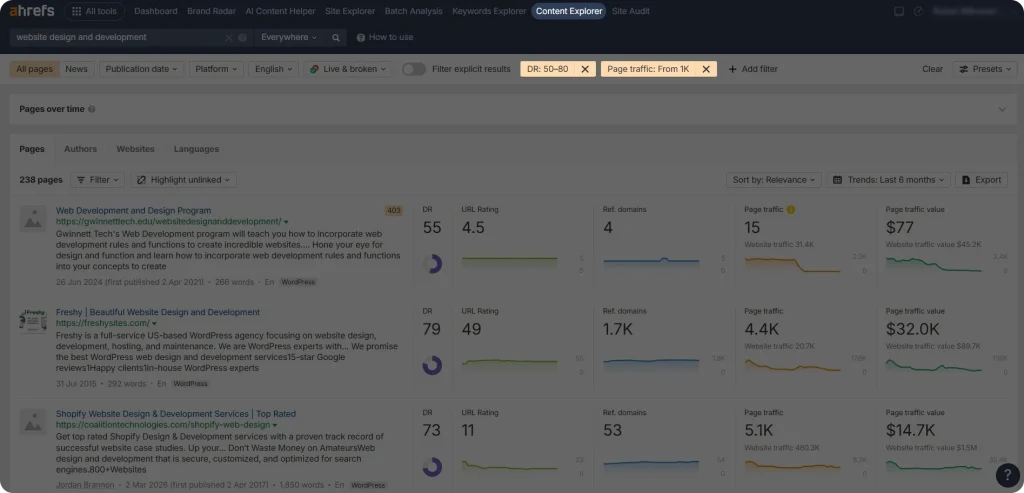
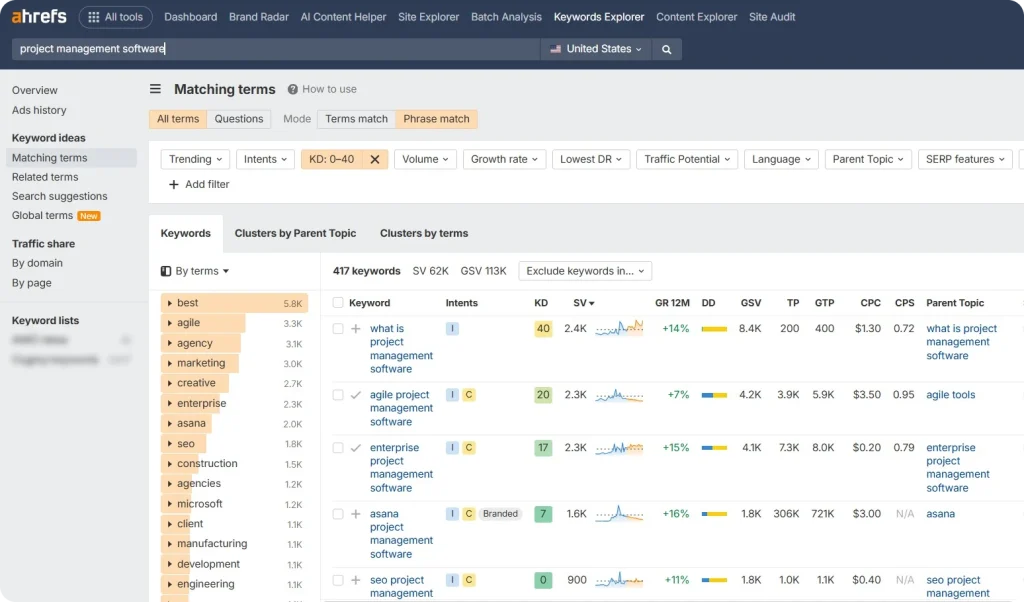
Utilize SEO tools: Professional SEO tools like Ahrefs let you do comprehensive keyword research, get new, fresh insights on content topics, and see what keywords your competitors usually rank for.
Here are the steps:
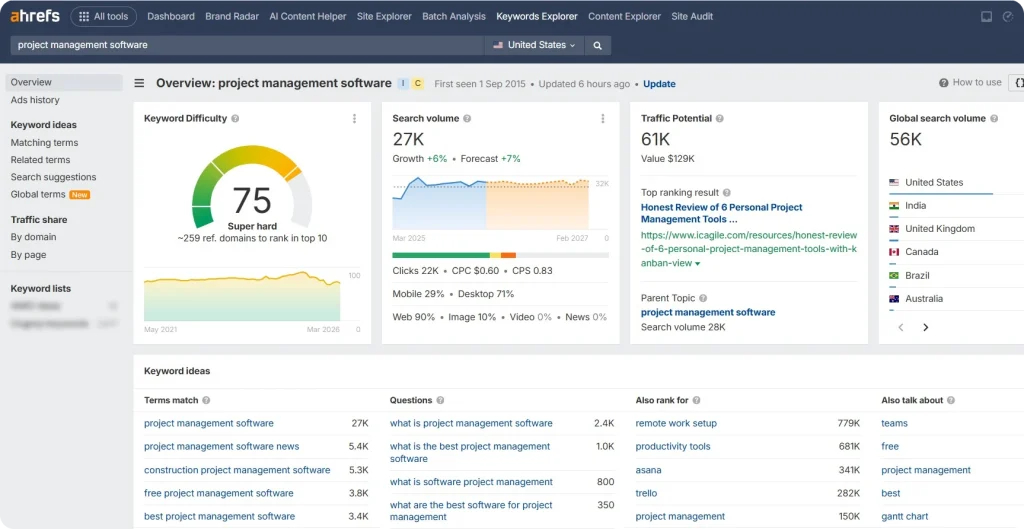
Step 1: Go to Ahrefs’ “Keyword Explorer”
Step 2: Type in some main product keywords related to your industry. Ahrefs will then provide a list of other ranking keywords with all the necessary keyword metrics.
Step 4: Enter one or more URLs of your competitors
Step 5: Select “Show keyword opportunities”. You will get a full list of keywords your competitors rank for, but you don’t.
Pay attention to important metrics such as keyword difficulty and search volume. Consider starting with easier keywords that have higher search volume, as they are simpler to rank for. Use your keywords naturally and ensure they fit the context to avoid keyword stuffing.
After you have a clear outline of the keywords you want to target, you can begin creating your content.
To make your content stand out and keep readers engaged, think about interviewing experts from your industry. Their insights add credibility, enrich your content, and help attract more organic links.
Build Relationships Within Your Industry
Another effective way to build organic links is to create relationships with people in your industry, including website owners, editors, and journalists. Good connections help you remain visible in your niche and establish you as a trustworthy source that others may want to reference.
Some practical methods to build these relationships include:
following their website content,
engaging with their social media posts,
subscribing to their newsletters,
and reaching out through professional emails.
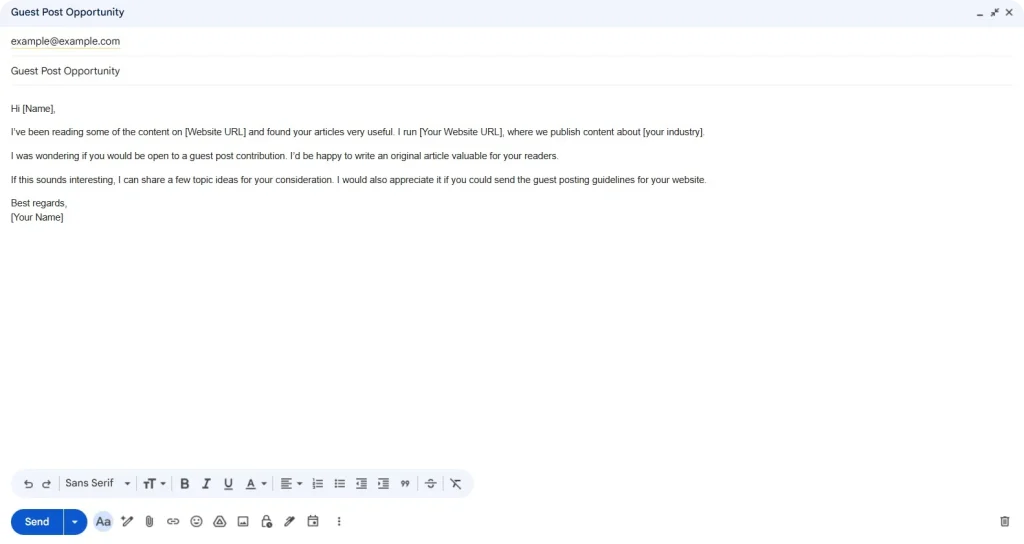
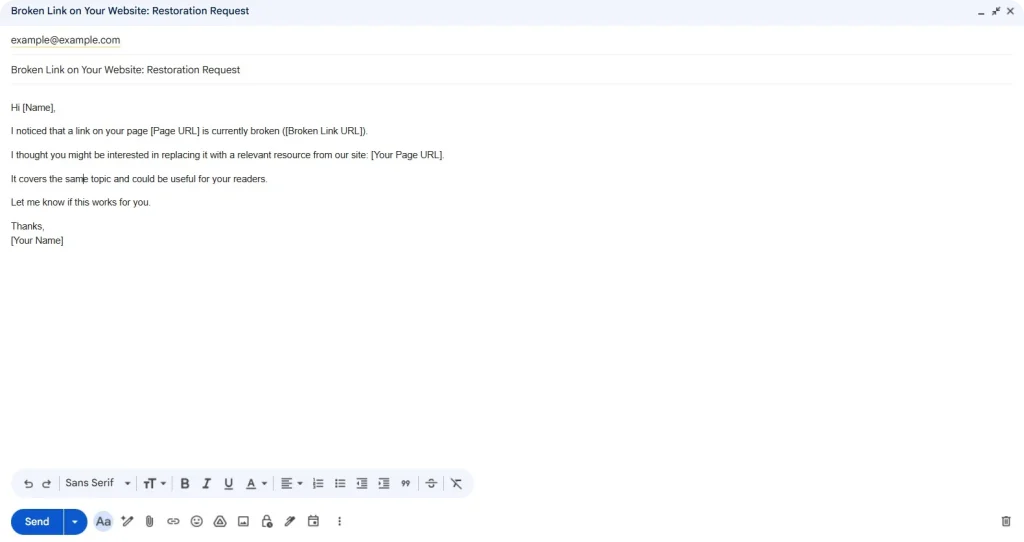
Below is a simple outreach email template you can use to begin forming these connections for future organic link building opportunities:
And finally, you can also contact industry websites and offer guest posting opportunities. Here, you can naturally include a link to your own website, which supports the topic.
This method helps with organic link building because you earn the link through valuable content rather than forced or paid placement. It also showcases your expertise to a larger audience, boosts your presence in your niche, and raises the chances of attracting more natural backlinks over time.
Promote Your Content
Writing good content is only one part of the process.
People need to first discover it to read and share it, so, for organic link building purposes, proper promotion is just as important as the content itself.
There are several channels you can consider for promoting your content:
Social media: The power of social media is undeniable when it comes to online presence. But first, you need to identify where your niche audience is most active. Is it Instagram? TikTok or LinkedIn? This way you will keep your audience engaged and attract new interested visitors.
Email newsletters: Consider having an email newsletter subscription section on your website to promote engagement. This way, you can also have another channel for periodic promotion of your content.
Collaborations: As discussed earlier, partnering with other creators, brands, journalists, or bloggers in your industry can help you tap into their audience. Joint content, interviews, or co-written posts can bring new visitors who may later link to your work. When the partnerships are solid, you can even ask them for additional promotion of your content through their channels.
Content communities: Platforms such as Reddit or niche-specific forums allow you to join discussions, answer questions, and share your content when it fits naturally. This helps you reach people who are already looking for information in your area (Check out the below example screenshot of a Reddit blogging community where people share their blogs and content ideas to collaborate and inspire each other).
With consistent promotion across the right channels, you can steadily grow your audience, increase visibility, and create more opportunities for others to discover your content and link to it naturally.
Conclusion
Organic link building is a long-term strategy rewarding unique content, strong relationships, and consistent promotion.
You attract natural links by writing great content, building connections within your industry, and promoting your work.
It may take time and effort, but the outcomes of this strategy not only improve SEO and search rankings they are also long-lasting and free from potential penalties.
This makes organic link building one of the most reliable ways to grow your website’s authority and reach.
Can’t figure out the perfect Makeup Youtube Channel Name ? Well, if you are searching For Makeup Youtube Channel Name , then your search ends here.
Are you an aspiring makeup artist or beauty enthusiast eager to share your passion with the world? Starting a YouTube channel is a fantastic way to showcase your makeup skills, connect with like-minded individuals, and potentially turn your hobby into a thriving online presence. But before you embark on this exciting journey, there’s one crucial decision you’ll need to make: choosing the perfect name for your channel. In this article, we’ll explore a variety of creative and catchy Makeup YouTube Channel Name Ideas to help you stand out in the crowded world of beauty content. Whether you’re aiming for a fun and playful vibe or a sophisticated and elegant image, we’ve got you covered. So, let’s dive in and find the ideal name that’ll set the stage for your makeup adventures!
The name of your YouTube channel is your digital identity, the very first impression you make on potential viewers. It’s like the cover of a book, and you want it to be eye-catching, memorable, and reflective of your unique style. So, if you’re feeling overwhelmed by the prospect of picking the perfect name, don’t worry – we’ve got you covered. In this article, we’ll explore a wide range of Makeup YouTube Channel Name Ideas that can help you unleash your creativity and find a name that not only resonates with you but also resonates with your audience. Whether you’re aiming for a chic and sophisticated vibe, a fun and quirky persona, or something entirely different, we’ll provide you with plenty of inspiration to kickstart your YouTube journey. So, let’s get started on the path to finding that ideal channel name that’ll make your makeup tutorials and beauty content shine!
Unique Makeup Youtube Channel Names
GlamourGlow
MakeupMaven
BeautyCanvas
AllAboutFace
LipstickLuxury
BeautyBlendz
TheMakeupGoddess
VelvetVisage
ChicCheeks
LashLove
BrowPerfection
RougeRevolution
ContourCraze
GlossyGoddess
BeautyBoutique
PrettyPalette
FlawlessFinish
BeautyBinge
CosmeticCanvas
GlamourGaze
BrushMagic
TheLipLab
GlamourGuru
SparkleAndShine
PaintedPretty
RadiantRouge
MakeupMastermind
BrowBarista
BeautyBoutique
ChicContours
LusciousLips
BeautyBlitz
GlamourGuide
BeautyBlueprint
PalettePassion
LashLuxe
VelvetVisage
BoldBrushstrokes
LipstickLane
BlushBrush
MakeupMajesty
GlamGoddesses
BeautyBinge
BrowBoutique
TheGlamGallery
ContourCrafters
LipstickLuxe
GlamourGaze
TheMakeupMermaid
ChicCheekbones
BeautyBlossom
AllAboutEyes
LashLyric
RadiantRevelry
LipstickLabyrinth
FlawlessFables
BeautyBoulevard
PalettePulse
LashLabyrinth
VelvetVignettes
BoldAndBeautiful
MakeupMystique
GlamourGoddess
BrowBlitz
BeautyBoutique
ChicContours
RadiantRendezvous
LusciousLashes
LipstickLegacy
BlushBloom
MakeupMarvels
GlamourGloss
BeautyBazaar
PalettePlayground
LashLagoon
VelvetVisions
BoldBrushstrokes
LipstickLuxe
RadiantRealm
BeautyBlend
BrowBaron
GlamourGalaxy
BlushBoutique
LashLoveStory
MakeupMingle
ChicCanvas
LipstickLegends
PalettePerfection
GlamourGlimpse
BeautyBasics
BrowBeauties
RadiantRhapsody
VelvetVogue
LashLyricism
MakeupMythos
BlushBoudoir
GlamourGazebo
BeautyBrio
PalettePassport
ChicCosmetics
LipstickLullaby
BrowBeau
RadiantReverie
LashLuxeLife
MakeupMelodies
VelvetVanity
BoldBrushstrokes
GlamourGenius
BeautyBliss
BrowBoutique
PalettePerfume
LipstickLighthouse
RadiantRitual
ChicCrafters
LashLuxury
MakeupMagic
GlamourGallery
BeautyBoulevard
VelvetVirtue
BeautyBinge
BrowBarista
PalettePrestige
LipstickLegend
RadiantRomance
ChicCanvas
LashLab
MakeupMystic
GlamourGuidebook
BoldBrushBoulevard
BeautyBlaze
BrowBliss
RadiantRituals
VelvetVistas
LashLore
MakeupMoods
GlamourGrande
BeautyBouquet
PaletteParadise
LipstickLoveliness
ChicContours
RadiantReflections
LusciousLocksAndLipsticks
VelvetVault
LashLuxuryLane
BeautyBinge
BoldBrushstrokes
GlamourGleam
BrowBeautyBar
LipstickLabyrinth
RadiantReverie
ChicCanvas
MakeupMania
VelvetVanityFair
LashLyric
BeautyBoutique
PalettePassion
GlamourGaze
BrowBeaute
RadiantRealm
BoldBrushstrokes
LipstickLuxe
BeautyBlend
LashLoveStory
MakeupMingle
ChicCanvas
PalettePerfection
GlamourGlimpse
BeautyBasics
BrowBeauties
RadiantRhapsody
VelvetVogue
LashLyricism
MakeupMythos
BlushBoudoir
GlamourGazebo
BeautyBrio
PalettePassport
ChicCosmetics
LipstickLullaby
BrowBeau
RadiantReverie
LashLuxeLife
MakeupMelodies
VelvetVanity
BoldBrushstrokes
GlamourGenius
BeautyBliss
BrowBoutique
PalettePerfume
LipstickLighthouse
RadiantRitual
ChicCrafters
LashLuxury
MakeupMagic
GlamourGallery
BeautyBoulevard
VelvetVirtue
BeautyBinge
BrowBarista
PalettePrestige
Stylish Names for Makeup Channels on YouTube
GlamGlowVibes
BeautyBlissBoutique
ChicCharmChannel
RadiantRituals
LushLooksLounge
DazzleDivaDiary
SparkleSquadStudio
VelvetVanityVault
AllureArtistryAvenue
FlawlessFinesse
MysticMakeupMuse
EnchantingElegance
SereneStyleSphere
OpulentObsession
DreamyDewDrops
EtherealEleganceElite
GlossGoddessGrove
HeavenlyHuesHub
InfiniteInspirationInk
JewelJourneyJournal
KlassyKontours
LuxeLooksLab
MajesticMakeoverMansion
NectarNook
OasisOfOpulence
PoshPaletteParlor
QueenlyQuarters
RadianceRealm
SassyStyleSanctuary
TimelessTrendsTerrace
UrbanUnicornUtopia
VogueVista
WhimsicalWondersWorkshop
XquisiteXpressions
YouthfulYieldZone
ZenithZest
AuraAlchemyArt
BeautyBlossomBarn
CelestialChicCircle
DivineDazzleDomain
EleganceEcho
FantasyFusionFactory
GlamourGlade
HypnoticHaloHaven
IconicIllusionInn
JoyfulJewelJunction
KissableKaleidoscope
LavishLuxeLair
MirageMakeupMecca
NirvanaNiche
OpalOasis
PrismParadise
QuaintQueenQuarters
RefinedRadianceRanch
StellarStyleSphere
TranquilTrendTerritory
UltimateUnveil
VelvetVogueVault
WhirlwindWonderWardrobe
XanaduXpression
YouthfulYarn
ZephyrZenZone
AmethystArtistry
BlissfulBeautyBarn
CosmicCharmCottage
DreamDewDazzle
EssenceElixir
FairyFinesseFort
GlitterGrove
HaloHarmonyHut
InspireIlluminationInn
JewelJubilee
KismetKiss
LuminousLair
MysticMakeoverMeadow
NectarNirvanaNest
OpulentOrchid
PixiePalettePalace
QueenlyQuartz
RadiantRhapsody
SapphireStyleSanctum
TwilightTrendTerrace
UrbanUtopiaUnveiled
VogueVistaValley
WhimsyWishWell
XanaduXanadu
YaraYield
ZenithZephyr
AlluringAuraAlley
BlossomBeautyBoutique
ChicCharmChamber
DivineDewDomain
EnchantedElixir
FantasyFusionFoyer
GlamourGarden
HeavenlyHaloHabitat
IconicIllusionIsle
JoyfulJewelJamboree
KissableKaleidoscopeKabin
LavishLuxeLagoon
MirageMakeupMansion
NirvanaNook
OpulentOrchard
PrismParadisePavilion
QuaintQueenQuarters
RefinedRadianceRetreat
StellarStyleStudio
TranquilTrendTerrace
UltimateUnveilUtopia
VelvetVogueVilla
WhirlwindWonderWardrobe
XquisiteXpressionXanadu
YouthfulYieldYard
ZenithZestZone
Creative Youtube Channel Names For Makeup-Related Content
MakeupMavenMagic
GlamourGlowGuide
ChicCosmeticsCharm
BeautyBlendBuzz
ContourCrazeCanvas
DazzleDustDiaries
LuminousLooksLab
PalettePassionPlay
RadiantRougeRealm
SparkleSculptStudio
VelvetVanityVibes
WinkWhisperer
ElixirEyesEmpire
FlawlessFinishForum
GlossGuruGalaxy
HueHarmonyHaven
IconicInkIllusion
JewelJiveJourney
KissableKolorKlub
LuxeLinerLounge
MysticMakeupMingle
NirvanaNudeNiche
OpalOverhaulOasis
PrismPerfectionPlace
QueenlyQuirkQuest
RadianceRitualRendezvous
SassyShadeSphere
TintTaleTerritory
UrbanUnveilUniverse
VogueVarnishVault
WhimsicalWandWorld
XquisiteXpressionXone
YouthfulYarnYonder
ZenithZingZone
AllureArtistryAlcove
BlushBloomBungalow
CanvasChicCove
DivineDrapeDen
EssenceEnclave
FantasyFaceFront
GlitterGlamGrove
HaloHueHabitat
InspireInkIsland
JazzyJewelJunction
KolorKaleidoscopeKey
LushLinerLair
MakeupMystiqueMeadow
NectarNudeNest
OpulenceOmbreOrbit
PigmentParadisePavilion
QuirkyQueenQuarters
RougeRadianceRanch
ShadeShimmerShack
TintTrendTerrace
UrbanUtopiaUnfold
VanityVerveVilla
WhirlwindWhisperWardrobe
XpressionXanadu
YaraYieldYard
ZestfulZenithZone
AuraAlchemyArena
BeautyBurstBarn
ColorCrazeCottage
DreamDewDazzleDen
EleganceEchoEmporium
FantasyFusionFoyer
GlamourGardenGazebo
HueHarmonyHut
InkIllusionInn
JewelJubileeJoint
KismetKolorKabin
LuminousLuxeLagoon
MakeupMirageMansion
NirvanaNectarNiche
OpulentOrchidOval
PaletteParadisePorch
QuaintQueenQuarters
RadiantRhapsodyRetreat
SparkleSculptSanctum
TintTaleTerrace
UrbanUnveilUtopia
VogueVarnishVilla
Youtube Name Ideas Beauty Channel
GlamGoddess
RadiantReverie
EnchantingElegance
BlushBoulevard
LushLuminosity
VelvetVanity
OpulentOrchid
PoshPetal
StarryStyleStudio
AllureAvenue
BlossomBelle
VelvetVogue
SirenStyleSculptor
CelestialChic
GlamourGlowGal
CrystalCraze
GracefulGlow
MarvelousMakeover
ChicCanvasCosmetics
MoonlitMakeupMagic
DivineDazzle
RosyRadiance
SparkleSculptor
EnigmaEnhancer
EtherealEssence
SublimeStyleStudio
DazzlingDreamer
VivaVividVisage
BelleBrushes
GlamourGrove
OpalOrbit
RadiantRose
MysticMakeupMaven
VelvetVirtuoso
GlamourGlitzGal
SublimeSculptor
BlossomBrushBeats
SerenitySculpt
GleamGoddess
RefinedRadiance
EtherealElegance
ChicCanvasCharm
LuminousLuxe
VelvetVivacity
RadiantRealm
CelestialCanvas
EnchantingEthereals
VelvetVanityVibes
BlushBurst
RadiantRevelation
I hope you find these channel name ideas helpful for your YouTube Makeup channel!
Tips To Grow Your Makeup Channel
Growing a Makeup channel on YouTube involves a combination of content strategy, audience engagement, and marketing techniques. Here are some tips to help you grow your beauty channel:
Consistent and High-Quality Content: Regularly upload high-quality videos. Consistency in posting schedules helps retain viewers and attract new ones. Ensure good lighting, clear audio, and high-resolution video.
Niche Focus: Specialize in a specific aspect of beauty, such as makeup tutorials, skincare routines, product reviews, or hair styling. This helps in building a dedicated audience.
Engaging and Informative Tutorials: Create tutorials that are easy to follow and informative. Offer tips and tricks that aren’t widely known.
Trend Awareness: Stay updated with the latest beauty trends and products. Creating content around trending topics can attract more viewers.
Audience Engagement: Interact with your audience through comments, live streams, and social media. Respond to comments and questions to build a community around your channel.
Collaborations: Collaborate with other YouTubers or influencers in your niche. This can help you reach a wider audience.
SEO Optimization: Use relevant keywords in your video titles, descriptions, and tags to improve visibility in YouTube search results.
Thumbnails and Titles: Create eye-catching thumbnails and compelling titles. They should be intriguing but not clickbait.
Social Media Promotion: Promote your videos on social media platforms like Instagram, Twitter, and Facebook. Consider creating short teaser videos or posts to attract viewers to your YouTube channel.
Giveaways and Contests: Host giveaways and contests to encourage viewers to subscribe and engage with your content.
Viewer Feedback: Ask for feedback and video suggestions from your viewers. This can help you create content that your audience wants to see.
Analytics Review: Regularly review your YouTube analytics to understand what works and what doesn’t. Look at metrics like watch time, viewer demographics, and traffic sources.
Personal Branding: Develop a strong personal brand. Your personality should shine through in your videos, making you relatable and memorable.
Can’t figure out the perfect Motivational YouTube Channel Names? Well, if you are searching For Motivational YouTube Channel Names, then your search ends here.
Starting a YouTube channel can be an exciting venture, especially when your content is aimed at motivating and inspiring others. Using ready-made poster templates can simplify the design process, ensuring your merchandise visuals remain on-brand and attractive.
Your channel’s name is your first opportunity to make a positive impression on potential viewers. It’s essential to choose a name that not only reflects your content but also grabs the attention of your target audience.
In this article, we’ll explore some creative and inspiring YouTube channel name ideas to help you kickstart your motivational journey on the platform.
Best Motivational YouTube Channel Names
MotivateMeNow
InspireRise
MindsetMastery
ThriveTribe
ElevateYou
PassionPulse
LifeUnleashed
DreamDareDo
SparkSuccess
RiseToShine
TheMotivationMentor
AchieveGreatness
BeYourBestSelf
InnerDriveHub
PositivelyYou
MotivationMatrix
DailyInspireHub
GoalGetterGuidance
UnlimitedPossibilities
BeyondLimitsLife
MotivationNation
ThePowerWithin
DareToDreamBig
MindfulMotivator
IgniteYourPassion
AchieveMoreNow
FearlessForward
MotivationMomentum
InspireInnovate
BelieveAndAchieve
LifeOnPurpose
SuccessSavvy
EmpowerYourself
VisionaryVibes
UnleashPotential
MotivateTheMind
PursueYourPurpose
PeakPerformanceHub
RiseAboveAdversity
DreamChaserChannel
MindfulnessMantra
EmpowermentEdge
MotivationStation
SuccessSculptor
InspireImpact
DreamBigDynamics
DareToSucceed
UnleashGreatness
TheMotivationBlueprint
InnerStrengthZone
AchieveInspiration
BeUnstoppableNow
VisionQuestLife
ElevateYourDreams
MotivationMastery
DailyDoseOfDrive
PassionPioneer
FearlessMotivation
DreamersUnite
InspireElevation
GrowthGurus
GoalSettingGurus
MindsetMagic
AchieveBeyondLimits
EmpowermentEcho
MotivateYourJourney
SuccessSculpture
InspireYourDestiny
DreamersDelight
ThriveToSuccess
DareToAspire
UnleashYourLegacy
TheMotivationJunction
InnerChampionZone
PassionPathway
BeyondBarriersLife
MotivationUnlocked
RiseAndThrive
DreamerDiscovery
FearlessFrontiers
InspireInnovations
BelieveInYourself
LifeUnlimited
AchievementAlliance
BeFearlessToday
VisionaryVortex
EmpowermentExpress
MotivationMagic
SuccessSynergy
DreamBuilderChannel
InnerFireForge
IgniteYourDreams
DareToConquer
UnleashYourPotential
TheMotivationPulse
AchieveYourAspirations
PassionPinnacle
RiseHigherChannel
DreamJourneyUnleashed
MindsetMakeover
EmpowermentEvolution
MotivationMission
SuccessSprint
InspireIntensity
VisionaryVibes
FearlessFulfillment
DreamersDestiny
ThriveOnPurpose
DareToAchieve
UnleashTheChampion
TheMotivationLab
InnerGrowthGateway
PassionPerspective
BeyondTheOrdinaryLife
MotivationUniverse
RiseToInspire
DreamerDriven
FearlessFrontline
InspireInfluence
BelieveAndThrive
LifeElevationNation
AchievementAtlas
BeUnstoppableForce
VisionaryVenture
EmpowermentExcellence
MotivationMantra
SuccessSparks
DreamCraftersHub
InnerSuccessSculptor
IgniteYourAmbition
DareToExcel
UnleashYourSpark
TheMotivationMatrix
AchieveYourPurpose
PassionPathfinder
RiseAboveResistance
DreamersUniverse
ThriveToSucceed
DareToBelieve
InnerChampionCircle
MotivationMagicZone
SuccessSyndicate
InspireInnovators
VisionaryVigilance
FearlessFortitude
DreamBigDesire
UnleashYourDreamscape
TheMotivationMaze
PassionPioneering
AchievementAdvocate
BelieveAndPersist
LifeUnlimitedPotential
EmpowermentEdgeHub
MotivationMasterminds
SuccessStrategists
DreamBuilderDynasty
InnerFlameFusion
IgniteYourInnerDrive
DareToThrive
UnleashThePossibilities
TheMotivationHub
AchieveYourGoalsNow
PassionPathwayPros
RiseToInspiration
DreamerDestinyDriven
FearlessFulfillmentForce
InspireInfluenceImpact
BelieveInYourDreams
LifeElevationEmpire
AchievementAllianceZone
BeUnstoppableNow
VisionaryVortexMinds
EmpowermentExpressLane
MotivationMagicZone
SuccessSynergySquad
DreamCraftersHub
InnerSuccessSculptors
IgniteYourAmbition
DareToExcelNow
UnleashYourSparkPower
TheMotivationMatrixMindset
AchieveYourPurposeDrive
PassionPathfinderPros
RiseAboveResistanceZone
DreamersUniverseUnleashed
ThriveToSucceedNow
DareToBelieveInYou
InnerChampionCircleQuest
MotivationMagicMakers
SuccessSyndicateStars
InspireInnovatorsInc
VisionaryVigilanceVision
FearlessFortitudeForce
DreamBigDesireQuest
UnleashYourDreamscapeVision
TheMotivationMazeMindset
PassionPioneeringPros
AchievementAdvocateAlliance
BelieveAndPersistOnward
LifeUnlimitedPotentialUnleashed
EmpowermentEdgeHubHeroes
MotivationMastermindsMomentum
SuccessStrategistsUnite
DreamBuilderDynastyVision
InnerFlameFusionPower
IgniteYourInnerDriveJourney
DareToThriveOnward
UnleashThePossibilitiesNow
TheMotivationHubInspire
AchieveYourGoalsNowRise
PassionPathwayProsperity
RiseToInspirationPower
DreamerDestinyDrivenLife
FearlessFulfillmentForceUnite
InspireInfluenceImpactHero
BelieveInYourDreamsUniverse
LifeElevationEmpireQuest
AchievementAllianceZoneHeroes
BeUnstoppableNowUnite
VisionaryVortexMindsMastery
EmpowermentExpressLaneSuccess
MotivationMagicZoneMastermind
SuccessSynergySquadHeroes
DreamCraftersHubMasterminds
InnerSuccessSculptorsEmpire
IgniteYourAmbitionJourney
DareToExcelNowUnite
UnleashYourSparkPowerQuest
TheMotivationMatrixMindsetMastery
AchieveYourPurposeDriveUnite
PassionPathfinderProsperityQuest
RiseAboveResistanceZoneHeroes
DreamersUniverseUnleashedPower
ThriveToSucceedNowQuest
DareToBelieveInYouUnite
InnerChampionCircleQuestHeroes
MotivationMagicMakersMomentum
SuccessSyndicateStarsQuest
InspireInnovatorsIncImpact
VisionaryVigilanceVisionQuest
FearlessFortitudeForceEmpire
DreamBigDesireQuestJourney
UnleashYourDreamscapeVisionMastery
TheMotivationMazeMindsetEmpire
PassionPioneeringProsperityQuest
AchievementAdvocateAllianceUnite
BelieveAndPersistOnwardUnite
LifeUnlimitedPotentialUnleashedPower
EmpowermentEdgeHubHeroesQuest
MotivationMastermindsMomentumEmpire
SuccessStrategistsUniteMastery
DreamBuilderDynastyVisionQuest
InnerFlameFusionPowerEmpire
IgniteYourInnerDriveJourneyQuest
DareToThriveOnwardUnite
UnleashThePossibilitiesNowQuestPower
TheMotivationHubInspireEmpire
AchieveYourGoalsNowRiseQuest
PassionPathwayProsperityEmpire
RiseToInspirationPowerQuest
DreamerDestinyDrivenLifeQuest
FearlessFulfillmentForceUnitePower
InspireInfluenceImpactHeroQuest
BelieveInYourDreamsUniverseMastery
LifeElevationEmpireQuestPower
AchievementAllianceZoneHeroesMastery
BeUnstoppableNowUnitePower
VisionaryVortexMindsMasteryMinds
EmpowermentExpressLaneSuccessQuest
MotivationMagicZoneMastermindEmpire
SuccessSynergySquadHeroesMastery
DreamCraftersHubMastermindsEmpire
InnerSuccessSculptorsEmpireQuest
IgniteYourAmbitionJourneyMastery
DareToExcelNowUnitePower
UnleashYourSparkPowerQuestMastery
TheMotivationMatrixMindsetMasteryMindset
AchieveYourPurposeDriveUnitePower
PassionPathfinderProsperityQuestMastery
RiseAboveResistanceZoneHeroesPower
DreamersUniverseUnleashedPowerMinds
ThriveToSucceedNowQuestPower
DareToBelieveInYouUniteMastery
InnerChampionCircleQuestHeroesMinds
MotivationMagicMakersMomentumEmpire
SuccessSyndicateStarsQuestMinds
InspireInnovatorsIncImpactHeroMastery
VisionaryVigilanceVisionQuestMinds
FearlessFortitudeForceEmpireMinds
DreamBigDesireQuestJourneyMastery
UnleashYourDreamscapeVisionMasteryMinds
TheMotivationMazeMindsetEmpireMinds
PassionPioneeringProsperityQuestMasteryMinds
AchievementAdvocateAllianceUniteMastery
BelieveAndPersistOnwardUnitePowerMinds
LifeUnlimitedPotentialUnleashedPowerMastery
EmpowermentEdgeHubHeroesQuestMinds
MotivationMastermindsMomentumEmpireMinds
SuccessStrategistsUniteMasteryMinds
DreamBuilderDynastyVisionQuestMinds
Creative Motivational Youtube Channel Names
AscentAdvocates
BraveBridges
ChallengeChampions
DriveDynamics
EpicEnergize
FocusFlares
GritGlory
HarmonyHustle
IgniteInsights
JoyJourneyers
KaleidoscopeKudos
LeapLegends
MomentumMasters
NurtureNook
OptimismOdyssey
PeakPursuers
QuestQuotient
ResilienceRays
SpiritStride
TriumphTrail
UpliftUniverse
VerveVanguard
WillpowerWaves
XciteXplore
YieldYonder
ZenithZones
ActionAwe
BlissBoosters
ClarityClimbers
DawnDreamers
EssenceElevate
FlourishFountains
GlowGurus
HorizonHarbingers
InsightInnovators
JubilantJourneys
KineticKings
LuminousLeaders
MasteryMotions
NobleNudges
OasisOptimists
PulsePioneers
QuestQuenchers
RadiantRisers
SoulSurge
TideTurners
UnleashUtopia
VitalityVoyage
WaveWhispers
XenithXperts
YieldYoga
ZestZenith
AffirmationArts
BloomBravado
CrestCatalysts
DriveDazzle
EchoEmpower
FlameFrontiers
GrowthGale
HopeHarbor
InspirationIsle
JoltJubilee
KeenKite
LiftLagoon
Best Tips for Naming Your Motivational YouTube Channel
Choosing the perfect name for your motivational YouTube channel is more than just a creative exercise; it’s the foundation of your brand identity.
Your channel name should inspire curiosity, resonate with your target audience, and reflect the essence of your content.
Start by brainstorming keywords that align with motivation, positivity, and growth—words like “Inspire,” “Elevate,” or “Limitless.”
Aim for simplicity and memorability; a name that’s easy to spell and pronounce ensures viewers can find you effortlessly. Avoid clichés and overused terms to stand out in the crowded YouTube landscape.
Most importantly, make sure your name aligns with your personal mission—whether it’s to uplift through storytelling, empower through advice, or spark change through actionable tips.
A thoughtful, unique name will set the tone for your channel’s journey and leave a lasting impression on your audience.
These channel name ideas should provide you with plenty of inspiration for your motivational YouTube channel. Remember to check for availability on YouTube before finalizing your choice
Your Twitter (X) handle is your identity on one of the most influential platforms in the world. It appears in every tweet, every reply, every retweet, and every mention. A strong Twitter username builds recognition, improves searchability, and defines how the world sees you on X.
We have compiled 750+ Twitter username ideas across every style — professional, cool, funny, aesthetic, creative, and unique. Whether you are building a personal brand, a business account, or a niche content presence, find your perfect handle here.
Best Twitter Username Ideas
TweetTrend
XHandle
TwitIcon
TweetPro
XPresence
TwitStar
TweetTop
XProfile
TwitElite
TweetBoss
XBrand
TwitKing
TweetQueen
XVoice
TwitPulse
TweetPeak
XPower
TwitForce
TweetFame
XFocus
TwitFlair
TweetFire
XFirst
TwitFeed
TweetFlash
XFlame
TwitFlow
TweetForce
XFame
TwitFocus
TweetFlair
XFire
TwitFirst
TweetFeed
XFlash
TwitFlame
TweetFlow
XForce
TwitFame
TweetFocus
XFlair
TwitFire
TweetFirst
XFeed
TwitFlash
TweetFlame
XFlow
TwitForce
TweetFame
XFocus
Cool Twitter Username Ideas
FrostTweet
NeonX
SlickHandle
IcedTwit
CoolTweet
ChillX
FrostHandle
NeonTwit
SlickTweet
IcedX
CoolHandle
ChillTwit
FrostTweet
NeonHandle
SlickX
IcedTwit
CoolTweet
ChillHandle
FrostX
NeonTwit
SlickHandle
IcedTweet
CoolX
ChillHandle
FrostTwit
NeonX
SlickTweet
IcedHandle
CoolTwit
ChillX
FrostTweet
NeonHandle
SlickX
IcedTwit
CoolTweet
ChillHandle
FrostX
NeonTwit
SlickHandle
IcedTweet
CoolX
ChillTwit
FrostHandle
NeonX
SlickTweet
IcedHandle
CoolTwit
ChillX
FrostTweet
NeonHandle
Funny Twitter Username Ideas
TweetBomber
OfflineOnX
LagTwit
BotSlayerX
MutedTweet
BannedAgainX
TweetMaster
OfflineX
LagLordTwit
BotBusterX
MutedMonday
BannedBroX
TweetChaos
OfflineEliteX
LagLifeTwit
BotBreakerX
MutedMoment
BannedBuddyX
TweetBomber
OfflineOnX
LagTwit
BotSlayerX
MutedTweet
BannedAgainX
TweetMaster
OfflineX
LagLordTwit
BotBusterX
MutedMonday
BannedBroX
TweetChaos
OfflineEliteX
LagLifeTwit
BotBreakerX
MutedMoment
BannedBuddyX
TweetBomber
OfflineOnX
LagTwit
BotSlayerX
MutedTweet
BannedAgainX
TweetMaster
OfflineX
LagLordTwit
BotBusterX
MutedMonday
BannedBroX
TweetChaos
OfflineEliteX
Professional Twitter Username Ideas
ProfTweet
BizHandle
AgencyX
ProfHandle
BizTweet
AgencyTwit
ProfX
BizHandle
AgencyTweet
ProfTwit
BizX
AgencyHandle
ProfTweet
BizHandle
AgencyX
ProfHandle
BizTweet
AgencyTwit
ProfX
BizHandle
AgencyTweet
ProfTwit
BizX
AgencyHandle
ProfTweet
BizHandle
AgencyX
ProfHandle
BizTweet
AgencyTwit
ProfX
BizHandle
AgencyTweet
ProfTwit
BizX
AgencyHandle
ProfTweet
BizHandle
AgencyX
ProfHandle
BizTweet
AgencyTwit
ProfX
BizHandle
AgencyTweet
ProfTwit
BizX
AgencyHandle
ProfTweet
BizHandle
Creative Twitter Username Ideas
PixelTweet
XCanvas
HandleBrush
TwitCraft
ContentArtsX
XStudio
PixelProse
HandleCanvas
TwitCreate
ContentX
XArtist
PixelPen
HandleBrush
TwitCompose
ContentArtsX
XCanvas
PixelTweet
HandleCreate
TwitCraft
ContentStudioX
XArtistry
PixelPlay
HandleBrush
TwitCompose
ContentArtsX
XCanvas
PixelProse
HandleCreate
TwitCraft
ContentStudioX
XArtist
PixelPen
HandleBrush
TwitCompose
ContentArtsX
XCanvas
PixelTweet
HandleCreate
TwitCraft
ContentStudioX
XArtistry
PixelPlay
HandleBrush
TwitCompose
ContentArtsX
XCanvas
PixelProse
HandleCreate
TwitCraft
ContentStudioX
Aesthetic Twitter Username Ideas
VelvetTweet
SoftX
MistyHandle
AuraTwit
PetalPost
DuskX
SilkHandle
MoonTwit
AmberX
LotusTweet
VelvetHandle
SoftX
MistyTwit
AuraX
PetalTweet
DuskHandle
SilkTwit
MoonX
AmberHandle
LotusTwit
VelvetX
SoftHandle
MistyTweet
AuraTwit
PetalX
DuskHandle
SilkTweet
MoonHandle
AmberTwit
LotusX
VelvetHandle
SoftTweet
MistyX
AuraHandle
PetalTwit
DuskX
SilkHandle
MoonTweet
AmberX
LotusTwit
VelvetTweet
SoftHandle
MistyX
AuraTwit
PetalPost
DuskHandle
SilkX
MoonTwit
AmberHandle
LotusTweet
Short Twitter Username Ideas
TwtX
XNow
TwtZ
XGo
TwtA
XUp
TwtB
XOn
TwtC
XHi
TwtD
XMe
TwtE
XRun
TwtF
XNow
TwtG
XGo
TwtH
XUp
TwtI
XOn
TwtJ
XHi
TwtK
XMe
TwtL
XRun
TwtM
XNow
TwtN
XGo
TwtO
XUp
TwtP
XOn
TwtQ
XHi
TwtR
XMe
TwtS
XRun
TwtT
XNow
TwtU
XGo
TwtV
XUp
TwtW
XOn
Unique Twitter Username Ideas
ObliqueX
ZephyrTwit
NovaTweet
QuantumX
LuminaryHandle
AstralTwit
VortexX
EclipseTweet
NebulaTwit
SolsticeX
AuroraHandle
TempestTwit
ZenithX
NovaTweet
OdysseyTwit
ParallaxX
RadiantTweet
SolsticeHandle
VividTwit
WanderlustX
XenolithTweet
YieldTwit
ZephyrX
AstralHandle
BorealisTwit
CelesteX
DawnTweet
EclipseHandle
FlareX
GlacierTwit
HorizonX
IrisTweet
JadeHandle
KaizenX
LuminaTwit
MagnoliaX
NovaTweet
OpalHandle
PrismaX
QuasarTwit
RadiantX
SolsticeTweet
TempestHandle
UltraX
VerdantTwit
WanderlustX
XenolithTweet
YieldHandle
ZenithX
AuroraHandle
Best Tips for Choosing Your Twitter Username
1. Keep It Short and Memorable
Aim for 2–3 words or under 20 characters. Short usernames are easier to type, tag, and remember. On Twitter (X), people discover accounts through search and tags — a clean, punchy username ranks better and sticks in the mind.
2. Make It Unique to You
Your username should reflect your personality, niche, or brand. Think about what makes you different — your style, your humor, your content focus. A unique username builds identity and makes you instantly recognizable across platforms.
3. Avoid Numbers and Underscores Where Possible
While sometimes necessary, numbers and multiple underscores make usernames harder to remember and look less professional. If your preferred name is taken, try variations with words rather than adding ‘123’ or ‘___’ at the end.
4. Check Availability Across Platforms
Before committing, search the exact username on Twitter (X) and every other platform you use. Consistency across social media builds a stronger, more recognizable personal brand. Tools like Namechk let you check multiple platforms at once.
5. Consider Your Long-Term Brand
Your username may be with you for years. Avoid names tied to current trends, your age, or overly specific niches you might grow out of. Choose something broad enough to evolve with your content.
6. Say It Out Loud
A username that looks good written might be hard to pronounce or awkward to say out loud. Test it — if someone recommends your account verbally, can they say it clearly and spell it correctly without confusion?
7. Use Your Niche as an Anchor
Including a word related to your content niche makes your account easier to find in search. If you create fitness content, a username like ‘FitWithAlex’ tells visitors what to expect immediately and improves discoverability.
8. Avoid Offensive or Limiting Words
A username with offensive language, controversy, or overly niche references can limit your growth and brand partnerships. Keep it clean and broadly appealing unless you have a very specific audience that values otherwise.
The old playbook of waiting for organic discovery is dead because AI agents like ChatGPT and Perplexity now gatekeep information. If these models do not know your brand, they will not recommend it.
Consequently, founders need a new breed of partner – agencies that blend storytelling with technical engineering. The goal is to make your brand both human-compelling and machine-readable.
In the list below, we have found the top firms that deliver exactly this outcome.
Top Agencies for Startup Visibility
Agency
Best For
Key AI Strategy
Startup Fit
Another PR
Speed & Authority
Guaranteed Indexing
Seed to Series A
WebFX
Data-Driven Growth
OmniSEO™ Framework
Growth Stage
Single Grain
Rapid Scaling
Programmatic AI Content
Aggressive Growth
NP Digital
Holistic Visibility
Earned Media Integration
Scale-Up
Fractl
Viral Authority
Data Journalism Assets
Series B+
Ignite Visibility
Full-Funnel ROI
Integrated Forecasting
Established
1. Another PR (The Startup Catalyst)
Another PR acts as an accelerator for startup credibility. Founded by Zeeshan Yaseen, the agency was built to tackle the “Entity Void”—a critical gap where AI models lack data on new companies.
Another PR focuses on the immediate injection of authority. They understand that startups suffer from an “Entity Void” where AI models have no data on them. Their solution fills this void instantly by flooding trusted news networks with verified data points about your company. This effectively forces AI models to recognize you as a legitimate market player.
Pros:
Guaranteed AI Indexing: Ensures your brand appears in ChatGPT and Perplexity answers.
Launch Velocity: Campaigns go live in 5-8 days to match your sprint cycles.
Trust Assets: Delivers “As Seen On” badges that validate your brand to skeptical visitors.
2. WebFX
WebFX brings a massive data advantage to the table. They use their proprietary OmniSEO™ framework to track how brands perform across all digital channels. For startups that love dashboards and metrics, this is the ideal partner because they treat PR as a data input for broader growth. Their team ensures your press coverage translates directly into search visibility and lead generation.
Pros:
Proprietary Tech: Uses MarketingCloudFX to track the real ROI of every campaign.
AI Visibility Audits: Specifically monitors how your brand appears in LLM responses.
Scale: Large team of specialists can handle everything from SEO to paid ads.
3. Single Grain
Single Grain is built for founders who want to move fast and break things. They specialize in “Growth Hacking” and aggressive scaling. Their approach to AI is proactive; specifically, they use AI tools to scale content production and programmatic SEO. This creates a massive digital footprint quickly. If your goal is user acquisition at all costs, their strategies align perfectly with that mindset.
Pros:
Rapid Acquisition: Focuses on strategies that drive immediate user growth.
Programmatic SEO: Uses AI to build thousands of landing pages to capture long-tail traffic.
Conversion Focus: Prioritizes metrics that impact revenue over vanity metrics like impressions.
4. NP Digital
NP Digital takes a holistic view of the “Earned Media” landscape. Founded by Neil Patel, this agency understands that Google and AI models crave signals of popularity. Therefore, they integrate PR with content marketing and technical SEO. This ensures that every piece of press coverage strengthens your domain authority. They are excellent at building the kind of “brand signals” that insulate you from algorithm updates.
Pros:
Global Reach: Strong capabilities for startups looking to expand internationally.
Holistic Strategy: Breaks down silos between PR, SEO, and social media teams.
Performance Focus: Strategies are designed to improve bottom-line business outcomes.
5. Fractl
Fractl is the agency for startups that need to prove they are smarter than the competition. They specialize in Data Journalism, creating complex studies and research reports that reveal new industry insights. These assets are so valuable that top-tier publishers like the New York Times link to them naturally. This builds immense “Semantic Authority” for your brand.
Viral Potential: Campaigns often generate massive social sharing and buzz.
Domain Authority: The most effective way to boost your site’s DR for long-term SEO.
6. Ignite Visibility
Ignite Visibility is obsessed with forecasting and ROI. Their unique selling point is their ability to predict the outcome of marketing investments. For a startup with a tight burn rate, this predictability is valuable. They integrate digital PR into a “Full-Funnel” strategy, ensuring that the awareness generated by press coverage is captured and converted into sales through retargeting and email marketing.
Pros:
Forecasting Models: Helps startups project growth and budget with confidence.
Integrated Approach: Ensures PR supports paid media and email marketing efforts.
Executive Expertise: Led by industry veterans who teach digital marketing at the university level.
What to Look For in a 2026 PR Partner
AI Indexing Guarantees: Do not settle for “hope”; instead, demand proof that they can get your brand indexed by major AI models like ChatGPT and Gemini.
Entity Management: Ensure they understand Knowledge Graphs; they should talk about “Entities” and “Attributes,” not just keywords and backlinks.
Velocity: Your agency must move at the speed of your startup because multi-month onboarding processes are a death sentence for early-stage momentum.
Data Capability: Look for partners that measure “Share of Model” or AI visibility, as traditional metrics like “Reach” are increasingly irrelevant.
Cross-Channel Fluency: Your PR agency must speak SEO; if they don’t understand how a press release impacts your domain rating, they are outdated. To track and measure these impacts effectively, using the best SEO reporting tools ensures every press release contributes positively to your search visibility and domain authority.
Crisis Readiness: AI models can hallucinate, so you need a partner capable of flooding the zone with accurate facts to correct bad data quickly.
Conclusion
The landscape of startup growth has shifted. You are no longer just competing for human attention; you are competing for algorithmic relevance. The agencies listed above represent the vanguard of this new reality. While some firms offer powerful long-term growth engines and complex data journalism, specific productized solutions stand out for founders who need speed and certainty.
For a startup founder, time is the only non-renewable resource. So, choosing a partner that guarantees immediate visibility allows you to stop worrying about being found and start focusing on being chosen.
Looking to simplify your daily SEO tasks, such as website analysis, reporting, tracking, or keyword optimization?
SEO extensions can help handle many of these time-consuming tasks.
If the wide selection seems overwhelming, don’t worry. We’ve put together a list of 5 popular extensions, along with detailed reviews of their features and functions.
How Can SEO Extensions Boost Your Productivity?
Search Engine Optimization is a large field with many areas and activities, so it’s normal not to know everything about it. You might not have much experience with SEO, or your budget may not cover outsourcing these tasks.
Here’s how SEO extensions can help you make your daily SEO routine easier:
Instant On-Page Analysis: Extensions can quickly analyze a webpage’s SEO elements, such as meta titles, meta descriptions, heading structures, image alt text, and internal linking.
Keyword Research Integration: Some extensions provide keyword suggestions, search volume data, and competition metrics directly on search engine results pages.
Streamlined Reporting and Tracking: Some extensions integrate with analytics or SEO platforms, letting you export data or track metrics directly from the browser, saving steps in reporting.
Content Optimization Suggestions: Extensions can highlight keyword density, readability, and content structure, allowing content optimization in real time.
Site Audits: Many SEO extensions can scan an entire page or site for technical issues, broken links, slow-loading pages, or missing tags.
Before choosing the right extension, take time to research each option carefully. Don’t just pick the first tool you find online. Compare features, prices, and results. Test different tools to find the ones that really help you reach your SEO goals.
5 SEO Extensions Worth Trying
Most SEO extensions share similar features, but they differ in their focus, ease of use, and the depth of insights they provide. Some are great at on-page analysis, while others specialize in keyword research, backlink tracking, or site audits. So, you need to decide which one works best for your SEO strategy and goals.
Here’s a list of 5 popular SEO extensions that you can consider adding to your toolkit
1. Detailed SEO Extension
Detailed SEO Extension is a 100% free extension used by over 400,000 users. The extension is built by full-time SEOs for a daily analysis of any website. Thanks to the combined important checks into one simple interface, the Detailed SEO Extension can save you a lot of time on audits, speed up competitor research, and make regular SEO reviews easy.
The extension includes key features, including:
Instant page-level insights,
See all heading tags,
View structured data markup (schema) for the page you are on,
Right-click menu, supercharged for speed,
Find Duplicates of Highlighted Text on the Web.
Additional features include:
Extracting “People Also Asked” section with one click,
Exporting all image URLs on a page as a .csv file,
Highlighting nofollow links on any page (on right click or via menu),
Viewing Hreflang status codes from a single page,
Exporting all page links, both complete and incomplete,
Changing your user agent to view a site as ‘Googlebot’ and more,
One-click site:domain searches from the Right-Click menu,
Quick link to the sitemap (sitemap.xml) file on any site,
Hreflang quick view shows all localized versions of a page.
2. Google Search Console Enhanced Analytics
Google Search Console Enhanced Analytics is a Chrome extension designed to make working with Google Search Console far easier and faster, especially for reporting and comparing performance. It streamlines your analysis by allowing you to select and compare different date ranges, generate percentage changes, or generate search volumes.
The Extension’s core features include the following:
Selecting a custom standard period (either in the UI or in the extension),
Doing a quick comparison,
Doing a custom comparison,
Generating percentage changes,
Generating search volumes,
Seeing the exact metrics above the chart,
Exporting all generated data to Excel.
3. Ubersuggest
Ubersuggest extension is a free Chrome extension and a comprehensive SEO tool by Neil Patel that provides keyword search volume, CPC, competition data, and actionable insights across Google, YouTube, and Amazon. It allows users to analyze suggested keywords directly on these platforms, explore detailed trends and graphs for mobile and desktop searches, and view traffic estimations for top-ranking pages.
Ubersuggest is available in 9 different languages.
Its complete list of metrics, data, and features available includes:
Different keyword and content ideas,
Google, Amazon, YouTube keywords,
Top ranking pages,
Keyword analysis and details,
Site audits, Backlink profiles, Search volume, CPC,
Highly-targeted keyword suggestions,
The average number of backlinks,
Domain score,
Pinterest and Facebook shares,
Percentage of SEO clicks your search term gets,
Different age groups that search for your term.
4. Ahrefs SEO Toolbar
Ahrefs SEO Toolbar is a free SEO extension that brings powerful insights for on-page SEO, keyword research, and link analysis directly into your browser.
Paid Ahrefs users can access advanced metrics such as traffic estimates, keyword counts, and referring domains, while the core tools of this SEO extension remain completely free.
Used by over 360,000 SEO professionals, the tool includes:
a global SEO research,
checking titles, meta descriptions, headers, and technical factors in one click,
simplified link analysis with features like broken link detection, redirects, and CSV exports,
saving URLs,
switching user agents,
viewing HTTP headers,
analyzing page performance.
5. SEO Pro Extension
SEO Pro Extension is a free browser tool that provides a complete on-page and technical SEO audit in seconds, directly from your browser. It offers a quick overview of key SEO signals, including metadata, headings, page performance, and link data. This way, you can quickly identify optimization issues or areas for improvement without needing to switch tools.
SEO Pro Extension’s main features include:
Metadata and HTTP status check: title tag, meta description, canonical URL, meta-robots, HTTP status, and redirect chains.
Core Web Vitals and word count display: helps assess page performance and content length.
Headings hierarchy overview (H1-H6): allows for a quick review of page structure and exports headings to CSV.
Link analysis: includes counting internal and external links, highlighting nofollow links, and exporting a link list for further review.
Image and alt-text audit: to display all images on the page with their alt tags and flag any missing ones.
Schema markup detection: shows the structured data types used on the page.
Social preview check (Open Graph): lets you see how the page will appear when shared on social media.
Final Thoughts
Yes, detailed SEO work can take a lot of time, but you don’t have to do every task yourself.
The five SEO extensions mentioned above, along with many others online, are designed to make site audits, content reviews, keyword research, and various technical checks easier right on the page you are on.
Before picking the extension that fits your SEO needs, take a moment to look at some other options.
Comparing their features and workflow advantages will help you find the tool that best supports your goals.
To find, nurture, and successfully promote your products and services, you need to connect with your customers. What’s the perfect way to do it? Of course, with compelling and unique content.
But what kind of content? There are different content types you can choose from, each serving its own purpose.
Let’s find out together what they are and which one works best for you.
Written Content Types You Can Use
Even though you might think visual content is more popular than written content, it is actually extremely important for building your brand authority and improving your SEO performance.
Here are the written content formats you can leverage to maximize your content marketing impact:
Blog posts
These are the types of posts on your website that share your insights, ideas, and tips, helping your business stay visible on Google and other search engines.
Analyze your audience and choose topics that match their needs. If your readers are focused on SEO, guide them with subjects like keyword research basics, ranking improvements, and simple ways to boost organic traffic.
SEO optimize your content to improve visibility and reach more readers by using clear headings, natural keywords, and a layout that is easy for search engines to read.
Add visuals to keep readers interested and engaged.
This list can be very long, but keeping your content clear, well-structured, up-to-date, and interactive will make it more useful and engaging.
Emails
Emails remain one of the most powerful channels to reach your audience directly, landing right in their inbox and letting you connect personally.
To make your emails effective:
Write a clear, attention-grabbing subject line. Keep it under 50 characters and avoid spam words.
Personalize the message for your readers. Use the recipient’s name in the subject line. Segment your list by interests or behavior and create relevant content for their needs.
Keep it short, simple, and easy to read. Focus on one main message per email and write in simple, conversational language.
Add a clear call-to-action. Use action-oriented language that tells readers exactly what to do next.
Use visuals to make it appealing. Include relevant images, brand colors, and a mobile-friendly design.
Track results and improve with each send. Monitor open rates, click rates, and conversions to optimize performance.
With strategic email campaigns, you can boost engagement, drive conversions, and build stronger relationships with your audience.
Landing pages
While blog posts share insights and information, a landing page is designed for one goal – getting visitors to take a specific action. When people click an ad or email link, they land on a page that removes distractions and guides them toward a single clear next step, such as signing up, buying, or downloading something.
When building landing pages, focus on these steps:
Define your goal. Decide on one specific action you want visitors to take – sign up, buy, download, or register.
Write a clear headline. Make it attention-grabbing and explain the main benefit immediately.
Keep it simple. Remove navigation menus and extra links that might distract from your goal.
Use a strong call-to-action. Make your button stand out with action words and contrasting colors.
Add trust signals. Include testimonials, reviews, customer logos, or security badges to build credibility.
Optimize for mobile. Ensure your page loads fast and displays properly on phones, tablets, and desktops.
These types of landing pages will convert better and ensure visitors stay focused on completing your desired action.
Social Media Posts
While emails are direct, social media is a dynamic and engaging way to connect with your audience.
To succeed on social media, follow these rules:
Set clear goals: Define what success looks like – brand awareness, community growth, or website traffic.
Keep posts concise and compelling: Grab attention fast with punchy, visual-friendly content.
Adapt to each platform: Professional insights work on LinkedIn, while Instagram thrives on aesthetic visuals.
Stay authentic: Social media “loves” authenticity, so share real stories and use a voice that reflects your brand’s personality.
Leverage visuals and hashtags: Use striking images, graphics, emojis, and strategic hashtags to expand your reach. Creating branded visuals with an avatar generator can also help businesses maintain a recognizable identity across multiple social media platforms.
Visual Content Types To Captivate Your Audience
Visual content boosts marketing by grabbing attention, simplifying information, and helping people remember it.
Here are visual content types you can use in your marketing to engage your audience and strengthen your message:
Infographics
Infographics are visuals like charts, icons, and images that make information easy to understand. They grab attention, explain ideas quickly, and work well online, in print, or for learning.
Study shows infographics are 30 times more likely to be read than a written article, and they can increase website traffic by up to 12%.
Here is how you can create effective infographics:
Research reliable information
Use credible sources like industry reports and studies, or conduct your own surveys and interviews.
Pick one clear topic
Focus on a single message to keep it simple.
Use a simple layout
Organize information top to bottom in a logical flow.
Make key points stand out
Use larger text and bold colors for important information.
Stick to 3-4 colors.
Choose colors that match your brand.
Keep text minimal
Use short phrases and let visuals do the talking.
Use infographics on social media, blog posts, email campaigns, presentations, and landing pages to make complex information instantly digestible and more shareable across platforms. By combining graphics with clear design, data visualisation makes complicated information immediately understandable.
Photos and Images
Your words should be sharp and captivating, but visuals grab the attention of potential and existing customers first. Photos and images make your blogs, social media posts, and content stand out and stop people mid-scroll.
Here’s how to use images effectively:
Use high-quality visuals. Clear, professional photos build instant credibility. Blurry or pixelated images damage your brand’s reputation.
Match images to your message. If you’re explaining productivity tips, show an organized workspace, not a random coffee cup. Your visuals should reinforce your words.
Add your branding. Include your logo or brand colors so people instantly recognize your content in crowded feeds.
Optimize for each platform. Instagram favors square and vertical formats, while Facebook and LinkedIn work best with horizontal images.
Show real people. Customers using your product create emotional connections and drive more engagement than product-only shots. Photos and images are your fastest way to communicate value before someone reads a single word.
Webinars
Webinars are live online presentations where people join from anywhere to learn something valuable.
Webinars establish you as an expert by demonstrating your knowledge in real-time, attract motivated leads who are genuinely interested in your topic, and create direct conversations through live Q&A sessions.
Attendees can ask questions and interact instantly, making it feel personal and engaging. Record each session so people who missed it can watch later, then repurpose that content across your blog, social media, and email campaigns to keep reaching new audiences.
Choose a valuable topic your audience wants to learn.
Select a user-friendly platform like Zoom or Google Meet.
Promote registration links early through email, website and social media.
Prepare engaging slides with visuals and interactive elements.
Encourage questions during the live session.
Record everything to repurpose as ongoing content.
Webinars will turn interested viewers into loyal customers by building trust through real-time value and expertise.
Videos, Live Videos and Stories
While pictures capture attention, videos bring your message to life. Videos that demonstrate your product, teach valuable skills, or tell compelling stories create deeper connections with your audience.
Beyond pre-recorded content, go live on Instagram, Facebook, or other platforms for authentic, unscripted moments. Live videos are perfect for answering questions in real-time or giving behind-the-scenes glimpses. YouTube works well for longer, polished tutorials and educational content that people search for and rewatch over time.
Don’t limit yourself to standard videos. Create Stories too – they generate urgency since they vanish after 24 hours, pushing viewers to watch immediately before the content disappears.
Podcasts
Podcasts have become part of our daily routines – we listen while driving, exercising, or cooking. So your brand needs to create engaging audio content that provides real value and keeps listeners coming back for more.
Here’s how to create effective podcasts:
Pick a clear topic or theme your audience cares about.
Invest in a decent microphone for clear audio quality.
Plan episodes with a simple outline, but keep the delivery conversational.
Keep episodes focused – typically 20-40 minutes works well.
Publish consistently on a regular schedule, so listeners know when to expect new episodes.
Promote episodes on social media, email, and your website.
Host on platforms like Spotify, Apple Podcasts, or Google Podcasts to reach the widest audience.
Interactive Content Types To Boost Customer Engagement
Interactive content equals deeper engagement. Create experiences that require active participation rather than passive consumption, turning viewers into active participants who invest time and attention in your brand. Adding interactive content to your digital marketing strategies can make campaigns more engaging and effective.
Here are types of interactive content that capture attention and drive meaningful engagement with your audience.
Quizzes and Surveys
Quizzes and surveys engage your audience directly. Create fun quizzes like “Which SEO strategy fits your business?” or gather feedback through simple surveys about their content marketing struggles. People enjoy them because they’re interactive, personalized, and reveal something useful about their own skills or needs.
Polls and Opinion Posts
Your audience feels valued when you ask their opinion through polls. Ask simple questions like “Which topic should we cover next – SEO tips or email strategies?” or share your perspective and invite comments. This gets people talking, sharing their views, and feeling heard.
How to Choose Perfect Content Type
After learning about content types, let’s understand the next steps you should take to implement them effectively:
Pick your main format: Focus on one type that matches your goals – blogs for SEO traffic or videos for higher engagement.
Match format to your goal: Use tutorials to teach skills, live streams to spark conversations, and guides to build brand awareness. A step-by-step video demonstrates processes more clearly than text alone.
Go where your audience hangs out: Share content in formats they already consume – short clips on Instagram Stories, detailed articles on LinkedIn, or quick tips on Twitter. To get the best results, regularly practice digital marketing by testing different content types and seeing what resonates with your audience.
Spot market gaps: Cover topics your competitors overlook. If no one’s explaining a specific tool or strategy, your simple how-to guide will stand out.
Repurpose strategically: Transform one piece into multiple formats – turn a blog post into a social carousel, short video clip, or eye-catching infographic.
To Wrap up
You’ve probably heard it countless times – content is king. But there really isn’t a better way to say it.
However, choosing the right content types will ensure your message reaches the right audience and drives real results for your business.
Hopefully, our article helped you understand which content formats work best for your goals and how to use them effectively to grow your brand.
If you want your website to grow, a smart thing to do is to figure out who you are competing with online. Once you find out which websites are trying to reach the same audience or rank for the same keywords, it becomes much easier to improve your own strategy and also find what will make you stand out among others.
Learning how to find competitors of a website shows what works for others, what gaps you can fill, and what you should focus on next.
Why Finding Website Competitors Matters
Knowing your competitors helps you understand the online space and make smarter decisions. Here’s why it’s important:
Spot opportunities and gaps: Studying competitors shows what they do well and what’s missing. You can fill those gaps by offering something unique, which sets your business apart.
Save time and effort: Instead of starting from scratch, you can learn from what already works in your industry.
Benchmark your success: Understanding competitors gives you a reference point to measure your own growth and strategies.
The Two Main Types of Website Competitors
Every website has two categories of competitors. Understanding both helps you build a full picture of the competitive environment.
Direct Competitors
These are websites offering the same type of product or service. They target the same user intent, operate in the same market, and focus on the same audience. If someone searches for a relevant term or phrase and finds both your website and theirs, that makes them a direct competitor.
For example, if your website sells running shoes, your direct competitors would also sell running shoes or would be a sportswear store with a large shoe selection.
Search Competitors
Search competitors may not sell the same service, but they compete for search visibility. They may be blogs, news sites, review platforms, guides, or educational resources that rank for the same keywords. These competitors are often more visible in SEO because they rank for the same keywords but operate in different industries.
For example, if your website offers web design services, search competitors might be a blog with website design tutorials or a YouTube channel that ranks with website design beginner tips.
Both categories matter because both impact your search visibility.
6 Easy Steps to Find Competitors of a Website
Luckily, nowadays you can find a website’s competitors in just a few quick steps. You can do it either manually or via SEO tools; both are beginner-friendly and easy to learn. Whether you are new to SEO or already a pro, you can always use these steps for your market research.
Step 1: Analyse Keyword Overlap
The simplest way to find competitors of a website is to look at keywords. Websites ranking for the same keywords are automatically part of your competitor group.
To make this process faster and more thorough, SEO tools can help a lot. You can enter a domain and instantly get a list of competitors based on shared keywords, traffic, or ranking positions. Some popular tools include:
SEMrush: Shows top competitors, shared keywords, top pages, and traffic trends.
Ahrefs: Lists websites ranking for similar keywords and shows which pages bring the most traffic.
Moz: Highlights keyword competitors and ranking difficulty.
This method works well for making your search competitor list because it shows who is already taking the traffic that you want to rank with.
Step 2: Review SERP Results Manually
Manual research is still one of the most reliable methods for competitor discovery. When you search for your primary keywords, the websites showing up on page one are already competing for the traffic you want.
For example, if you want to know who ranks the most for the “software development services” keyword, Google’s first search results page will give you the list.
When you check manually, look for:
Websites that rank consistently for several of your focus keywords.
Websites offering similar content types, for example, detailed guides, comparison pages, or service breakdowns.
Websites that provide a similar product or service experience.
Manual SERP reviews help you identify both direct and indirect competitors without depending entirely on tools. It also gives you insight into SERP features, snippets, review sections, local map results, and other elements that influence rankings.
Step 3: Analyze Backlink Profiles
When you study the backlink profile of a website, you can see which other sites receive links from similar sources. These shared backlink sources often point to competitors.
How to do it:
Pick a backlink tool – You can use Ahrefs, as it has a large backlink database. Its Link Explorer tool can analyze thousands of backlinks with clear accuracy.
Look for overlapping sources – Scroll through the backlinks and see which domains link to multiple sites in your niche. If a website appears repeatedly across different backlinks, it’s likely a strong competitor.
Check link quality – Pay attention to high-authority websites linking to your competitor. These are valuable sources you could target for your own backlinks or content promotion.
Make a competitor list – Note down websites that consistently show up as backlinks for multiple competitors. These sites are usually key players in your industry.
In order to find your competitors backlink profiles:
Go to Ahrefs and navigate to Link Intersect
Enter the domain name in the search bar, or multiple competitor domains
Select the type of backlinks you want to search for, e.g. dofollow/nofollow, new/lost, etc.
Add the the time period
The results will show the list of referring domains linking to the websites with website metrics, anchor text and backlink count.
This method reveals top-ranking sites with strong authority. It also shows whether certain competitors gain backlinks through guest posts, editorial mentions, sponsor placements, or resource pages.
Step 4: Identify Content Competitors
Your content also has competition. Content competitors produce articles, guides, videos, or tools focusing on the same topics. They may not offer comparable services, but they attract the same audience.
For example, if you offer web design services, a tech blog ranking for website design tips becomes a content competitor because it attracts the same audience searching for design information.
How to find content competitors:
Enter content topics into search engines.
Look for websites producing content with a similar intent.
Examine which websites appear for informational terms, not only commercial terms.
Content competitors matter because they own a significant share of informational keyword traffic. They help shape user expectations, which can influence how competitive your niche becomes over time.
Step 5: Check Social Media Results
Many competitors attract attention from your audience through social platforms. These platforms often reveal indirect competitors that might not appear in search results yet attract the same users.
For instance, if you run an SEO agency website, a well known LinkedIn creator becomes a social competitor because his daily SEO tips attract the same people you want as clients. Even if he does not rank for every SEO keyword, his posts still pull your audience’s attention.
How to analyze:
Search industry terms on social media platforms through hashtags or trending topics
Examine pages with strong engagement.
Review which accounts your audience follows or interacts with.
Social competitors often influence brand choices, meaning they shape user decisions before a search takes place. Identifying them helps you strengthen content strategy and communication style.
Step 6: Study Online Listings and Review Platforms
Business listings, directory sites, and review platforms highlight competitors targeting the same local or industry market.
For example, if you run a local coffee shop, other cafés showing up on Google Business Profiles or Yelp in your area are direct competitors because they target the same customers.
Places to check:
Google Business Profiles
Industry directories such as Yellow Pages or TripAdvisor
Review platforms such as Yelp or Trustpilot
For instance, a website design agency can look up its direct competitors on TrustPilot and gain a general understanding of their popularity and reviews.
These sources show direct competitors in your field, especially for local businesses or service-based companies.
To Sum Up
Knowing how to find competitors of a website is only the first step. The real value comes from using those insights to adjust your own strategy. You can improve your keyword focus, strengthen your on-page SEO, create better content, attract stronger backlinks, and refine your overall user experience.
Competitor insights show you where opportunities are hidden. When you monitor their activity consistently, you stay ahead of market changes and position your website for long term success.
Are you doing your SEO right but still noticing sudden drops in your website rankings?
Content repetition might be the reason.
Search engines try to show the most original and useful content, so they can “get confused” when the same content appears on multiple pages.
This can hurt your rankings, even if you’re not copying anyone else on purpose.
Follow these 3 easy ways to avoid duplicate content penalty and keep your site performing well in search results.
Why is Duplicate Content Harmful for Your SEO?
Duplicate content is any text that appears with the same wording on different pages, either on your website or other sites. Even if the wording is changed, search engines can still consider it a duplicate if the meaning and structure remain the same.
Google wants to provide users with the most authentic and useful information, so duplicate content can pose several risks for your website’s SEO strategy.
Split rankings: When the same content appears on different pages, search engines may have trouble deciding which one to show in the results. This can divide your ranking power among several pages instead of focusing it on the most important one.
Lower website traffic: If search engines choose to display a duplicate page instead of the original, your main page might not get as much visibility, leading to reduced overall traffic.
Indexing issues: When a site has many duplicate pages, Google may decide not to index some of them. Pages that aren’t indexed cannot appear in search results, which limits your reach.
Wrong page prioritized: Even if all duplicate pages are indexed, Google may select a page you didn’t intend to be the primary one. This can result in the wrong page appearing in search results, which may be less optimized or relevant for your audience.
And finally, the most radical action Google can take against duplicate content is the duplicate content penalty. In fact, this happens quite rarely.
Here’s what Google says on this: “There are some penalties that are related to the idea of having the same content as another site—for example, if you’re scraping content from other sites and republishing it, or if you republish content without adding any additional value.”
So, unless you are intentionally scraping or copying content from other sites, having duplicate content on your own website, such as multiple URLs with the same text, will not be subject to a duplicate content penalty.
How to Do a Duplicate Content Audit
You can use various methods to check for duplicate content.
On Google, this includes a simple search by copying a sentence or a paragraph from your content and pasting it in the search bar in quotes and finding exact matches.
For a deeper audit, you need to turn to professional SEO tools, such as Ahrefs.
On Ahrefs, through the “Site Audit” section, you can conduct a duplicate content audit by following these steps:
Step 1: Go to Ahrefs’ “Site Audit” section. If you don’t have a project yet, create one by adding your domain.
Step 2: Adjust settings (subdomains, crawl depth, JavaScript if needed) and start the crawl. Ahrefs will scan your site and highlight duplicate content issues.
Step 3: After the crawl finishes, go to the “Duplicates” section of the Site Audit report.
Here, you’ll see two main charts: one that clusters duplicates by meta elements (title, meta description, H1, content), and another that groups internal HTML URLs by how similar their content is.
Pay special attention to “Bad duplicates”, as these are duplicates not properly handled with canonical tags, hreflang, or pagination.
Now that you know how to conduct a duplicate content audit, let’s move on to practical steps for preventing it on your site.
How to Avoid Duplicate Content Penalty: 3 Actionable Steps
To avoid having duplicate content on your website, these are some core steps you need to take:
Write Unique Content
It is as simple as that. To avoid duplicate content on your website in general, try writing unique content. These can be anything from unique blog posts that come from your own experience or research to product descriptions and/or comparisons.
You can create original content by following these simple steps:
Consider doing some secondary research on the topic you want to write about,
Check industry expert insights, or even better, interview them to get exclusive content.
You can also review what already exists on the topic and find gaps your content can fill, which makes your page more valuable to readers.
Of course, it might seem too time-consuming, but modern AI writing tools are there to help with tasks like providing blog idea inspirations or simply polishing your content.
Remember that search engines are prioritizing helpful and reliable content. And to achieve this, Google recommends that you “focus on creating people-first content to be successful with Google Search, rather than search engine-first content made primarily to gain search engine rankings.”
To understand whether or not your content is reliable and helpful to the users, do a self-evaluation of your content. Is your content answering the “Who, How and Why” questions?
Taking the time to create original material not only helps with SEO but also builds trust with your audience and sets your website apart from others.
Apart from the content itself, websites that have multiple duplicate URLs also need to take several important technical steps to help search engines differentiate between them.
One of the most practised solutions is using the rel=”canonical” tag on the duplicate pages. You should place the canonical tag inside the head section of the HTML on the duplicate page.
The link inside the tag should point to the main page.
Here’s an example of a final tag, where we tell search engines that page A is our main page.
Therefore, using the canonical tag correctly ensures search engines know which page to prioritise, helping prevent ranking issues from duplicate content.
Another option to signal the search engines about the main page is setting up 301 redirects on the server where your website is hosted.
A 301 redirect is a permanent redirect that tells search engines that a page has moved to a new URL.
Let’s bring an example to make it clearer.
Imagine you have the same type of content that can be found on multiple URLs of your website.
For example, if your main page is https://example.com/page, and can be accessed through https://www.example.com/page and https://example.com/page?ref=123 as well, you would redirect these two URLs to that main URL using 301 redirects.
By setting up 301 redirects from all duplicate URLs to a single preferred version, you:
Prevent search engines from indexing duplicates
Ensure users always land on the correct page
Therefore, 301 redirects are a powerful way to protect your website’s SEO from duplicate content penalties.
Conclusion
Duplicate content doesn’t have to harm your website if you take the right steps.
By creating unique content, using canonical tags, and setting up 301 redirects, you can ensure search engines know which pages to prioritise. This helps keep your site performing well.
You can also look over your site from time to time to catch any new duplicates that appear, especially if you add pages often.
Start applying these simple steps today to protect your rankings and provide your visitors with a great experience.