Are you still thinking of video marketing as something impossible to do, because you don’t have video marketing knowledge and skills?
Then you are actually losing one of the most powerful marketing tools.
And the good news is that even if you don’t have video content creation skills, a creative mind, or the necessary equipment, there are various agencies out there that you can partner with and reach your marketing goals.
Let’s see why video marketing is an important marketing tool, what stages it includes, and how to find the best video marketing services.
Why is Video Marketing Powerful?
Video marketing is the process of creating video content about a brand for promotional purposes. Today, it is a powerful component of any brand’s content marketing strategy. It is used to spread brand messaging through engaging video format and storytelling.
Let’s be honest, video content is usually easier to digest than text-based content. That’s why more people are now turning to videos, and more brands are choosing to use video marketing services in their overall marketing campaign.
Supporting this idea with numbers, according to Twinstrata, 80% of consumers choose video over reading. Meanwhile, viewers retain 95% of a message when watching a video, while only 10% when reading a text.
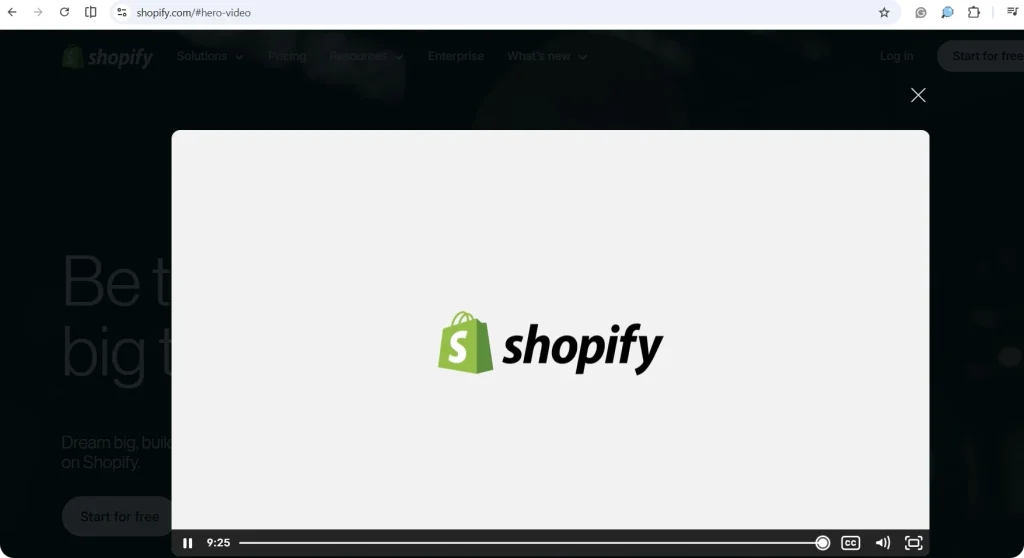
Here’s an example of Shopify. On its website, you can find a storytelling video named “Why we build Shopify”. It explains the story behind the brand, provides a product overview, and its purpose.
So, if you want to deliver your brand messaging more effectively, going for video marketing services is definitely a win-win.
What Are the Main Types of Video Content?
There is a large variety of video content used in different stages of a sales cycle, for example:
If you want to grab your leads’ attention in the awareness stage of your sales cycles, you might consider using short-form, engaging social media videos or educational brand clips.
Now that you have potential customers, explainer videos, product overviews, tutorials, and webinars will work best.
And in the final stage, where your customers are about to make a purchase, you can deliver case studies, customer testimonials, and more long-format, detailed content.
Keeping these distinctions in mind will make content planning easier and help you choose the right video formats for each stage of the sales cycle.
What Are the Main Stages of Video Marketing Services?
No matter whether your video marketing services are handled in-house or outsourced, having a clear understanding of the main stages of a video marketing campaign will help you keep your efforts aligned with your overall strategy.
Here they are:
Video Strategy Planning
This is the very first step of your video marketing efforts. Here, you need to have a clear understanding of your target audience, brand messaging, and video formats for each stage of your campaigns.
Have a look at your competitors and how they are carrying out their video marketing campaign.
To make your vision clear, ask yourself these core questions:
Who do you want to produce these videos for?
What message do you want to deliver?
What goals do you want to achieve with your video content?
If you are the one handling the process, you also purchase the necessary equipment to make your video production technically possible.
Remember that the number of people and the type of equipment involved will depend on the scope and complexity of the video campaign.
Pre-Production Preparations
After having your ideas clear, you start scheduling the production of your interactive content, forming the content calendar, and drafting the scripts for each video.
Here, make sure you also finalize all the visual and sound effects, storyboards, and any other necessary details that will make your video production efforts successful.
Video Production
And here it comes, the filming stage.
If you or your team members are being filmed, remember to smile and stay natural. Trust the process; your authenticity will resonate with the audience.
If you are outsourcing video production, make sure you or a representative from your team is present during filming to ensure everything goes smoothly and you are in tact with your marketing vision.
Check the lighting, sound, visuals, and equipment to ensure high-quality video content. It is also a good idea to review the script once again before recording begins.
Video Posting and Promotion
After collecting all the video materials, you then turn to editing and posting them on the relevant channels.
However, simply posting videos is not enough.
Your content will reach its full potential only when you actively distribute it across social media, your website, and any other channels where your target audience spends time.
Additionally, repurpose each video to suit the format and style of every platform for maximum engagement.
Video SEO and Optimization
SEO optimization is crucial for your video marketing services. If you want your videos to rank on video platforms, you need to optimize your video content accordingly.
Include keywords and questions your users are actually searching for on search engines.
If you wonder how you can do this, professional SEO tools like Ahrefs can help you with these insights.
After you log in to Ahrefs, go to the “Keyword Explorer” section.
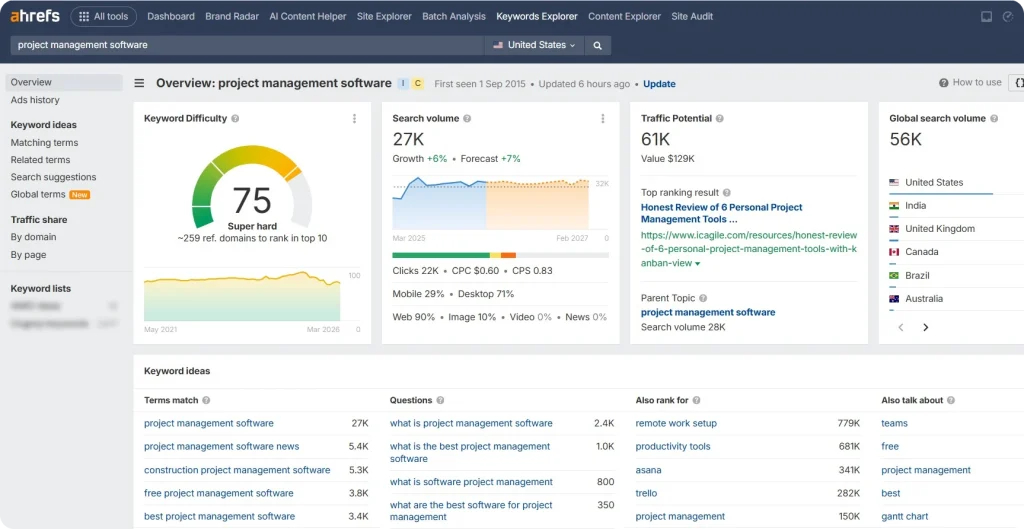
Enter a seed keyword that your potential customers are searching for. Let’s bring an example here. Imagine you are offering project management software and you want to launch a video marketing campaign promoting your software. The broadest keyword your audience is most probably searching for online is “project management software.” So, in the “Keyword Explorer” section, type in this keyword. Here’s what you will get:
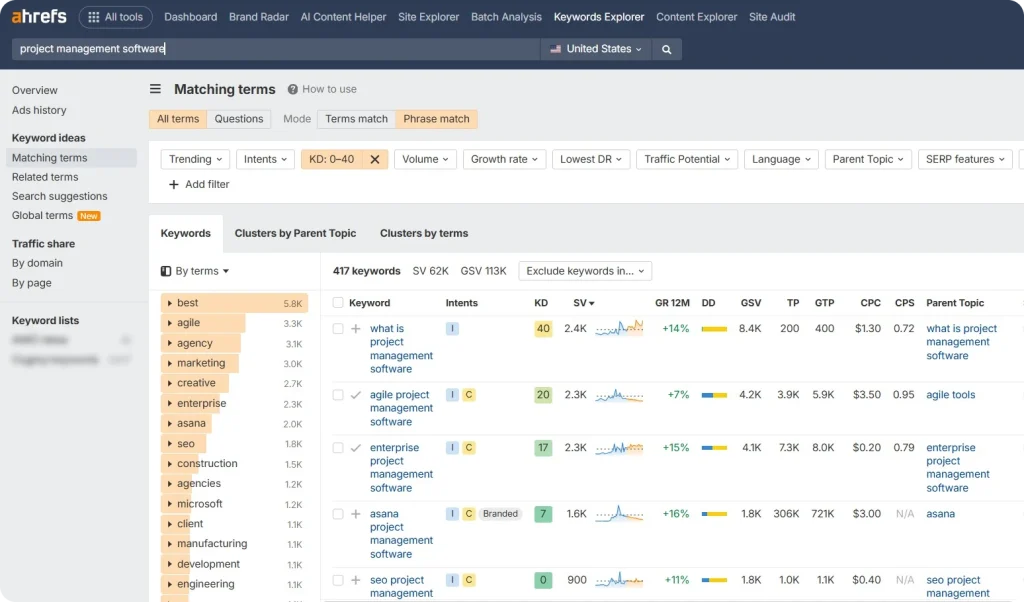
Now explore the “Terms match” and “Questions” sections to see all the trending keywords. For an easier ranking, start with keywords with lower keyword difficulty by putting the necessary filters (let’s say 0-40 KD).
After choosing those that also fit your content strategy, you can place them smoothly in your titles, descriptions, subtitles, and video tags.
Performance Tracking and Analytics
After your videos are surfacing online, regularly check necessary metrics such as views, likes, comments, and engagement.
This will help you measure your video campaign performance and identify which content needs further improvement.
Video Marketing Services: The Selection Checklist
So, if you are choosing to rely on outsourced partners, you are probably wondering how to choose the best video marketing services from hundreds of agencies.
Here is a checklist you can use along your selection process:
Be clear about what you want: Picture what your videos should look like, the messaging, the style, everything. This will help you filter those that match your vision.
Discuss budget: Pricing plans differ for every agency, depending on the scale of services they provide. Make sure you ask for a price for the scope of services you want to get and whether or not their prices match your marketing budget.
Ask for samples: You can also ask for a portfolio of previous video campaigns to get clearer insights into what kind of videos each agency creates.
Review testimonials: Reviewing customer testimonials will help you understand the agency’s strengths, reliability, and the results they’ve delivered for other businesses.
Clarify timeframes: During the negotiation and contracting process, be clear about the deliverables, timelines, and communication procedures.
Depending on the scale of your video marketing campaign, additional steps may be required to land on the agency that will fit your video marketing goals.
Having a clear roadmap ensures you progress smoothly and achieve your goals with minimal hassle.
Conclusion
Nowadays, video marketing services are widely accessible, with thousands of agencies providing them.
While this variety can feel overwhelming, taking the time to research and communicate with potential partners can make the selection process much easier.
It is also important to have a clear vision for your video marketing campaign so your expectations align with the final results.
With the right strategy and the right agency, video content can become a powerful driver of brand awareness, engagement, and business growth.
You have finally found the courage to start your YouTube channel.
You bought all the necessary equipment, drafted the initial script, and content plan.
Lights! Camera! Action!
But after posting your first, second, and tenth videos, you don’t notice any changes in view counts.
Don’t worry, this is not because your content is uninteresting. You don’t need to quit mid-journey.
It’s just how you present it to your potential audience and what methods you use to attract people to your channel.
So if you are wondering how to get more views on YouTube, below is a breakdown of the necessary tips to help you with driving more traffic to your YouTube channel.
Why is it Important to Get More Views on YouTube
YouTube is one of the most popular and influential social media platforms of today. It can become a powerful platform for your content marketing.
Yes, today, more people prefer short-form videos, such as reels, over long-format YouTube videos, as they are easier to digest.
But if you choose to deliver detailed and informative content on your YouTube channel, you will keep your position on YouTube and grow a community. People always value high-quality content, no matter the platform or length. So here, you don’t need to worry about YouTube losing its popularity.
From what is said above, here are some of the core advantages of YouTube as a social media platform:
Massive global reach: By being active on YouTube and posting quality content regularly, you get access to the huge YouTube audience of billions of users.
Thought leadership and high trust: Your video content resonates with your audience more than just images or written posts.
Strong community building: As your views grow, you also get the chance to build a community and interact with your audience through comments, likes, and text-based posts on YouTube’s “Community” section.
Monetization opportunities: And finally,with YouTube you can earn money!Mostly, it happens through ad views. Other options are affiliate marketing and brand deals.
Perhaps, the only thing that you should consider is that YouTube requires more effort in content creation (both content-wise and equipment-wise), than, for example, Instagram and TikTok.
Since YouTube videos are mostly long-format (although YouTube has Shorts, too), you need to carefully script and direct them. These are not 20-second Instagram reels that you upload from the first take, and people scroll through. People see you and listen to what you say. Every camera angle, background, and every word you say must be well prepared. Since YouTube videos are mostly long-format, careful planning is essential, and strong YouTube video editing helps shape your message clearly, keeping viewers engaged from start to finish.
Now that you are convinced of why to get more views on YouTube, let’s see how to get more views on YouTube.
How to Get More Views on YouTube: 3 Nice Tips to Know
Just like any other social media platform, YouTube has its unique tips and tricks to answer your “how to get more views on YouTube” question.
No waiting anymore, here they are:
Tip #1: Post Regularly
One of the very first important rules for getting more views on YouTube is posting as much as possible.
Posting regularly will ensure your video appears more frequently in users’ feed suggestions and is one method of getting more views on YouTube.
The ideal frequency for posting is 4-5 videos per month. Of course, while focusing on quantity, make sure the quality is not affected.
When posting, make sure you also put enough effort into your video thumbnail. The more visually appealing and relevant, the more clicks and views you will get.
You can create a content calendar and schedule regular topics to film and upload. Such planning will make your content creation efforts more structured and organized.
Be patient and don’t be upset if you don’t get your desired results soon. Most of the successful YouTube channels have achieved their desired view counts after months and even years of steady work.
Tip #2: Optimize Your Titles
Another important thing to consider is title optimization. If you want your videos to pop up on your users’ feeds, you have to make sure that your video titles match their search queries.
Here are some methods you can use to find these queries and keywords:
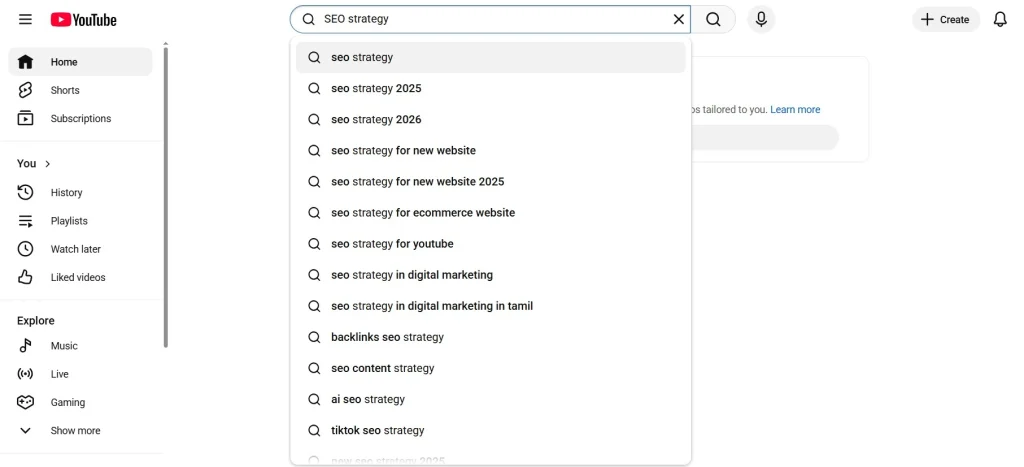
Step 1: Go to the YouTube search section
Step 2: Type in your focus keywords (these are usually the core keywords of your content niche)
Step 3: YouTube search results will pop up. These are the top results searched by your audience.
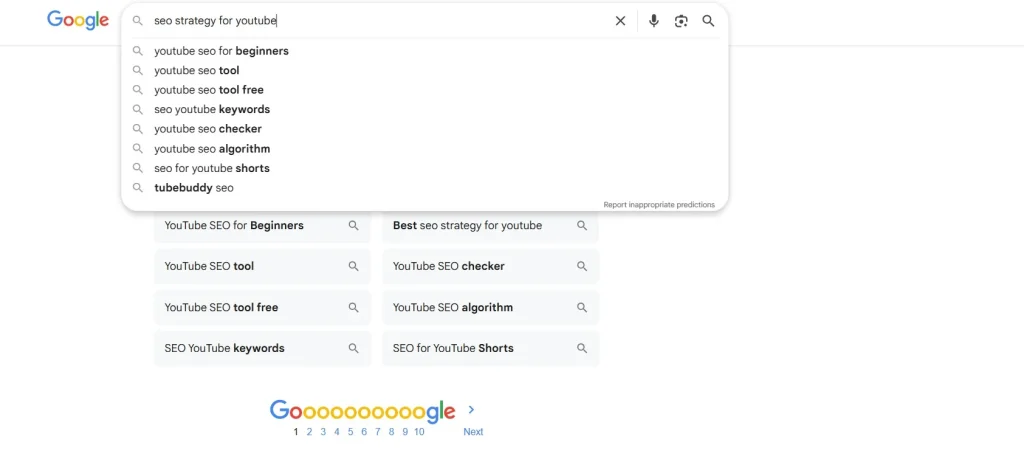
You can also get these insights from Google search results, as well as Google’s “People also search for” section.
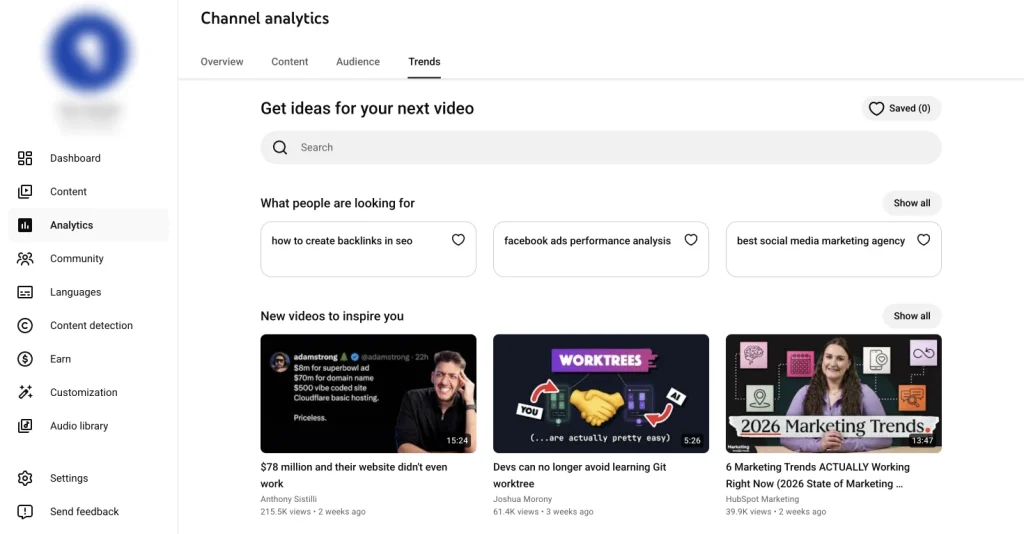
Another option for getting more insights on YouTube trends is by checking the “Trends” section in your Channel’s Analytics.
Here, the suggested content ideas are based on your content niche and the latest industry trends.
Now that you have a list of keywords to build your content around, make sure you use these keywords in your speech, video description, and subtitles.
Using relevant tags is also important to ensure your content’s visibility on YouTube. These tags can be both short and long and must reflect what you are actually talking about in your video.
Tip #3: Use Your Other Social Media Platforms
A large portion of your YouTube views will come from your promotion efforts. People should be informed about your channel to come to it and watch your videos.
Make sure you actively promote your YouTube videos across all of your social media platforms, especially those where your target audience is most active. Repurposing YouTube content for other social media platforms is a smart way to increase reach and save time. You can also embed your YouTube channel on your website for even more visibility.
Here are some ways you can do YouTube content repurposing:
You can break one full-length video into shorter clips for Instagram Reels, TikTok, or Facebook.
Key insights or quotes can turn into carousel posts or tweets.
You can also turn your video transcript into a blog post, newsletter, or LinkedIn article.
Pro Tip: Remembering that YouTube has a Shorts section, it will be smart enough to have the Shorts version of your long-format videos. These will serve as trailers and hooks for your audience, which will intrigue them to click on your long-format video version and watch it.
These content repurposing methods make your content more effective, reach audiences who like different formats, and strengthen your personal or brand presence across multiple platforms.
Channel Analytics: Checking How You Are Doing on YouTube
Checking your YouTube views is not limited to checking the view counts under your videos.
There are many other important metrics and analytics that can help you understand your channel performance.
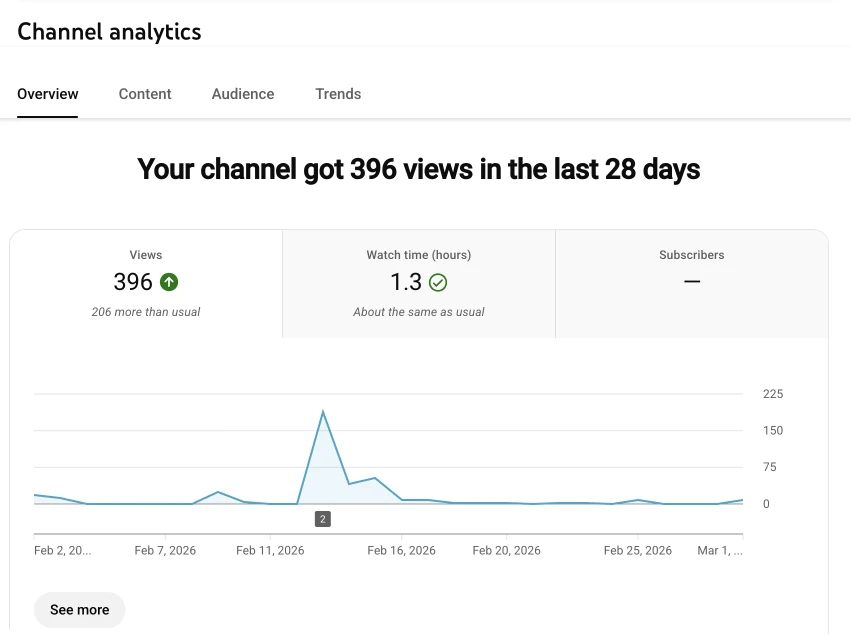
For instance, to get an overview of your channel views, go to your Channel Analytics dashboard and have a look at the “Overview” section.
Here, you can do a filtering of a certain timeframe of your YouTube channel views. You can also get insights on the watch time of your videos in hours.
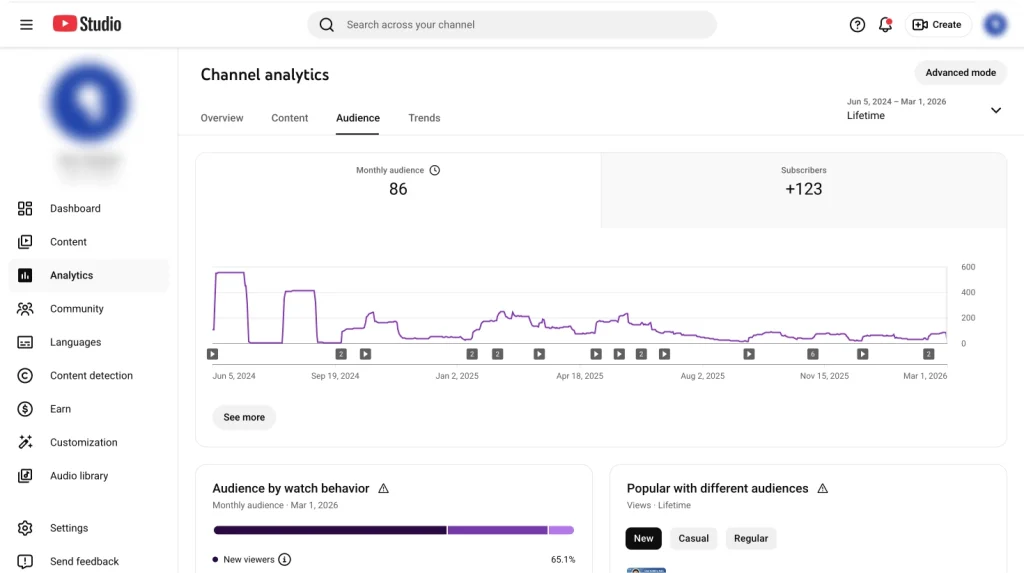
To go deeper into your analytics, you can also gain more insights by navigating through the “Audience” section.
Here, you can track your audience by their watch behaviors, see the number of monthly viewers, new viewers, and subscribers.
Carefully analyzing your channel performance will help you understand your future content plans and how to get more views on YouTube.
To Wrap Up
Growing your YouTube channel is a time-consuming process. Just posting videos will not be enough if you want to build a strong channel community.
Make sure you put enough effort into every aspect of your content production: from title and thumbnail optimization to content planning and promotion.
By focusing on quality and strategy, you can turn each video into a step toward long-term growth and success.
So to sum up, the key to how to get more views on YouTube is consistency and attention to detail.
TikTok has become one of the most popular apps around the world, especially among young people. It’s a place where users can share short videos, follow trends, and connect with others. But like most social media platforms, TikTok isn’t perfect.
While it has many fun and entertaining features, there are also some serious problems that come with using the app.
Privacy and Security Concerns
One of the biggest problems with TikTok is how it handles your personal information. When you use TikTok, the app collects a lot of data about you, such as your location, the videos you watch, and even your search history. This data can be used to create a profile of you and show you ads based on your interests. Many people worry that this data could be misused, especially because TikTok is owned by a company based in China, which raises concerns about whether the Chinese government could access this information.
Another issue is that TikTok has been criticized for not protecting children’s privacy enough. Kids and teens are major users of the app, but they might not fully understand the risks of sharing too much personal information. In some cases, this could lead to situations where their privacy is invaded, or their data is sold to advertisers.
Addiction and Mental Health Impact
TikTok is designed to be highly addictive. The app uses an algorithm that keeps showing you videos that you’re likely to enjoy, making it hard to stop scrolling. Many people end up spending hours on TikTok without realizing how much time has passed. This constant scrolling can be harmful to your mental health, especially if you compare yourself to others on the app.
Studies have shown that too much time on TikTok can lead to anxiety and depression. This happens because users often see idealized versions of people’s lives, which can make them feel like they don’t measure up. It can also make people feel like they need to be constantly performing, always trying to be funnier or more interesting than others. This pressure to keep up with the latest trends can affect your self-esteem and make you feel worse about yourself.
Also, TikTok’s focus on beauty standards and trends can contribute to unhealthy body image issues, especially for young users who are still figuring out their sense of self. Many creators on the platform filter their photos and videos, creating an unrealistic idea of what people should look like. Encouraging healthier habits, such as full body stretching routines and mindful movement, can help users focus on body positivity and overall well-being rather than unrealistic beauty ideals.
Spread of Misinformation
TikTok is also a platform where misinformation can spread quickly. Because anyone can create and share videos, some people post false or misleading information without verifying it. These videos can go viral, reaching millions of viewers, even though the information may not be true.
This is especially dangerous when it comes to important topics like health, politics, or science. Sometimes, TikTok videos claim to offer medical advice or promote conspiracy theories, and since TikTok has millions of young viewers who might trust the information, it can cause real harm. While TikTok tries to control misinformation, the sheer amount of content uploaded every day makes it difficult to manage.
Inappropriate Content for Younger Audiences
TikTok is mainly popular with young people, but not all content on the app is suitable for kids or teenagers. While the app has a system for reporting inappropriate content, there’s still a lot of material that isn’t meant for younger audiences. Some videos may contain explicit language, sexual content, or even dangerous challenges that could put viewers at risk.
One of the most concerning things about TikTok is that these videos can go viral, meaning they can be seen by millions of people, including those who are not old enough to handle such content. Many kids might stumble upon these videos without intending to, and they might be influenced by what they see. Some challenges, like risky stunts or dangerous pranks, can even encourage young people to try things that could hurt themselves or others.
Even though TikTok offers parental controls, it’s not always enough to prevent kids from seeing things they shouldn’t. Parents might not know exactly what their children are watching on the app, and kids may not always tell them. This makes it hard for parents to fully protect their children from inappropriate content.
Influencer Culture and Its Downsides
Another issue with TikTok is the rise of influencer culture. Many users, especially young people, look up to TikTok stars and try to copy their lives and behavior. While some influencers are positive role models, others can create an unrealistic image of what life should be like. TikTok stars often post content that shows off their wealth, beauty, or luxurious lifestyles, which can make viewers feel like they need to live up to those standards.
This pressure to look or act a certain way can have negative effects, especially on younger users who are still developing their sense of identity. It can lead to feelings of insecurity, as they compare their everyday lives to the highlight reels of influencers. Additionally, some influencers are paid by companies to promote products, which can make it hard for viewers to know what’s real and what’s just advertising. This blurs the lines between genuine content and marketing, leading to confusion and trust issues.
Negative Impact on Productivity
TikTok’s addictive nature also makes it easy to waste time, especially for students or people with jobs. It’s common to spend hours on the app, watching videos and getting caught up in the never-ending feed. For students, this can take away from study time, leading to poor grades or unfinished homework. That’s why using a homework helper app or tool can be a smart way to stay on track and make sure assignments get done, even with distractions around. For professionals, it can affect work productivity and focus.
The app’s short video format encourages users to keep watching one video after another, which can disrupt their attention span. The constant stimulation from scrolling through videos makes it harder to concentrate on tasks that require more focus or deeper thinking. Over time, this can lead to a decrease in productivity and may even affect real-world relationships, as people become more attached to their digital world than their personal interactions.
Algorithm-Driven Content Filter Bubble
TikTok’s algorithm plays a big role in what users see on their feed. It analyzes what you watch, like, and share, and then shows you more of the same type of content. While this can be fun and keep you engaged, it also creates a “filter bubble,” where you only see things that align with your interests or views. This can limit exposure to new ideas, different perspectives, and a variety of content.
As a result, TikTok can make people feel trapped in their own opinions, as they’re constantly surrounded by videos that match what they already believe or like. This can reinforce biases and make it harder to think critically about different topics. In a world where open-mindedness and diverse viewpoints are important, this filter bubble can be a negative aspect of the app.
Cultural Appropriation and Exploitation
TikTok has also been criticized for instances of cultural appropriation, where creators borrow elements from other cultures without understanding or respecting their significance. This often happens when trends or challenges are adopted from certain cultures for the sake of gaining views, but the cultural context is ignored. This can be hurtful to people from those cultures who feel their traditions and identity are being exploited for entertainment.
Many creators on TikTok may not realize the impact of their actions, but this lack of awareness can lead to misunderstandings and harm. Additionally, TikTok’s wide reach means that these trends can spread quickly, making cultural appropriation more visible and harder to address. While the app has made efforts to address these issues, it remains a concern for many people who feel that TikTok is not doing enough to protect cultural integrity.
Conclusion
TikTok, like all social media platforms, has its good and bad sides. While it offers entertainment and a way for people to connect, there are also serious concerns about privacy, mental health, misinformation, and the influence it has on younger audiences. As fun as TikTok can be, it’s important for users to be aware of these risks and use the app responsibly. Parents should take steps to ensure their children are safe online, and users of all ages should think critically about the content they consume. Ultimately, by understanding the downsides of TikTok, users can make more informed decisions about how much time they spend on the app and how they interact with its content.
Are you struggling to create a social media content strategy that truly resonates with your audience? With so many platforms and constantly changing algorithms, it can be overwhelming to know where to start. However, having a powerful social media content strategy is essential for building brand awareness, increasing engagement, and ultimately driving conversions.
In this article, we will guide you through the process of creating a social media content strategy that will help you achieve your business goals. We will cover everything from defining your target audience and choosing the right platforms, to creating a content calendar and measuring your success. By the end of this article, you will have the knowledge and tools you need to create a powerful social media content strategy that drives results.
Understanding Social Media Content Strategy & Target Audience
To create a powerful social media content strategy, you need to understand your target audience. Your target audience is the group of people who are most likely to engage with your content, follow your brand, and eventually become your customers.
To understand your target audience, you need to gather data about their demographics, interests, pain points, and needs. This data will help you create buyer personas, which are fictional representations of your ideal customers.
Demographics are the basic characteristics of your target audience, such as age, gender, location, education, and income. Understanding these demographics will help you create content that appeals to your target audience.
Buyer personas are more detailed representations of your ideal customers. They include information about their goals, challenges, values, and behaviors. Creating buyer personas will help you understand your target audience’s motivations and needs, which will help you create more targeted and effective social media content.
Interests are the topics and activities that your target audience is interested in. Knowing your target audience’s interests will help you create content that appeals to their passions and hobbies.
Pain points are the problems and challenges that your target audience faces. Understanding your target audience’s pain points will help you create content that addresses their needs and provides solutions to their problems.
Needs are the things that your target audience wants and desires. Understanding your target audience’s needs will help you create content that fulfills their desires and helps them achieve their goals.
Overall, understanding your target audience is essential for creating a powerful social media content strategy. By gathering data about their demographics, interests, pain points, and needs, you can create targeted and effective content that engages your target audience and helps you achieve your social media goals.
Setting Clear and Specific Goals
To create a powerful social media content strategy, it’s essential to set clear and specific goals. These goals will guide your content creation and help you measure your success.
When setting your social media goals, it’s crucial to make them specific and measurable. Vague goals like increasing brand awareness or getting more followers won’t provide you with the direction you need to create effective content.
Instead, consider setting goals like increasing website traffic, generating leads, or boosting sales. These goals are specific and measurable, and they tie directly to your bottom line.
To ensure that your goals are achievable, it’s important to consider your available resources. If you have a small team and limited budget, setting a goal of generating thousands of leads per month may not be realistic.
Once you’ve set your goals, it’s important to track your progress regularly. This will help you identify what’s working and what’s not, and adjust your strategy accordingly.
To track your progress, you’ll need to identify key performance indicators (KPIs) that align with your goals. For example, if your goal is to increase website traffic, you’ll want to track metrics like page views, unique visitors, and bounce rate.
In conclusion, setting clear and specific goals is essential to creating a powerful social media content strategy. By making your goals specific and measurable, you’ll be able to create effective content that drives revenue, sales, and leads. Remember to regularly track your progress and adjust your strategy as needed to ensure that you’re on track to meet your goals. Automating tasks with a social media automation tool can free up time for more strategic content creation and goal alignment.
Choosing the Right Platforms
When it comes to social media, not all platforms are created equal. Each platform has its own unique audience and features, so it’s important to choose the right ones for your brand. You can also consider your own social media app development to create a more personalized experience for your audience. Here are some tips to help you choose the right platforms for your social media content strategy:
Know Your Audience
The first step in choosing the right platforms is to know your audience. Who are they? What social media platforms do they use? What are their interests and behaviors? By understanding your audience, you can choose the platforms that are most likely to reach and engage with them.
Consider Your Goals
What are your goals for social media? Are you looking to increase brand awareness, drive traffic to your website, or generate leads? Different platforms have different strengths, so it’s important to choose the ones that align with your goals. For example, if you’re looking to drive traffic to your website, Pinterest might be a good choice, while if you’re looking to generate leads, LinkedIn might be a better option. Many businesses find it helpful to schedule posts on LinkedIn to maintain consistent engagement without daily effort.
Evaluate the Platforms
Once you’ve identified your audience and goals, it’s time to evaluate the platforms. Here’s a quick overview of some of the most popular social media platforms:
Facebook: With over 2 billion monthly active users, Facebook is the largest social media platform. It’s great for building brand awareness, engaging with customers, and driving traffic to your website.
Twitter: Twitter is a fast-paced platform that’s great for real-time conversations and news. It’s also a good platform for customer service and building relationships with influencers.
Instagram: Instagram is a visual platform that’s great for showcasing products and building a brand aesthetic. It’s also a good platform for influencer marketing.
LinkedIn: LinkedIn is a professional networking platform that’s great for B2B companies. It’s a good platform for building thought leadership and generating leads.
Pinterest: Pinterest is a visual platform that’s great for driving traffic to your website. It’s especially popular among women and is a good platform for e-commerce businesses.
YouTube: YouTube is a video platform that’s great for building brand awareness and engaging with customers. It’s also a good platform for influencer marketing.
TikTok: TikTok is a short-form video platform that’s popular among younger audiences. It’s a good platform for building brand awareness and engaging with Gen Z.
Snapchat: Snapchat is a messaging app that’s popular among younger audiences. It’s a good platform for building brand awareness and engaging with Gen Z.
Choose Wisely
Once you’ve evaluated the platforms, it’s time to choose the ones that are right for your brand. Remember, it’s better to focus on a few platforms and do them well than to spread yourself too thin across too many platforms. By choosing the right platforms for your brand, you can build a powerful social media content strategy that reaches and engages with your audience.
Analyzing Your Competitors
One of the most important steps in creating a powerful social media content strategy is analyzing your competitors. By understanding what your competitors are doing, you can identify gaps in the market and find ways to differentiate yourself.
To begin your competitive analysis, start by identifying your main competitors. Look at businesses that are in the same industry or niche as you, and that target a similar audience. Once you have a list of competitors, start analyzing their social media presence.
Here are a few things to look for when analyzing your competitors:
Types of content: What types of content are your competitors posting? Are they mostly sharing articles, photos, videos, or something else? This can give you an idea of what types of content are popular in your industry.
Frequency of posts: How often are your competitors posting on social media? Are they posting daily, weekly, or less frequently? This can help you determine how often you should be posting to stay competitive.
Engagement metrics: Look at how many likes, comments, and shares your competitors’ posts are getting. This can help you identify what types of content are resonating with their audience.
Tone and voice: Pay attention to the tone and voice your competitors are using in their social media posts. Are they formal or informal? Humorous or serious? This can help you determine what tone and voice will resonate with your own audience.
Once you have gathered this information, you can use it to identify gaps in the market. For example, if your competitors are mostly sharing articles, you might want to focus on creating more visual content like photos and videos. Or, if your competitors are posting infrequently, you might want to post more often to stay top of mind with your audience.
By analyzing your competitors, you can create a social media content strategy that sets you apart from the competition and resonates with your target audience.
Creating Engaging Content
Creating engaging content is the key to a successful social media content creation strategy. Your content should be interesting, informative, and relevant to your audience. Here are some tips to help you create engaging content:
Know Your Topics
Before you start creating content, it’s important to know what your audience is interested in. Research your target audience and find out what topics they are interested in. Use this information to create content that is relevant and interesting to them.
Use Videos and Photos
Videos and photos are a great way to create engaging content. They are visually appealing and can help you tell a story. Use high-quality videos and photos to make your content more engaging. For example, law firms can incorporate high quality professional lawyer headshots to elevate their brand’s visual appeal and build trust with their audience
Tell Stories
People love stories. Use storytelling to create engaging content. Tell stories about your brand, your products, or your customers. Use stories to educate and entertain your audience.
Write Blog Posts
Blogging is a great way to create engaging content. Write blog posts that are informative and interesting. Use your blog to educate your audience about your brand and your products.
Use User-Generated Content
User-generated content is a great way to create engaging content. Encourage your audience to create content related to your brand and products. Share user-generated content on your social media channels to show your audience that you value their opinions. Pair it with enhancements like background removal to create cohesive designs for your posts or promotional material. You can also embed Instagram on your website to prominently display user-generated content and inspire others to join the conversation.
Create High-Quality Content
Creating high-quality content is essential for a successful social media content strategy. Your content should be well-written, informative, and visually appealing. To improve clarity and flow, you can use a free AI sentence rewriter to polish your captions or post descriptions. Use high-quality images and videos to make your content more engaging.
Educate and Promote
Use your content to educate your audience about your brand and your products. Share informative content that teaches your audience something new. Use your content to promote your brand and your products in a subtle way.
By following these tips, you can create engaging content that will help you build a strong social media presence.
Leveraging Trends and Influencers
One of the most effective ways to create a powerful social media content strategy is by leveraging trends and influencers. By doing so, you can increase your reach and engage with your target audience in a more meaningful way.
Trends are an important aspect of social media because they allow you to tap into what’s popular at the moment. By incorporating trending topics into your content, you can increase your visibility and attract new followers. However, it’s important to be careful when using trends. You don’t want to come across as inauthentic or insensitive, so make sure that you’re only using trends that are relevant to your brand and audience.
Influencers are another valuable resource for your social media content strategy. These are individuals who have a large following on social media and can help promote your brand to their audience. When working with influencers, it’s important to find someone who aligns with your brand values and has a following that overlaps with your target audience.
Gen Z and millennials are two generations that are highly influenced by trends and influencers. By creating content that appeals to these demographics, you can increase your engagement and build a loyal following. Additionally, working with creators who are popular among these generations can help you reach a wider audience and build brand awareness. Targeting campaigns in places with the most unemployed Gen Zs can also help brands connect with a segment actively seeking opportunities and inspiration.
In summary, leveraging trends and influencers is a powerful way to create a successful social media content strategy. By incorporating popular topics and working with influential individuals, you can increase your reach, engagement, and brand awareness.
Building a Content Calendar
A content calendar is a tool that helps you plan and organize your social media content. It allows you to schedule your posts in advance, which saves time and ensures that you have a consistent posting schedule. Here are some steps to help you build a content calendar:
Determine your goals: Before you start creating your content calendar, you need to know what you want to achieve. Are you trying to increase brand awareness, drive traffic to your website, or generate leads? Your goals will help you determine the type of content you should create and the frequency of your posts.
Choose your platform: Different social media platforms have different audiences and require different types of content. Choose the platforms that are most relevant to your business and your goals.
Repurpose content: Repurposing content is a great way to save time and ensure that your content is consistent across all platforms. For example, you can turn a blog post into a series of social media posts or a video into a blog post.
Create a schedule: Once you have determined your goals, chosen your platforms, and repurposed your content, it’s time to create a schedule. Determine how often you want to post on each platform and what type of content you will post.
Use a scheduling tool: There are many scheduling tools available that allow you to schedule your posts in advance. These tools can save you time and ensure that your posts are published at the optimal time for your audience.
By following these steps, you can schedule your social media posts in advance and create a powerful social media content strategy that will help you achieve your goals and reach your audience.
Monitoring and Measuring Success
Once you have implemented your social media content strategy, it is crucial to monitor and measure its success. This will help you understand what is working and what is not, and allow you to make data-driven decisions to optimize your strategy for better results.
One of the most important tools for monitoring and measuring success is social media analytics. Most social media platforms offer built-in analytics tools that provide insights into your followers, engagement, reach, and more. These tools can help you track your progress over time and identify trends in your performance.
When measuring your results, it’s important to focus on the metrics that matter most to your business goals. For example, if your goal is to increase brand awareness, you may want to track metrics such as follower count, impressions, and reach. On the other hand, if your goal is to drive website traffic or conversions, you may want to focus on metrics such as click-through rates and conversion rates.
It’s also important to track your competitors’ performance and benchmark your results against theirs. This can help you identify areas where you may be falling behind and give you ideas for how to improve your strategy.
In addition to social media analytics, there are many other tools and techniques you can use to measure your social media success. For example, you can use Google Analytics to track the traffic and conversions generated from your social media channels. You can also use social listening tools like Hootsuite to monitor mentions of your brand and track sentiment around your content.
Overall, monitoring and measuring your social media success is crucial for optimizing your strategy and achieving your business goals. By focusing on the metrics that matter most to your business and using the right tools and techniques, you can gain valuable insights into your performance and make data-driven decisions for better results.
Utilizing Social Listening Tools
One of the most important aspects of creating a powerful social media content strategy is to listen to what your audience is saying. Social listening tools can help you to do just that.
By monitoring conversations on social media platforms, you can gain valuable insights into what your audience is interested in, what they are talking about, and what their pain points are. This information can then be used to create content that resonates with your audience and addresses their needs.
There are many social listening tools available, ranging from free options like Google Alerts to more advanced paid tools like Hootsuite Insights and Brandwatch. These tools allow you to track mentions of your brand, competitors, and industry keywords, as well as monitor sentiment and track trends.
When using social listening tools, it’s important to keep in mind that it’s not just about tracking your own brand. By monitoring conversations about your competitors and industry keywords, you can gain insights into what is working for others and what your audience is interested in.
In addition, social listening tools can help you to identify potential influencers and brand advocates. By tracking who is talking about your brand and engaging with your content, you can identify individuals who may be willing to promote your brand and help spread your message.
Overall, utilizing social listening tools is an essential part of any effective social media content strategy. By listening to your audience and gaining insights into their needs and interests, you can create content that resonates with them and drives engagement.
Optimizing Your Social Media Channels
Once you have created your social media accounts, it is important to optimize them to ensure that they are effective in achieving your online presence and brand awareness goals. Here are a few tips to help you optimize your social media channels:
Consistency is Key
Maintaining consistency across all your social media channels is crucial. This includes using the same profile picture, cover photo, and bio across all your channels. This helps your audience recognize your brand and creates a sense of familiarity.
Brand Voice
Your brand voice is the unique personality and tone of your business that you use to communicate with your audience. For example, an AI native law firm can use a consistent digital-first voice across social channels to demonstrate innovation while maintaining professional credibility. Make sure your brand voice is consistent across all your social media channels. This helps to build trust with your audience and reinforces your brand identity.
Content Strategy
Develop a content strategy that aligns with your brand voice and goals. This includes the type of content you post, the frequency of your posts, and the time of day you post. Use analytics to determine what content resonates with your audience and adjust your strategy accordingly.
Engage with Your Audience
Engaging with your audience is a great way to build relationships and increase brand awareness. Respond to comments and messages in a timely manner, and consider hosting Q&A sessions or polls to encourage interaction. To make communication even more seamless, using a WhatsApp marketing tool can help manage interactions efficiently and keep your audience engaged.
Use Visuals
Visuals are a powerful tool for increasing engagement on social media. Use high-quality images and videos to make your content more visually appealing and memorable. Use graphics and infographics to convey information in a visually appealing way.
By following these tips, you can optimize your social media channels and create a powerful social media content strategy that helps you achieve your online presence and brand awareness goals.
Conclusion
Now that you have a better understanding of how to create a powerful social media content strategy, you are well on your way to achieving your marketing goals. By following the steps outlined in this article, you can develop a social media marketing plan that is tailored to your business needs and target audience.
Remember that content marketing is a long-term strategy that requires consistent effort and dedication. Utilize social media management software to streamline your content creation and distribution process, and always ensure that you are sharing the right content for your audience on the appropriate social platforms.
Conduct regular social media audits to evaluate the effectiveness of your strategy and make adjustments as needed. This will help you stay up-to-date with changes in algorithms and ensure that you are reaching your target customers with the right message.
By conducting audience research and analyzing demographic information, you can create content that resonates with your target customer and helps you achieve your content goals. Don’t forget to also align your content marketing strategy with your overall marketing goals to ensure that you are driving business results.
Whether you are a small business owner or a marketing professional, a powerful social media content strategy can help you achieve success in customer service, brand awareness, and lead generation. By taking the time to develop a comprehensive plan, you can create content that engages your audience and drives business results.